Free NewsletterPro Login
S&P 500 6,287 +0.42%
DOW 44,521 -0.18%
NASDAQ 21,103 +0.71%

Warning: Undefined variable $funds in /var/www/briefs.co/htdocs/wp-content/plugins/oxygen/component-framework/components/classes/code-block.class.php(133) : eval()'d code on line 491

Warning: foreach() argument must be of type array|object, null given in /var/www/briefs.co/htdocs/wp-content/plugins/oxygen/component-framework/components/classes/code-block.class.php(133) : eval()'d code on line 491
/* the link was here */

Black Sea Violence Could Drive Up Global Food Prices

Published Aug 21, 2026
[tts_player]
Share:
Summary:
  • Russia and Ukraine account for roughly one-quarter of global grain exports, making their port attacks a serious threat to worldwide food security.
  • Grain shipments from the two nations totaled nearly 100 million metric tons over the 12 months ending in June, based on customs data.
  • Analysts point to rising fertilizer expenses, unpredictable weather patterns, and maritime transport difficulties as additional risks to food availability.

Black Sea Grain Shipments Face Disruption

These deliveries had managed to continue largely uninterrupted since the full-scale war started in 2022, primarily because of international agreements designed to safeguard food shipments.

Those agreements were seen as critical because so many countries depend on the Black Sea for affordable wheat and feed grains. When cargo ships cannot move safely, importers must compete for supplies from other regions, often at higher prices.

The Black Sea region has long been a vital source of wheat, corn, and barley for many nations that rely on grain imports. Any disruption to these shipments can have immediate effects on food availability and prices in those countries.

Insurance Problems Make Exports More Difficult

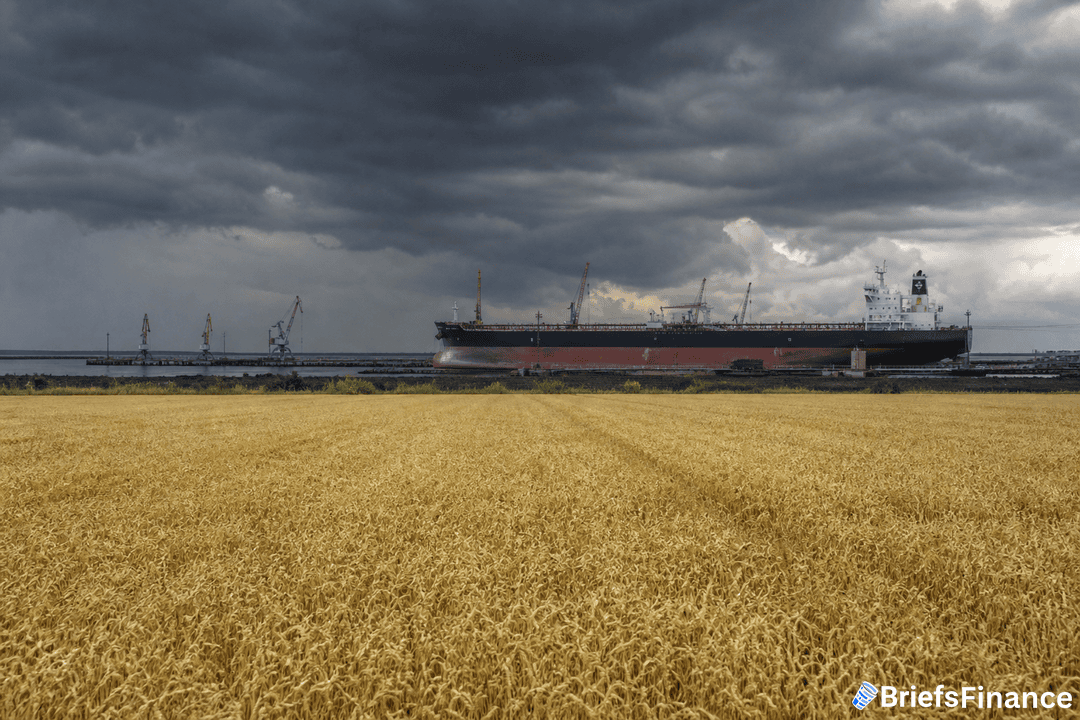
Fresh military actions targeting grain terminals, oil tankers, and cargo ships in the Black Sea region have made it extremely difficult for shipping companies to secure insurance coverage. Consequently, numerous vessels are now avoiding these waters, which is putting upward pressure on wheat prices. This shipping route is essential for moving food around the world, and the longer it remains hazardous, the greater the threat to food security worldwide.

When grain prices climb, a steady investing plan can protect you, so grab the free Always Be Buying E-Book today

Overland Routes Face Their Own Obstacles

Overland routes meant to carry Ukrainian grain instead of Black Sea shipping are also facing serious problems. Low water levels along the Danube River and necessary maintenance work on rail networks in Eastern Europe are hampering these alternative shipping paths. This means agricultural trade is facing disruption not only from the conflict zone but also from infrastructure problems elsewhere.

Additionally, the ongoing closure of the Strait of Hormuz and reduced navigability of the Rhine River are creating further complications. These waterway blockages are contributing to higher costs for agricultural inputs, particularly fertilizers, which in turn increases the financial burden on farmers globally. The ripple effect means that difficulties in one part of the world can quickly translate into elevated expenses for producers in entirely different regions.

A Fragile Supply Chain

The scale of these trade flows explains why analysts are concerned. With Russia and Ukraine accounting for roughly one-quarter of global grain exports, and with shipments from the two nations totaling nearly 100 million metric tons over the 12 months ending in June, even brief interruptions can affect supply. Because many import-dependent countries rely on those deliveries, shipping delays or higher freight costs can quickly push up consumer prices.

Financial Pressures Mount for Agricultural Producers

Jacqui Fatka, an economist, said in a recent analysis, "The elevated price of fertilizers has become a persistent issue rather than a temporary setback." She noted that supply constraints for essential chemicals stem from ongoing tensions in the Middle East. These rising costs for inputs like fertilizers, diesel fuel, and labor are creating a challenging environment for agricultural producers. Many farmers are questioning whether they can achieve sufficient returns to continue operations, which could lead to reduced planting in the coming seasons.

Weather Patterns Add Another Layer of Uncertainty

Climate conditions are introducing additional unpredictability to agricultural planning. Severe heat waves and unusually heavy rainfall have already caused problems in various growing regions. The anticipated arrival of El Niño conditions is adding further uncertainty to harvest forecasts. These weather-related concerns affect not just the current growing season but also raise questions about planting decisions for next year.

Consumers may see continued volatility in food prices as these multiple factors converge.

When food costs rise, patience pays, so download the free Always Be Buying E-Book
Disclosure

Recent News

1 2 3 59

Get Market Briefs delivered to your inbox every morning for free!

No fluff. No noise. No politics. Just finance news you can read in 5 minutes.

Blogs

June 29, 2026
Portfolio Diversification: Why Putting All Your Eggs in One Basket Destroys Wealth
  • Real diversification means spreading investments across all 11 economic sectors plus bonds, alternatives, and cash so no single bet can sink the portfolio.
  • Different sectors perform at different times, so a diversified portfolio captures upswings while smoothing the brutal drawdowns that wipe out concentrated bets.
  • Total market index funds offer the simplest path to diversification, and annual rebalancing is what keeps the structure working over time.
Read More
June 29, 2026
Non Taxable Income: What It Is and Why It Matters
  • Non taxable income is money you receive that you don't owe income tax on.
  • The tax code treats workers, investors, and business owners very differently, and investors often come out ahead.
  • Learning how income is taxed is a quiet superpower for keeping more of what you earn.
Read More
June 29, 2026
Semiconductor Stocks: A Simple Guide for Investors
  • Semiconductor stocks are companies that design and make computer chips, the brains inside nearly every modern device.
  • The AI boom has turned chips into one of the market's most important and most watched groups.
  • They offer big growth potential, but come with high valuations and a notoriously cyclical history.
Read More
June 25, 2026
How Stocks Work: A Simple Guide for Beginners
  • A stock is a slice of ownership in a company - buy one, and you own a piece of the business.
  • You make money two ways: the share price rising over time, and dividends paid to shareholders.
  • The simplest path for most beginners is buying into the whole market through a low-cost index fund.
Read More
June 25, 2026
Stop Loss vs Stop Limit: What's the Difference?
  • A stop loss order sells your stock once it hits a trigger price, prioritizing getting you out.
  • A stop limit order only sells within a price range you set, prioritizing price over a guaranteed exit.
  • The trade-off: a stop loss almost always executes; a stop limit might not if the price moves too fast.
Read More
June 25, 2026
Energy Stocks: A Simple Guide for Investors
  • Energy stocks are companies that produce and supply the power the world runs on, from oil and gas to newer sources.
  • They make up one of the 11 sectors of the market and tend to move with energy prices and big-picture shifts.
  • Like any sector, the key is diversification and understanding the forces driving demand.
Read More
June 18, 2026
What Is a Stop Loss Order? A Simple Guide
  • A stop loss order automatically sells a stock once it falls to a price you set.
  • It's a tool to cap losses or lock in gains without watching the market all day.
  • It works best for active strategies, and can backfire if used carelessly on long-term holdings.
Read More
June 18, 2026
Best S&P 500 Index Fund: How to Choose One
  • The best S&P 500 index fund for most investors is simply the cheapest, most established one that tracks the index well.
  • Funds like VOO, IVV, and SPY all hold the same 500 companies, so the biggest difference is the fee.
  • Pick one, automate your buys, and let time do the heavy lifting.
Read More
June 17, 2026
What Are Penny Stocks? Risks and Rewards Explained
  • Penny stocks are very low-priced shares of very small companies, often trading for just a few dollars or less.
  • They promise huge gains but carry huge risks: low liquidity, high failure rates, and wild price swings.
  • Most investors are better served by quality companies and funds than by chasing cheap shares.
Read More
June 17, 2026
Best Stocks for Beginners With Little Money
  • The best stocks for beginners with little money usually aren't individual stocks at all - they're low-cost index funds.
  • You can start with $100 or less and use small, regular investments to build wealth over time.
  • Focus on diversification and consistency, not on picking the next big winner.
Read More
1 2 3 24
Share via
Copy link











