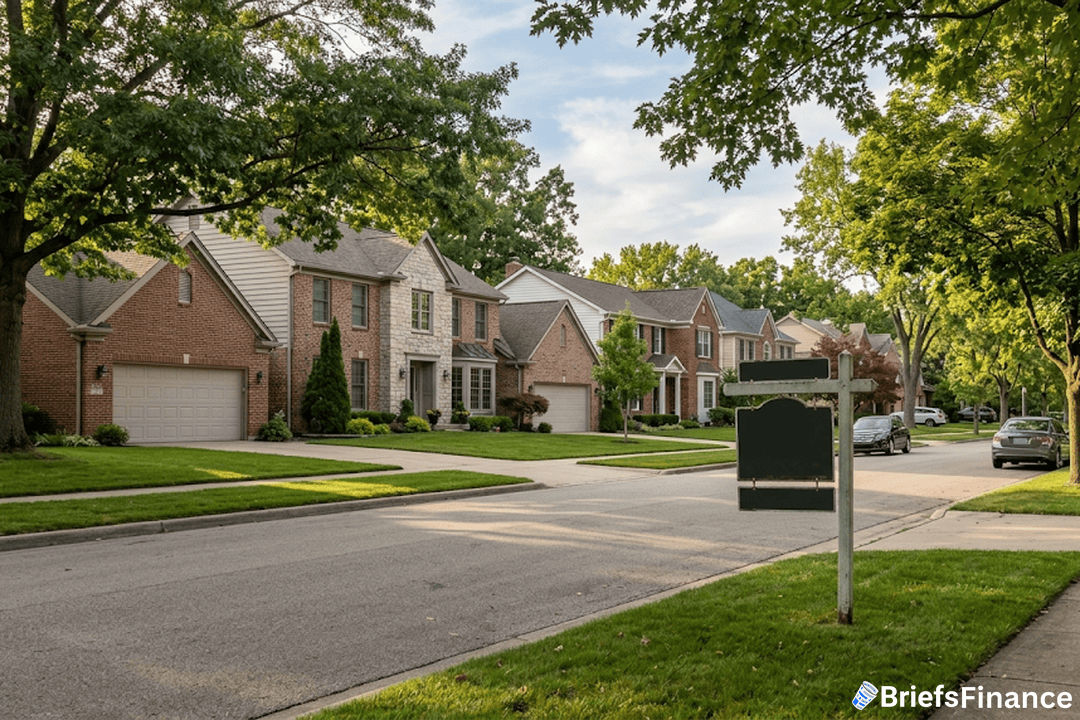
Sellers Are Accepting Lower Prices
After two years of watching sellers call the shots, buyers in most big cities finally have room to negotiate.
Redfin analyzed June sale-to-list data across America's 50 biggest metro areas. The sale-to-list ratio is simple: final sale price divided by asking price. When the price comes in below asking, buyers paid less than the seller wanted. In 38 out of those 50 markets, that's exactly what happened.
That doesn't mean homes are cheap. Prices are still at record highs.
Mortgage rates are behind much of the move. When rates go up, buyers can't borrow as much, so they can't pay as much. Redfin's chief economist, Daryl Fairweather, says buyers feel it immediately: "Buyers notice right away when mortgage rates go up because it's more expensive for them to buy a home."
Sellers, Fairweather says, are slower to adjust: "It takes a while for sellers to realize, 'Hey, maybe I need to price lower.'"
The recent shift follows a boom-bust arc in the housing market. During the pandemic, a mix of low mortgage rates and intense demand pushed far more homes above asking; now that rates have jumped, monthly payments are higher, buyer budgets are tighter and many sellers have had to recalibrate their price expectations.
Redfin's data shows how far the pendulum has swung: about 25% of U.S. homes are selling above asking, down from roughly 55% at the 2022 peak. That gives buyers more openings to negotiate, especially in areas where inventory is abundant.
Florida and Texas Lead the Discounts
The biggest markdowns are in Florida and Texas, with Pittsburgh the only other city in the top 10.
Get the free Always Be Buying eBook and learn the simple system for building wealth on any income
Here are the 10 largest average discounts in June:
- Miami: 4.66%
- West Palm Beach, Florida: 4.59%
- Houston: 3.53%
- Austin, Texas: 3.17%
- Tampa, Florida: 3.07%
- Dallas: 2.99%
- San Antonio: 2.84%
- Jacksonville, Florida: 2.76%
- Pittsburgh: 2.60%
- Orlando, Florida: 2.48%
Across much of the South, buyers typically paid 2% to 3% below list in June.
Why so many discounts there? A big reason is supply: the two states saw a wave of new home construction during the pandemic and in the years after, leaving shoppers with far more options. Insurance and property-tax costs have also climbed, which raises monthly ownership costs and shrinks the pool of buyers.
Not Every Market Is Cutting Prices
Some of the biggest markets are doing the opposite. San Francisco, New York and Boston all saw sellers average slightly above list price in June.
The exceptions come down to supply. In those cities, the number of homes for sale stays low and demand stays strong.
According to Bill Kowalczuk, a broker with Coldwell Banker Warburg in New York, "In neighborhoods where inventory remains limited and demand is strong, homes that are priced right are still selling quickly and often with multiple offers."
Sellers who bought near the 2022 peak have a different problem. They can't always cut the price much and still walk away with a profit after commissions and other costs.
What It Means for Buyers
How much leverage buyers have, however, varies by market and by property.
Not every listing will bend. Properties that have sat for weeks or already taken price cuts are more likely to allow negotiation, while fresh listings can still pull multiple offers.
There are other negotiating points besides price. Buyers can request help with closing expenses or credits for repairs, and cash offers are often seen as more likely to close.
The bottom line: prices are still at record highs and mortgage rates still sting. But in most big cities, buyers are no longer stuck paying whatever the seller asks.
Download the free Always Be Buying eBook and start putting your money to work today