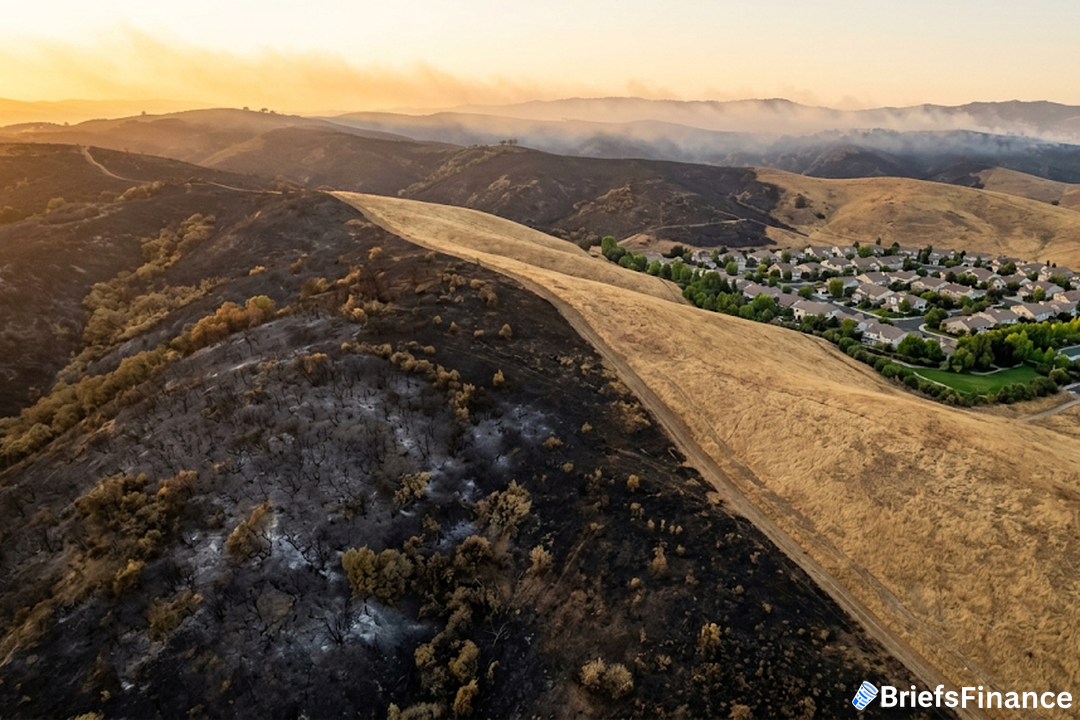
Wildfire-Driven Issuance Surges
Cat bonds are insurance-linked securities that transfer disaster risk to capital-market investors. Investor principal sits in a collateral account while the bond is outstanding. Investors lose money if a specified disaster occurs, but earn returns if it does not.
If a predefined disaster event occurs, the insurer can draw on those funds to pay claims; if no event triggers, investors receive their principal back with interest. That has turned cat bonds into a growing complement to traditional reinsurance, especially for risks too large or volatile for insurers to absorb on their own.
Investor confidence in wildfire risk models has also been increasing.
The boom in wildfire-linked bonds is happening alongside broader cat bond market growth. Most wildfire exposure so far has come through multi-peril bonds, but single-peril wildfire bonds are increasingly common.
The January 2025 fires around greater Los Angeles destroyed over 16,000 structures and drove insured losses to a record $40 billion. Recent years saw insurance carriers decline renewal on upward of a million at-risk wildfire policies, making the California FAIR Plan a significantly larger safety net. Its exposure jumped more than 50% in Los Angeles County alone from 2024 to 2025, and the plan issued its first cat bond last year.
Get the market news that matters in a five-minute read with Market Briefs, our free daily newsletter
Modeling Challenges and Investor Appetite
Modeling wildfire risk for cat bonds is especially difficult. Forecasting where a fire will go and how fast it will spread depends on detailed data about temperatures, vegetation, wind, and terrain. Wildfire is also one of the few disaster perils where actions like clearing dry brush early in the season can significantly change a bond's risk profile.
Dirk Schmelzer, a senior fund manager with Plenum Investments AG, said the peril has grown enough to be offered "on a standalone basis." Verisk and Moody's are among firms releasing updated wildfire models.
Acrisure Re said fire models have generally understated risk, but newer versions use fresher fire records and climate patterns. "From an insurance-linked-security perspective, the impact of better modeling is profound," Acrisure said in a report. "This outcome is feeding back into pricing: sponsors with good data and prudent structures are finding receptive investors, whereas poorly understood wildfire risks would still face a high cost of capital."
As wildfire losses climb, the market has expanded to cover a broader set of perils.
Europe Looks to Catch Up
California still dominates the market, but insurers and investors told Bloomberg that Europe will eventually have to look at transferring wildfire risk to private capital. Europe is warming faster than other regions, and its fires have become more frequent and destructive, reinforcing the case for private capital to take on the risk. European insurers say damage estimates for this season's fires are still premature. Will Bruce, who leads Aon Plc's climate risk consulting practice, said, "Europe's cat bond market still lags far behind the US."
"Whether a specific market develops around European wildfire risk will depend on a range of factors, including exposure growth, demand for protection, investor appetite and continued advances in modeling and analytics," he said.
"The key enabler is robust risk quantification," said Tyson Vickery, who arranges European placements at the global insurance brokerage Marsh. "Investors need confidence in the underlying hazard data and catastrophe models." He added that wildfire modeling in Europe is advancing, but "it is still less mature than in markets such as California."
Balz Grollimund, who leads catastrophe perils at Swiss Re, sees growing interest in capital markets for wildfire risk, but said "the absolute risk for the insurance industry is still small compared to global peak risks that are typically covered by cat bonds."
Climate projections point to hotter conditions ahead, so wildfire losses are expected to keep climbing and drive further use of cat bonds by insurers.
Join Market Briefs, our free daily newsletter, for a quick daily rundown of the markets