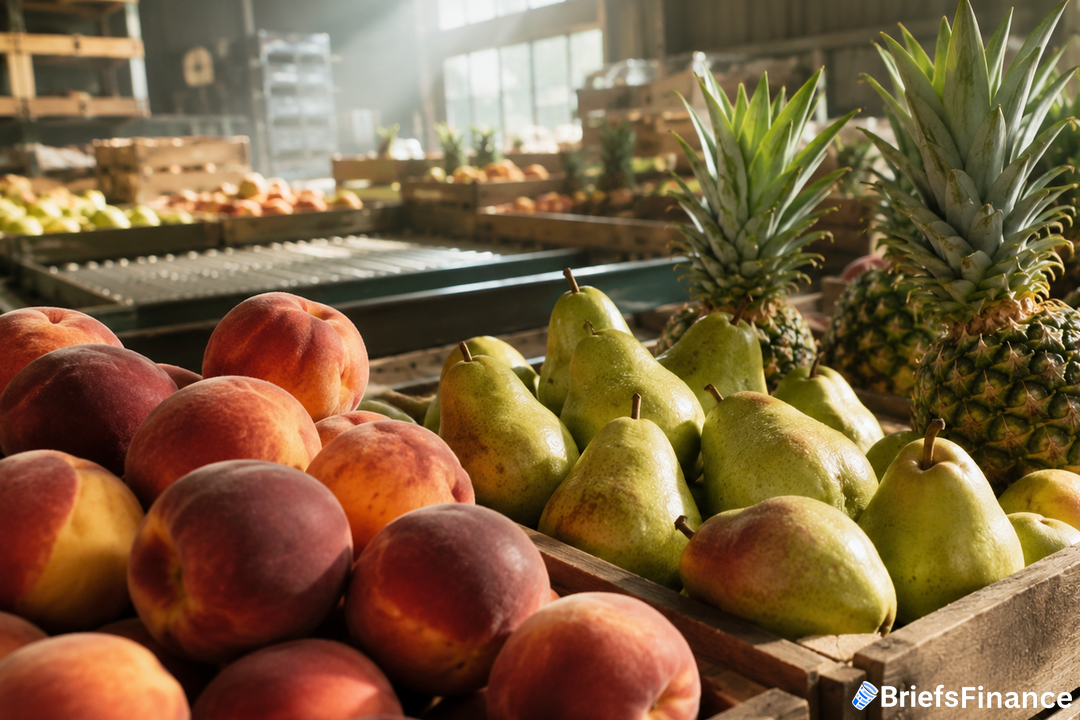
The merger between Fresh Del Monte Produce and Del Monte Foods, completed earlier this year, united two companies with a shared brand but separate ownership. Fresh Del Monte, a global producer of fresh fruits and vegetables, acquired the canned goods business of Del Monte Foods, creating a vertically integrated powerhouse. The combined entity now competes across both fresh and shelf-stable categories, a strategy that many analysts view as a competitive differentiator in the consolidating food industry.
The Numbers That Moved the Stock
Management now anticipates overall adjusted net sales growth between 13% and 15% for the full year, and executives project 2026 net sales for the canned foods division, Del Monte Foods, to reach $625 million, up from a prior forecast of $600 million.
Del Monte has faced elevated costs from higher fuel and fertilizer prices, but executives said Wednesday that the increases will be less severe than initially feared. Like many agricultural firms, the company has been grappling with rising input costs, but the revised forecast signals that some of these pressures are easing, giving investors greater confidence in the path ahead.
Get the market news that matters in a five-minute read with Market Briefs, our free daily newsletter
Prior to today's increase, Del Monte stock had fallen 19% this year, a stark contrast to the 21% rise in the S&P 500 Consumer Staples Index over the same period.
Background on the Integration
Earlier this year, Del Monte completed the purchase of Del Monte Foods' assets, merging two formerly independent companies. Fresh Del Monte, a global producer of fresh fruits and vegetables, acquired the canned goods business of Del Monte Foods, creating a vertically integrated powerhouse. The combined entity now competes across both fresh and shelf-stable categories, a strategy that many analysts view as a competitive differentiator in the consolidating food industry.
While the integration process has incurred short-term costs that weighed on earnings, management expects the combined operations to generate long-term savings through supply chain efficiencies and cross-selling opportunities. The company is also leveraging its expanded scale to negotiate better pricing with retailers and distributors.
Combining two distinct corporate cultures and supply chains required significant upfront investment, but executives remain confident that the long-term benefits will outweigh the transition expenses. The company's ability to now offer both fresh and canned products under one roof gives it a unique competitive advantage in retail negotiations, as grocers increasingly seek one-stop suppliers.
What Del Monte Is Betting On Next
Based in Coral Gables, Florida, the company has moved beyond its traditional produce business by offering a broader array of fresh items, including a premium pink pineapple variety. CFO Monica Vicente noted that the firm is converting some former banana plantations to cultivate more pineapples for these higher-margin products and plans to launch new packaged goods in the coming months.
CEO Mohammad Abu-Ghazaleh said during a Bloomberg Television interview last month, "We are exploring ways to use our products as components in pharmaceuticals and cosmetics." These initiatives highlight Del Monte's push to diversify its revenue sources and lessen its dependence on traditional commodity produce.
Join Market Briefs, our free daily newsletter, for a quick daily rundown of the markets