What the Numbers Show
The U.S. economy grew at a steady 2% clip in the first quarter of 2026, and businesses are spending heavily on AI. But the housing market is heading the other direction.
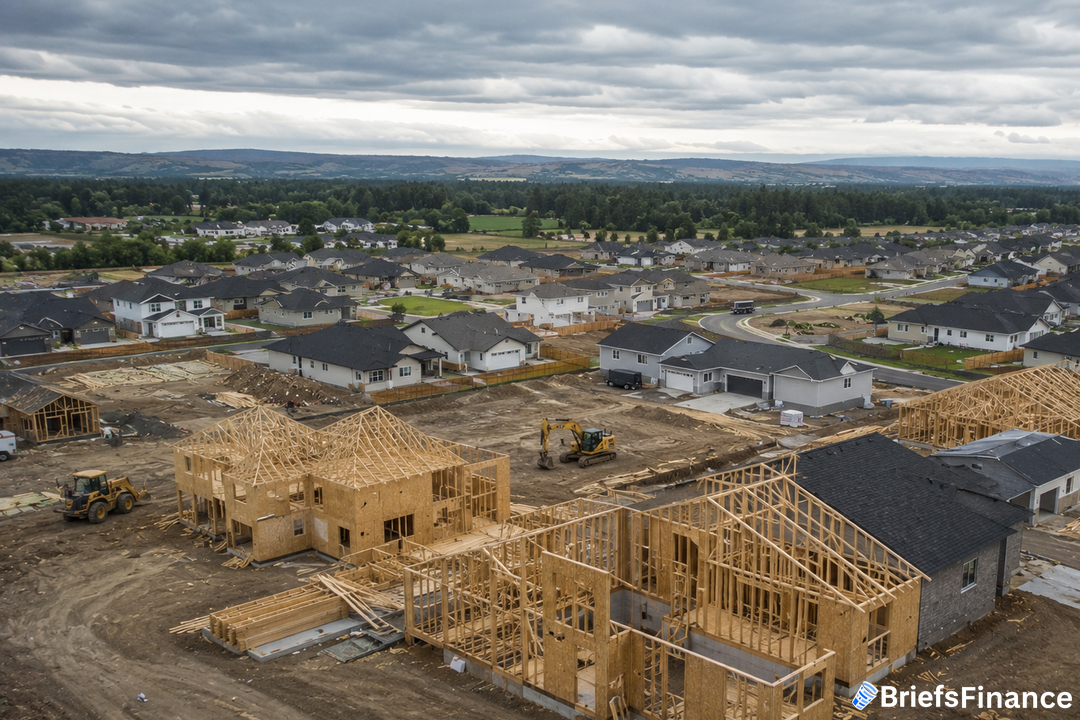
The contrast is sharp enough that Fitch Ratings analysts say the housing market has moved from stagnant to actually shrinking.
Olu Sonola, who directs U.S. economic research at Fitch Ratings, commented: "Once you look under the hood, even if the aggregate numbers are OK, there are pockets of weakness."
He noted that the gap between a healthy GDP and a struggling housing sector "doesn't happen frequently." Business investment, led by AI, is masking just how weak the residential side really is. As Sonola put it, "AI investment has been the savior, if you're thinking about investments as a whole, that has masked the very significant weakness we've seen on the resident front."
Get the market news that matters in a five-minute read with Market Briefs, our free daily newsletter
Why Housing Is Stuck
The main culprit is not a mystery. Mortgage rates are roughly double what they were during the pandemic. For the first two months of 2026, the average rate on a 30-year home loan sat around 6%. Then it crept higher - over 6.5% for the ten weeks leading up to this report.
On top of that, home prices are at all-time highs, and the cost of owning a home keeps climbing. Between 30% and 50% of a typical monthly mortgage payment now goes to property insurance and property taxes. That is a huge chunk of cash that used to go toward the loan itself.
"Housing has been weak for a while," Sonola said. "With much higher mortgage rates, it's not a surprise that housing isn't doing well."
Most current homeowners are locked into much cheaper loans. Two-thirds of outstanding mortgages have a rate of 5% or lower, and half have a rate under 4%. That creates a powerful incentive to stay put, which keeps inventory tight and prices high for anyone trying to buy.
The Iran war that started in late February 2026 is making things worse. It has pushed inflation higher, eating into what people can actually buy with their paychecks. Consumer spending growth has slowed from 2.5% last year to just 1.7% so far in 2026. Consumer sentiment and confidence "remain very weak," Sonola said.
The labor market is still stable - the unemployment rate has hovered around 4% for most of the past year, a sign of labor market stability.
Ryan O'Loughlin said, "Mortgage rates may not land in the 5% range for a number of years." That means the lock-in effect - homeowners refusing to sell and give up their low rate - could persist for a while.
One area analysts are tracking closely is rental properties financed with DSCR loans - debt-service coverage ratio loans that rely on rental income rather than personal income. With rents rising and owners struggling to pass those increases to tenants, some rentals are "not in as favorable a position as they were a few years ago," according to O'Loughlin. That said, loan performance is "still strong to date."
Join Market Briefs, our free daily newsletter, for a quick daily rundown of the markets