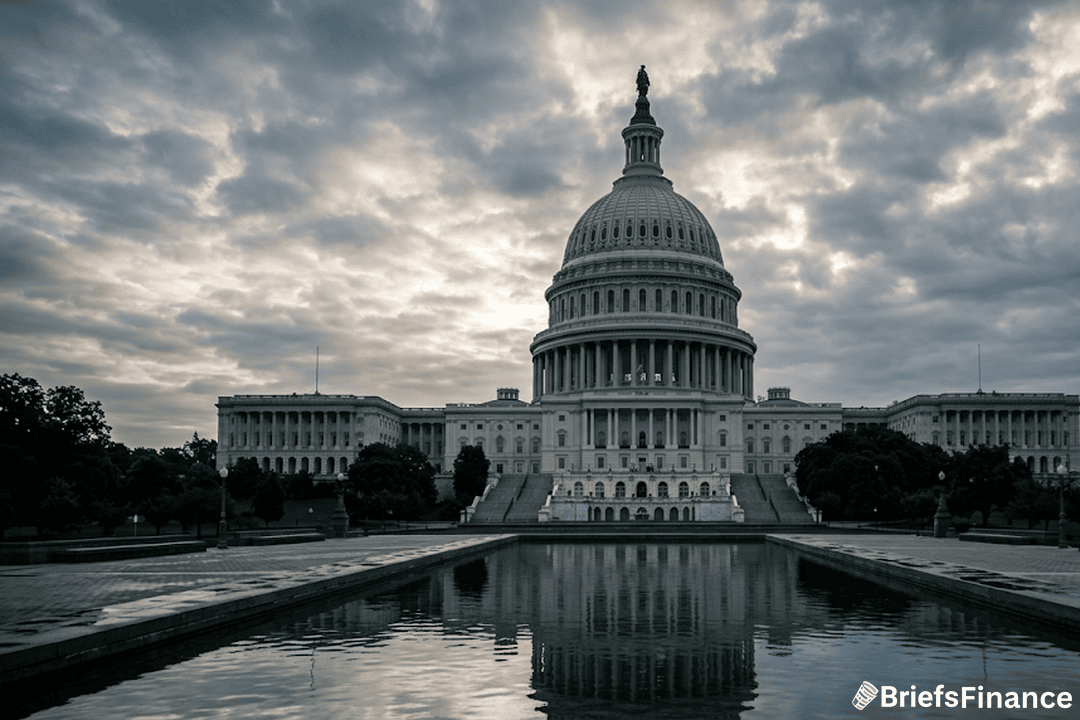
A Public Plea for Targeted Rules
A group of big names in artificial intelligence is asking the government to pump the brakes.
On July 24, a group of major AI firms - Hugging Face, Meta, Microsoft, Mistral, Nvidia - plus the software platform Replit sent an open letter to U.S. policymakers. Their message: do not ban Chinese open-weight AI models outright.
Open-weight models are AI systems where the underlying code and training data are publicly available. That openness lets developers study, modify, and build on them. It also allows a technique called distillation, where one model learns from another. The signers say a broad ban would hurt both.
Amjad Masad, CEO of Replit, put it bluntly: "I think banning Chinese open models is as good as banning open models in general."
Get the market news that matters in a five-minute read with Market Briefs, our free daily newsletter
The letter also made a security argument. "In a world where cybersecurity attackers use advanced AI, defenders need access to models with comparable capabilities so they can detect, simulate, and respond to emerging threats," the letter stated.
The Fight Over Chinese AI and Open Access
So why is the U.S. even considering restrictions? The short answer: intellectual property theft.
According to the White House, Moonshot AI used distillation on Anthropic's Fable model to develop its new Kimi K3 system. Another Chinese firm, Thinking Machines Lab, trained its new open model Inkling with the help of Moonshot's Kimi 2.5. And Z.ai, another Chinese AI company, released an open-weight model, GLM 5.2, that Hugging Face later used to defend itself against an attack on a Hugging Face repository.
The pattern raised red flags in Washington. Reports indicate that officials are discussing both a ban on Chinese open-weight models and possible penalties directed at AI firms based in China.
The open letter tries to steer them toward a narrower approach - targeted legal and commercial frameworks instead of a blanket prohibition. Not everyone in the industry agrees. OpenAI and Anthropic, both heavy hitters, did not sign the letter. Google DeepMind and SpaceX also stayed off the list.
Hugging Face is a hub for open-weight models. Their collective plea underscores the delicate balance between innovation and security in a rapidly evolving field. These models empower startups and independent developers to experiment without massive compute budgets, which many argue fuels global AI progress.
Distillation, the technique at the center of the controversy, allows one model to learn from another. The letter urges policymakers "not to conflate legitimate model-development techniques with misappropriation" and to address unlawful extraction through "targeted legal and commercial frameworks rather than sweeping restrictions on techniques." The letter further cautions that reactions to Chinese distillation should not lead to wider curbs on open-weight AI or standard methods such as distillation.
Join Market Briefs, our free daily newsletter, for a quick daily rundown of the markets