The Data Center That Runs Without Nvidia
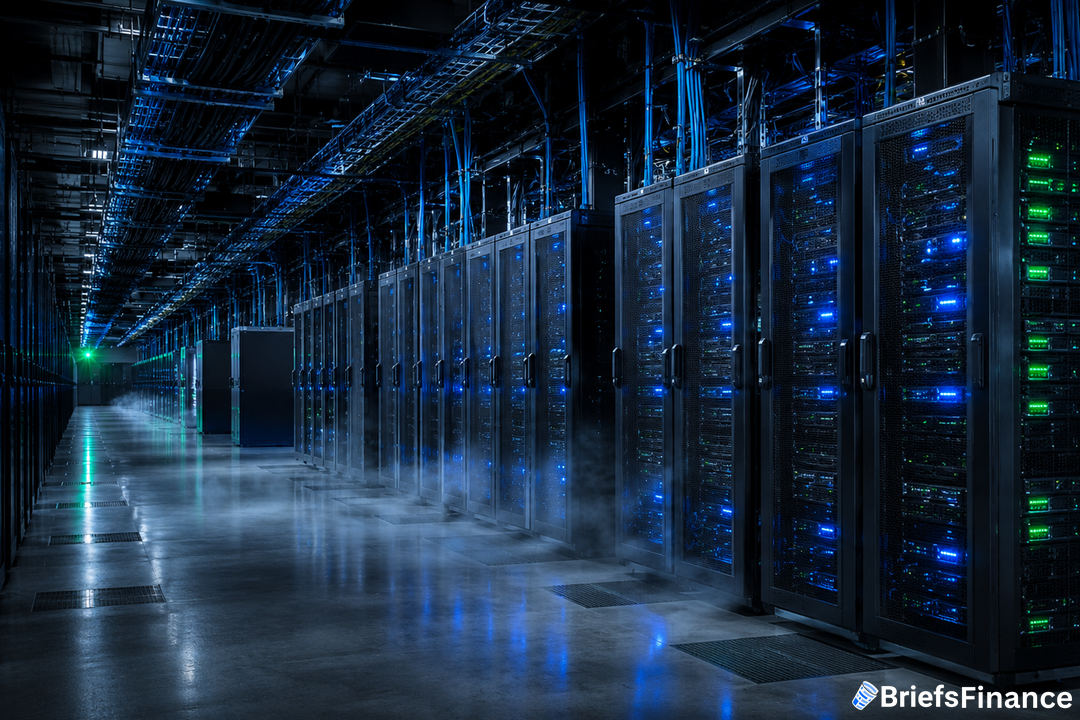
Z.AI - the company formerly known as Zhipu - finished building a data center that uses 1 gigawatt of power, enough to light up about 750,000 homes at once. Every computer chip in the building was made in China.
That matters because Beijing has been working to replace restricted Nvidia silicon. Z.AI's new center is a big step in those efforts.
The push for domestic chips comes as the U.S. tightens export controls on advanced semiconductors, forcing Chinese firms to accelerate their own chip development. Inside the facility, the company houses several major processing hubs, each built from more than ten thousand individual chips. Those clusters are designed to train the company's GLM family of AI models. The project also helps address a broader problem: Chinese AI labs have been short on computing power.
Get the market news that matters in a five-minute read with Market Briefs, our free daily newsletter
The activation of this data center comes amid escalating U.S. restrictions on advanced chip exports to China, which have pushed Beijing to prioritize self‑sufficiency in semiconductors. Chinese AI labs historically relied heavily on Nvidia's GPUs, but with limited access to the latest models, firms like Z.AI are turning to domestic alternatives such as Huawei's Ascend chips. Although domestic accelerators trail behind in performance, the massive size of Z.AI's computational groups - each comprising over ten thousand processors - underscores its resolve to develop extensive AI infrastructure with locally sourced technology.
Why China Is Betting Big on Homegrown Chips
Huawei Technologies Co. leads the design of domestic AI accelerators, competing with local firms including Alibaba Group Holding Ltd. and Cambricon Technologies Corp. to approach Nvidia's performance level. Currently, cloud service providers including Alibaba and China Telecom Corp. are recognized as the largest constructors of computing infrastructure. Z.AI's main rival is Beijing‑based Moonshot, which stunned the world on Friday by unveiling its Kimi K3 model that can compete with top‑tier models from OpenAI and Anthropic PBC. On Sunday, Moonshot temporarily halted new subscriptions, explaining in a social media post that the move was intended to "prioritize compute for current members."
The broader landscape shows Chinese AI firms racing to secure domestic chip supply as U.S. sanctions tighten. With Z.AI's new facility, the company positions itself as a leading enterprise AI provider, while the government's 2 trillion yuan investment signals long-term commitment to closing the performance gap with Nvidia's technology.
What It Means
Zhipu secured billions of dollars through an initial public offering in Hong Kong followed by an additional share sale.
The completion of this data center is a key achievement for Z.AI as it aims to stand out as an enterprise AI provider, often compared to Anthropic.
Join Market Briefs, our free daily newsletter, for a quick daily rundown of the markets