A Bad Week Gets Worse
On Thursday, a scheduled test flight of the Starship V3 was called off just before launch. Elon Musk posted on X that "some of the engines didn't start, triggering an automatic launch abort." The company started offloading propellant and announced plans to try again in a few days.
On Friday, July 17, SpaceX stock fell 5.43% in a single day. That marked six straight losing sessions for the aerospace company, which trades under the ticker SPCX.
The steep sell-off highlights the high stakes surrounding SpaceX's Starship program, which is central to its long-term revenue goals. Since its record-breaking IPO and rapid inclusion in the Nasdaq-100, the stock has experienced heightened volatility, and the aborted launch has reinforced investor caution.
Get the market news that matters in a five-minute read with Market Briefs, our free daily newsletter
SpaceX's reliance on Starship for its future ambitions cannot be overstated. The massive rocket is designed to carry payloads to deep space, including NASA's Artemis missions and the company's Starlink satellite deployment plans. With the IPO raising a record $85.7 billion, investors have closely tied the stock's valuation to successful Starship milestones.
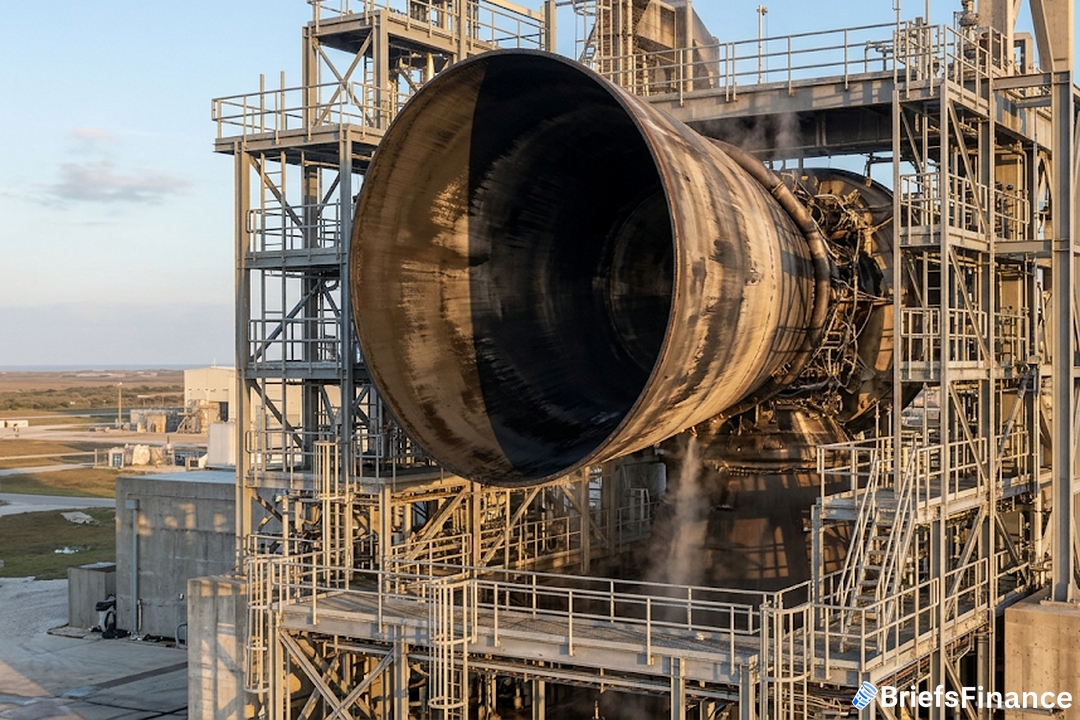
The recent aborted launch, combined with previous engine issues, has amplified scrutiny on the Raptor engine's reliability. Markets now await the next test flight, which will serve as a critical indicator of the company's ability to deliver on its ambitious timetable.
This is not the first time the Starship program has hit a snag. In a May test, the Starship's upper stage was sent on a path over the Indian Ocean, and the Super Heavy booster nearly missed its target splashdown in the Gulf of Mexico because only 28 of its 33 Raptor engines relit successfully, with five failing. The FAA launched a probe into the incident and by Monday had given the company permission to resume test flights.
A Record-Setting IPO Under a Microscope
The company raised a record $85.7 billion in its initial public offering back in June 2026, with shares priced at $135 each. Just 15 trading days after its IPO, SpaceX was fast-tracked onto the Nasdaq-100 index.
The Thursday launch window was scheduled as SpaceX's inaugural Starship V3 test flight following its massive IPO.
The next launch attempt is expected early next week.
Investor confidence in SpaceX remains closely tied to successful Starship milestones because the vehicle is designed for deep-space missions and satellite deployment contracts that underpin future revenue. Any delay or failure in the testing schedule can trigger sharp sell-offs, as seen this week. The aborted launch also rekindles concerns about the reliability of the Raptor engine, a critical component that has experienced issues in previous test flights. With the company now replacing two faulty engines, markets will monitor the upcoming attempt for signs of progress.
Join Market Briefs, our free daily newsletter, for a quick daily rundown of the markets