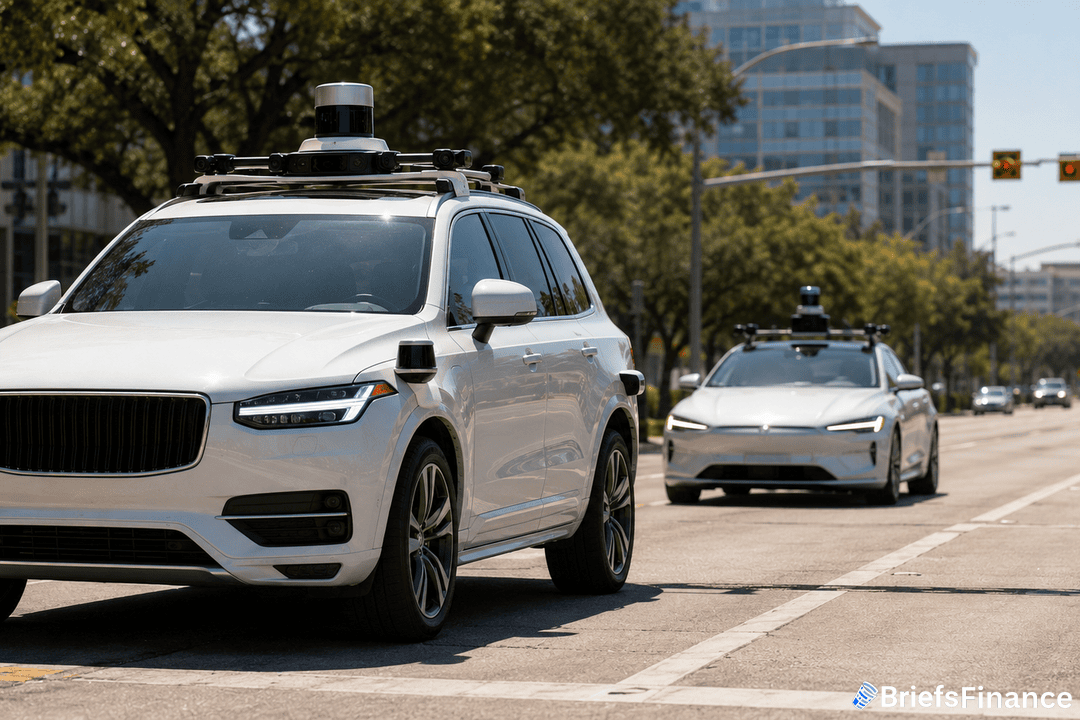
Everyone argues about who is winning the robotaxi race. Texas just turned on the lights and counted.
The answer, for now, isn't close. Waymo has 577 self-driving cars signed up in the state. Tesla has 42.
The First Real Headcount
A new Texas law took effect on May 28. It makes any firm testing or running self-driving cars there sign up its fleet and share basic safety info.
That gave the industry something it never had: a real public scoreboard, kept by the state.
Waymo, owned by Google parent Alphabet, sits on top with 577 cars.
Avride comes next with 317, then Nuro with 47. Tesla launched its own robotaxi service in Austin last summer, yet it trails the group with 42.
Every morning, Market Briefs explains what moves like this mean for your money in five minutes, plus a free investing class when you join.
Why The Count Doesn't Tell The Whole Story
A fleet number is a bit like a gym sign-up count. It tells you who joined, not who shows up.
Some of these firms don't run paid rides yet. And the data doesn't track how many cars hit the road on a given day.
Waymo paused service in parts of Texas this month after its cars struggled around flooding. So the lead is real, but it's a snapshot, not a finish line.
Tesla hasn't stood still, to be fair. It says it has grown its robotaxi service from Austin into Dallas and Houston.
Waymo has spread out too, reaching Dallas, Houston, and San Antonio since it launched in Austin in March 2025.
A few smaller names show up as well. Volkswagen's MOIA unit has 12 self-driving microbuses on the list.
The truck side tells its own story. The law counts self-driving trucks, and Aurora leads there with 91 big rigs after it started driverless freight runs last year.
Kodiak has 33 of these trucks, Waabi has 13, and Gatik, which runs mid-size trucks, has 64.
What the numbers don't show is profit. A big fleet costs a lot to run, and most of these firms aren't charging for rides yet.
So the count tells you who is on the road, not who is making money.
Worth Noting
The gap between Waymo and the rest is the story today. The bigger story is that we can finally measure it, because the numbers are public now.
Why does that matter for investors? Robotaxis have run on big claims for years.
Now there's a hard count, and it's checked by the state. That makes it easier to see real progress and harder to hide a slow start.
Over time, this same scoreboard will show who is really growing and who is only talking. Texas is just the first big state to make these firms show their cards.
If others copy the rule, the whole race gets easier to track.
If you want this kind of breakdown every weekday, join the readers getting Market Briefs. A 45-minute investing course comes with it, free.