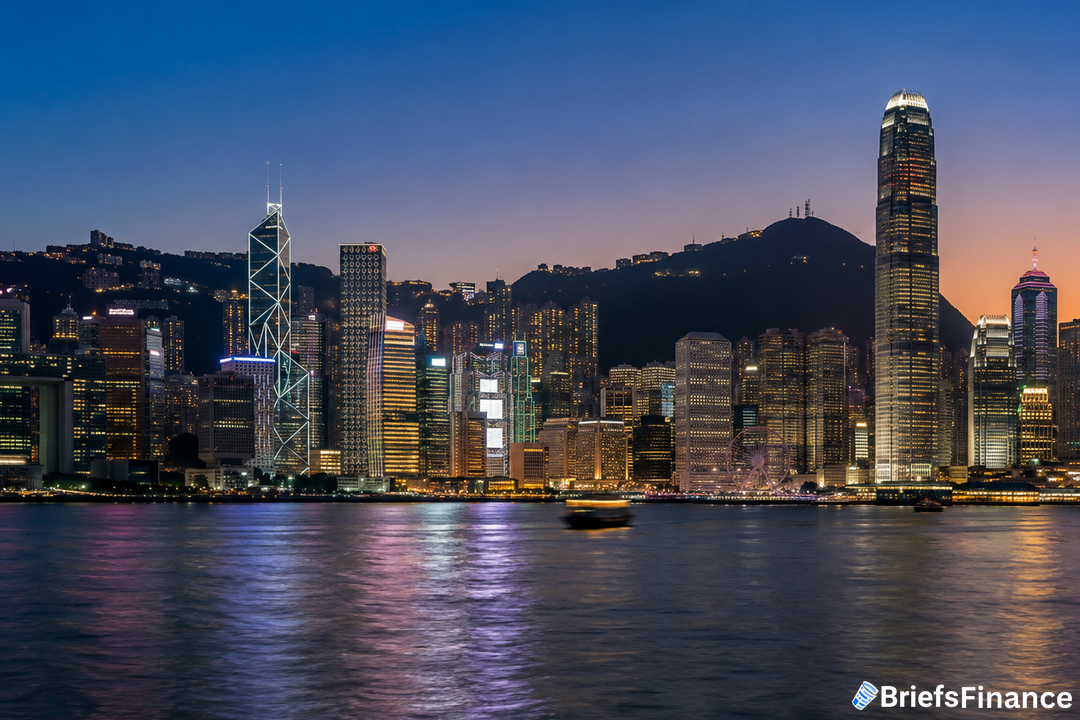
The United States reinstated special treatment for Hong Kong that had been withdrawn by former President Donald Trump during his initial term, a decision that drew commendation from Beijing, characterizing it as a significant move to enhance relations between the two nations.
In a Friday announcement, the U.S. Treasury's OFAC stated that the 2020 executive order on Hong Kong normalization had expired. The agency noted that it is currently reassessing its Hong Kong sanctions guidelines and intends to release updates shortly.
The executive order, enacted by Trump soon after China's imposition of a national security law on Hong Kong, had served as the foundation for sanctions against then-Chief Executive Carrie Lam and others. Among its provisions were the removal of certain privileges previously granted to Hong Kong, including relaxed export licensing rules and special treatment for Hong Kong passport holders.
Get the market news that matters in a five-minute read with Market Briefs, our free daily newsletter
"Maintaining Hong Kong's prosperity and stability serves the common interests of both China and the US," China's Commerce Ministry conveyed those sentiments in a Friday statement. The statement called on Washington to acknowledge China's sovereignty and legal framework in Hong Kong, to revive and deepen normal economic and trade links with the city, and to contribute to a "constructive and strategically stable" China-U.S. relationship.
The decision to let the 2020 measures expire comes after a series of actions by President Xi Jinping that seemed to ease tensions ahead of his anticipated U.S. trip, including the release of a Christian pastor at Trump's behest.
In contrast, Trump's Thursday allegation that China interfered in U.S. elections risked worsening relations, something Beijing denounced as "malicious smears." The Treasury's Friday announcement further clarified that the lapse of the 2020 order does not affect a 2019 law requiring annual evaluations of Hong Kong's unique trade privileges, nor does it alter a 2020 statute allowing future sanctions.
These laws remain in force, meaning Washington retains the ability to reassess Hong Kong's preferential trade treatment annually and to impose additional sanctions if deemed necessary. The 2019 Hong Kong Human Rights and Democracy Act, for example, requires the Secretary of State to certify whether Hong Kong maintains sufficient autonomy to warrant its special status. The expiration of the executive order thus primarily removes the specific sanctions targeting Hong Kong officials that Trump had imposed, while leaving the broader legal framework intact.
During bilateral trade discussions in Madrid last year, the U.S. made commitments on several matters, including Hong Kong, according to the Chinese statement. Beijing's Commerce Ministry stated that permitting the order to expire marked a significant advance in carrying out the agreement both countries had reached.
A separate statement from the Hong Kong government likewise applauded the development and pressed Washington to reestablish and enhance regular economic and trade relations with the city.
Join Market Briefs, our free daily newsletter, for a quick daily rundown of the markets