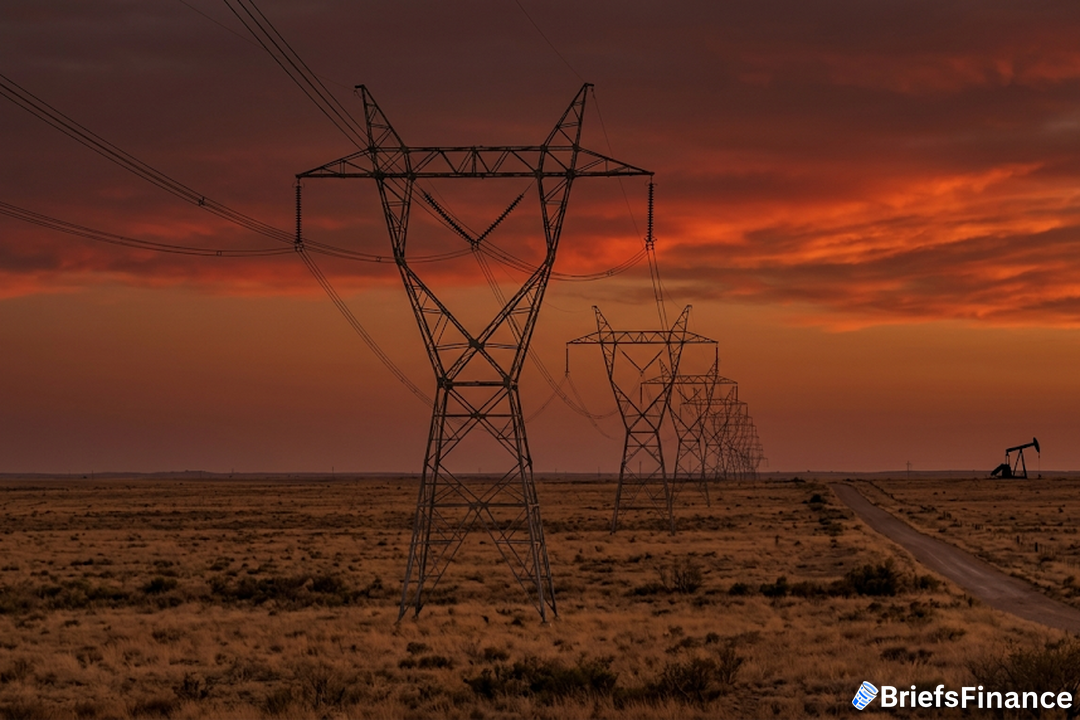
Why a Jump in Oil Prices Isn't Hitting Your Electric Bill
Oil prices are climbing. The reason is no mystery - the US and Israel intensified military strikes against Iran the same week, and markets tend to react badly when a major oil-producing region catches fire.
You might think that kind of jump would be a problem for the whole electricity system. It makes sense on the surface - oil prices go up, power gets more expensive, your monthly bill follows.
But LS Power CEO Paul Segal says the connection is mostly broken.
The Natural Gas Switch That Changed Everything
Here is the shift most people missed. For decades, oil and electricity were tied together. When global crude prices spiked, you felt it in your lights and your appliances.
Get the market news that matters in a five-minute read with Market Briefs, our free daily newsletter
That link broke when the shale boom took off. The US now produces enormous amounts of natural gas from domestic fields, and power plants switched over in a big way. Natural gas became the go-to fuel for generating electricity, and oil became an afterthought for the power grid.
Because natural gas supplies are still plentiful and prices have stayed low, the spike in oil prices does not travel through the system the way it once did. Your electric bill is largely disconnected from what is happening in the Middle East, at least for now.
Why does it matter? When a geopolitical crisis drives up oil prices, most people brace for higher costs across the board. But one of the biggest monthly expenses for American households - electricity - has a buffer that did not exist in previous decades.
What This Tells Us About the Energy Transition
Segal also made a point that points forward. "We are in a moment where we need more of every type of technology," he said.
That is worth sitting with for a second. The head of a major power company is saying the US needs everything - more natural gas, more renewables, more nuclear, more grid infrastructure. Not either-or choices.
The reason is simple. Electricity demand is growing. Data centers, electric vehicles, and a reshoring of manufacturing are all pulling more power from the grid. The system needs to expand, and it needs to do so while also shifting toward cleaner sources.
For investors, the LS Power insight matters because it shows where the real risk is and where it is not. The Iran conflict is real and oil prices are reacting. But if you are worried about your portfolio's exposure to higher oil prices, it is worth checking whether the companies you own actually depend on oil for their operations.
The power sector looks like a relatively safe corner of the market during this particular shock. Oil prices might keep climbing or they might fall back. Either way, the US electricity grid is running on a different fuel now. That does not solve every problem, but it does mean one less thing to worry about when the headlines get scary.
Join Market Briefs, our free daily newsletter, for a quick daily rundown of the markets