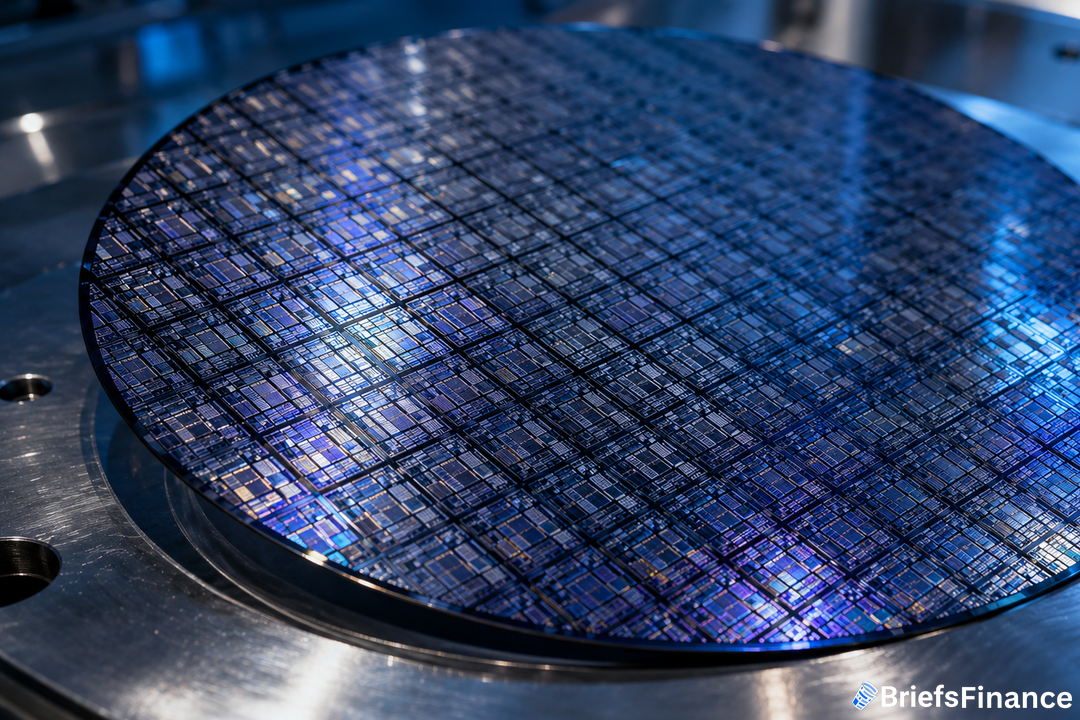
Chip stocks had a stunning run. From its March low to its late June peak, the Philadelphia Semiconductor Index, known as the SOX, soared 105%. The rally was built on a simple idea - AI needs chips, lots of them, and the companies that make them were going to cash in.
Then it all turned around.
On Friday, July 17, 2026, the index shed as much as 5.7% during the day before ending down 1.6%. Despite the drop, the index has still gained 65% year-to-date.
The selloff was fueled by fresh worries about the AI sector's viability and questions about whether major cloud companies can sustain investments amounting to trillions of dollars in infrastructure spending. Additionally, market participants are dealing with high stock valuations and the concern that prices may have climbed excessively quickly.
Get the market news that matters in a five-minute read with Market Briefs, our free daily newsletter
Samsung Electronics Co. saw a sharp drop in early July following its announcement of a 19-fold profit jump for the quarter, yet that growth failed to meet investor expectations after the stock had rallied 150% earlier in the year.
"I think it is obvious that the price momentum has outpaced fundamental momentum, even though fundamentals are still positive and still moving in a positive direction," said James Abate, who heads fundamental strategies as a managing director at Horizon Investments. He added that the chip index "basically had a parabolic move" prior to the reversal.
"Even though fundamentals are strong, expectations got too far ahead of where the fundamentals are," "said Muneeb Muzaffar, senior portfolio manager at Bold Wealth Partners". "Multiples were pricing in a blue-sky scenario, and that led to the question of, was the best part of the story already priced in? What are people willing to pay for chip earnings, and is there a chance those expectations are drawn back?"
Intel Corp., Marvell Technology Inc., and ARM Holdings Plc have each seen their shares drop more than 30% from their highest points. Micron Technology Inc. stock is down 30% from its high, and Sandisk Corp. and Western Digital Corp. have both suffered drops exceeding 35%. Taiwan Semiconductor Manufacturing Co. has recorded seven consecutive daily declines, its most extended losing streak since July 2022, with an 8.8% total loss during that period.
"The market does need to become more comfortable with the ROI for hyperscalers, but as that spending gets justified, they will continue to spend, and then chip companies will make money," Muzaffar said. "But the picture right now is a little complicated, when you lay in valuations and sentiment and flows on top of the positive fundamental picture."
Abate advised market participants to stay calm during the selloff, noting that the index had only fallen back to May levels. "Even if we're down 20%, we're only back to where we were in May, so let's not go crazy," he said.
Join Market Briefs, our free daily newsletter, for a quick daily rundown of the markets