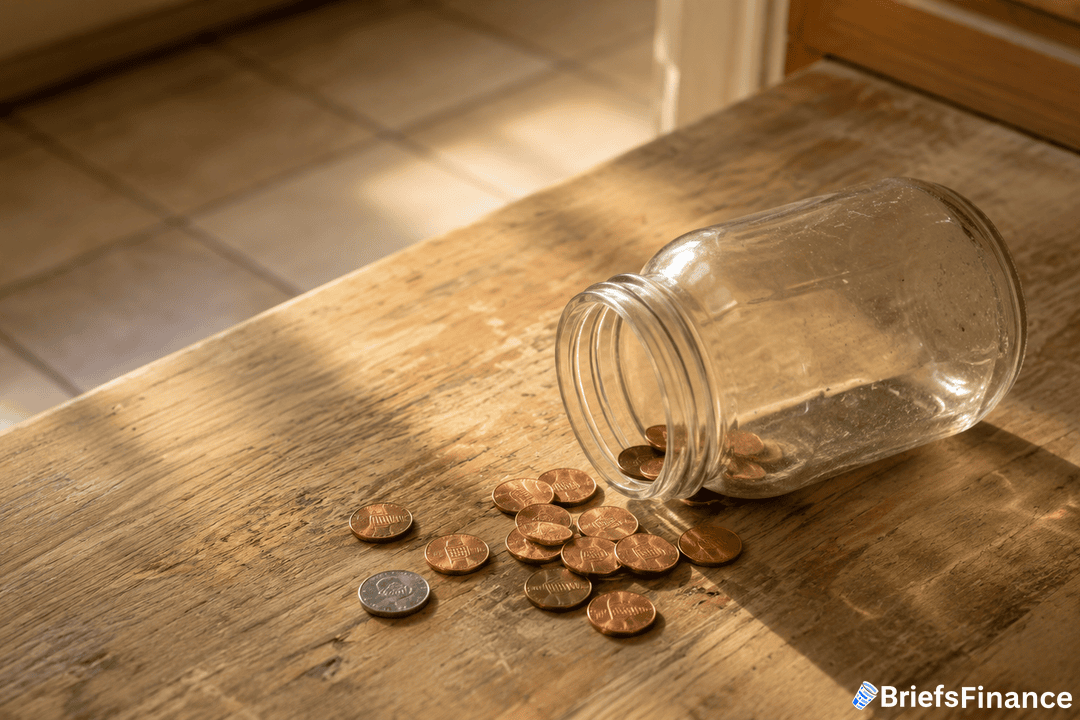
Americans aren't saving anymore - they're borrowing to keep up.
The personal savings rate just dropped to 2.6% in April, almost the lowest reading in 65 years. The only time it dipped below that mark recently was June 2022, when pandemic stimulus cash had Americans spending freely. This time, the cushion is gone.
Paychecks Aren't Keeping Up
Inflation rose 3.8% from a year ago, the highest level since May 2023, while wages grew only 3.6%.
That gap looks small on paper, but it lands hard in basics like gas, electricity, groceries, and healthcare - which are the items investors can't easily skip.
The national average for gas now sits at $4.43 a gallon, putting a steady drain on whatever money might have gone into savings.
The reaction: Heather Long, chief economist at Navy Federal Credit Union, told CNBC she thought the 2.6% reading "was a typo at first," noting that outside of the 2022 spending surge, the savings rate has almost never been that low in 65 years.
She added that even with recent tax cuts, paychecks aren't keeping up - and the squeeze isn't just at the pump but across electricity, healthcare, and food.
Every morning, Market Briefs breaks down what shifts like this mean for your portfolio in five minutes - plus a free investing masterclass when you sign up.
Credit Cards Are Filling The Gap
Here's the part investors should watch: 37% of Americans say they'll lean on a credit card, a Buy Now Pay Later loan, or another loan to cover at least some bills this month, according to a NerdWallet survey of 2,072 U.S. adults.
The pressure isn't only hitting lower-income households, with 35% of people earning $100,000 or more saying the same thing.
The borrowing isn't stopping at credit cards either. Fidelity says 19.2% of workers now have an outstanding 401(k) loan, up from 18.8% a year ago, with the share taking new loans or hardship withdrawals climbing alongside it.
When investors start raiding retirement accounts to cover monthly bills, the strain on household budgets becomes hard to ignore.
That backdrop is part of why steps like budgeting on autopilot and cutting monthly expenses are pulling more reader attention this year.
What To Watch
The setup: Long said consumers have enough cash for now, with tax refunds carrying many households through spring.
She warned that they "will have to belt-tighten later this year" once those refunds are spent and no fresh income boost is coming.
That puts thinner savings, more debt, and rising fixed costs all landing at once in the back half of 2026.
A weaker consumer is the slowest-moving story in finance until it isn't.
If you want this kind of read every morning, join 350,000+ investors reading Market Briefs and grab the 45-minute investing course as a bonus.