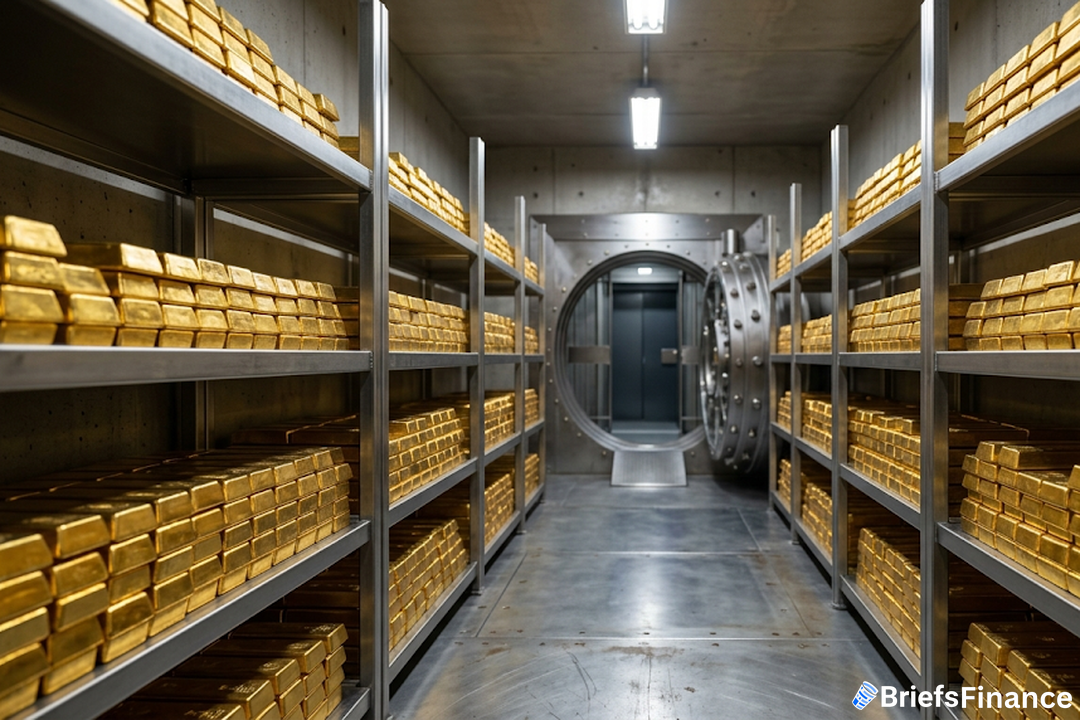
A Growing Gold Hoard
Tether's gold purchase in the three months that ended in June extended a lengthy buying streak and left Tether as the largest known gold holder outside banks and governments.
Gold prices fell over that stretch. Bullion slid as the Iran War's inflationary effects pushed bond yields higher, a headwind for gold because it pays no interest.
How Tether Makes Money
Tether has roughly $185 billion of USDT in circulation. Its business model is straightforward: customers hand dollars to Tether to receive USDT, and those dollars are invested in Treasuries, gold, and other holdings.
Get the market news that matters in a five-minute read with Market Briefs, our free daily newsletter
Tether was one of the biggest standalone bullion buyers for more than a year. But buying slowed sharply at the start of the year: Tether added just 6 tons in the first quarter, after purchasing more than 21 tons in the last three months of 2025. New USDT supply also helped drive the second-quarter rebound, with token issuance increasing by close to $500 million.
Profit and Gold Lending
Late last year, Tether recruited a pair of senior precious-metals traders away from HSBC Holdings Plc and said it wanted to build "the best trading floor for gold in the world." The two traders departed within a few months.
Tether also has an ownership stake in Gold.com, which buys and sells precious metals in the US, and the two companies have signed storage and trading agreements. It has also begun lending out a portion of its gold via Gold.com: the dealer's leasing program has a $100 million minimum, and outstanding leases plus customer advances totaled $363 million as of March 31.
Background and Reserve Disclosures
Tether's reserve disclosures come every quarter and give outsiders one of the few detailed views of how the stablecoin is backed. The attestation covers assets such as Treasuries and gold and is meant to show that the tokens in circulation are matched by holdings the company controls. That mix can generate income through lending, as Tether is now doing with part of its gold via Gold.com, but it also carries price risk, as the second-quarter decline demonstrated.
Because these disclosures are quarterly snapshots, they capture the value of Tether's reserves at one moment rather than over time. A drop in bullion prices can reduce the value of the reported holdings, and the second-quarter decline showed how that price risk shows up in the reserve mix.
Why It Matters
These disclosures provide a snapshot of Tether's reserve mix. For investors, the mix matters because it shows how much of USDT's backing sits in volatile assets like gold rather than in cash or Treasuries. The quarterly snapshot makes that allocation visible, even though it does not remove the price risk.
Join Market Briefs, our free daily newsletter, for a quick daily rundown of the markets