Iran Strikes U.S. Bases
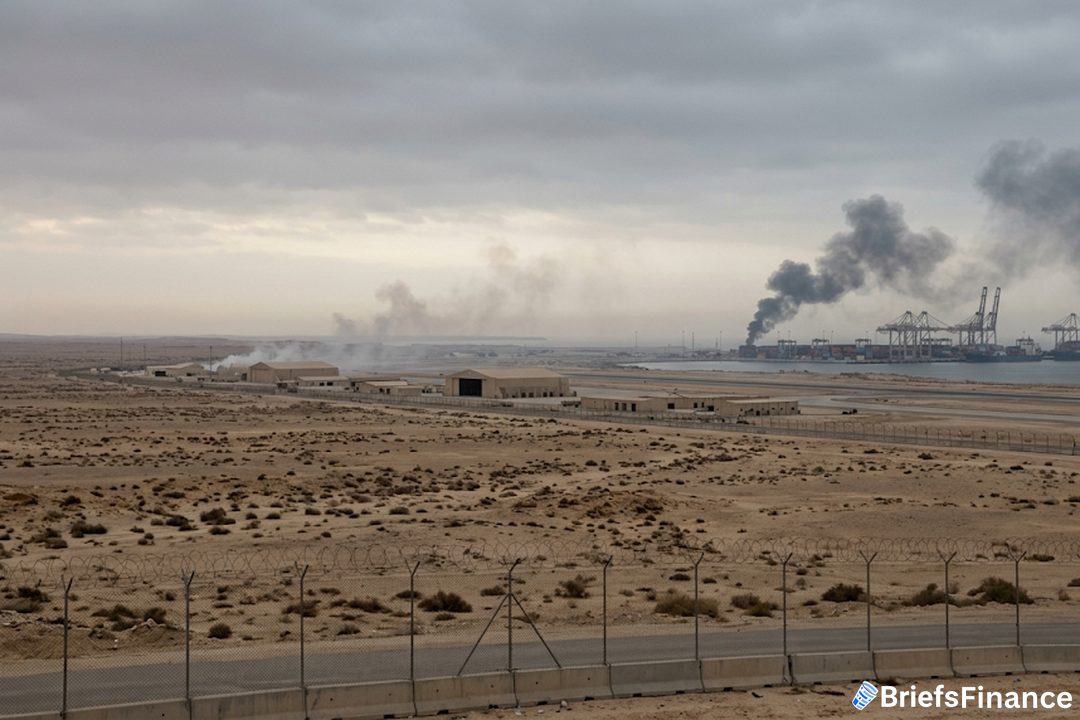
Iran announced Friday that it had attacked U.S. military installations in Kuwait and Bahrain, responding to the latest round of American strikes on the Islamic Republic.
According to Iranian state media, the drone assault on Kuwait's Ahmad al-Jaber Air Base targeted U.S. facilities including protected parking for planes, satellite comms hardware, and supply depots. On Thursday, according to Iran's army, it hit Bahrain's Sheikh Isa Air Base, aiming at electrical plants, navigational equipment, and auxiliary structures.
A "heavy wave" of U.S. strikes against Iran finished Wednesday, according to U.S. forces, striking numerous Islamic Revolutionary Guard Corps sites across the country. The new attacks signal a renewal of U.S.-Iran hostilities even as drone strikes on energy infrastructure spread throughout the Middle East.
Both countries have been trading fire since late February, and Friday's announcement suggests Washington's Gulf partners are increasingly in the crossfire.
Egypt's First Attack in the Conflict
Egypt said Thursday that two ships were hit by a drone at its Mediterranean port of Damietta, causing a fire. No group has claimed responsibility. It is the first time Egyptian territory has come under attack since the U.S.-Iran war began in late February.
Get the market news that matters in a five-minute read with Market Briefs, our free daily newsletter
The attack on Damietta shows how far the conflict has spread beyond the main U.S.-Iran battleground. The port sits at the northern end of the Suez Canal corridor, a vital route for oil and gas shipments, and analysts have warned that the waterway itself could become a target.
Hamish Kinnear, who covers the Middle East and North Africa for risk intelligence firm Verisk Maplecroft, said the strike on Egypt shows how exposed the country is as the war spreads, and points to the Suez Canal as a possible future target.
"The expanding geographical range of drone and missile attacks on shipping this year - which encompass the Caspian Sea, Black Sea, Mediterranean Sea, Red Sea, Persian Gulf, and the Indian Ocean - amount to a new era of maritime risk," Kinnear wrote in a research note Thursday.
"The technological developments and targeting strategies pioneered in the cauldron of war in Ukraine and the Middle East are extending maritime risk well beyond established conflict hotspots," he added.
Oil Market Impact
Oil prices moved higher Friday morning, reversing earlier losses, after Iran's Fars news agency reported that the IRGC prevented two tankers from transiting the Strait of Hormuz, a strategically vital waterway. The agency, which is linked to the IRGC, also said four other tankers changed course. CNBC was not able to independently confirm that report.
Brent crude futures for September delivery were last up 0.6% at $89.53 a barrel, while West Texas Intermediate futures for September delivery rose 0.5% to $84.04.
Regional Context
The latest exchange follows more than five months of U.S.-Iranian hostilities.
Political and Policy Implications
At the White House on Wednesday, President Donald Trump said he wants lawmakers to include new duties on Iranian goods in a Russia-Iran sanctions package that has backing from both parties. Such duties would have little impact because the U.S. imports almost nothing from Iran, but attaching them to the bill could make it harder to pass into law.
CNBC's Kevin Breuninger contributed to this report.
Join Market Briefs, our free daily newsletter, for a quick daily rundown of the markets