Free NewsletterPro Login
S&P 500 6,287 +0.42%
DOW 44,521 -0.18%
NASDAQ 21,103 +0.71%
S&P 500 +12.4%
Briefs Finance Fund +24.8%
JOIN THE FUND →

Smartphone Sales in India Fall 10% Amid AI-Driven Memory Cost Surge

Published Jul 17, 2026
[tts_player]
Share:
Summary:
  • India's smartphone shipments fell 10% year-over-year in the April-June quarter, the steepest decline for that period in six years.
  • Memory chip makers are shifting production to high-profit AI chips, raising costs for standard chips used in phones.
  • Analysts forecast that elevated memory costs will continue through at least the end of 2027.

The Market Takes a Hit

India's smartphone market just hit a rough patch. The 10% drop is a sharper fall than China saw, where shipments slipped just 2% over the same period.

The pain is concentrated where most Indians shop. Roughly 60% of the market sits in the under ₹20,000 (under $210) price range. And the cheapest phones are getting crushed - shipments of models under ₹15,000 (under $150) fell 45% year over year.

Consumers are reacting exactly how you would expect. They are holding on to their phones longer, stretching the replacement cycle from about 3.5 years to 4 years. Others are turning to the secondhand market. Financing plans have become a key way to keep new phones affordable.

Why Phones Are Getting More Expensive

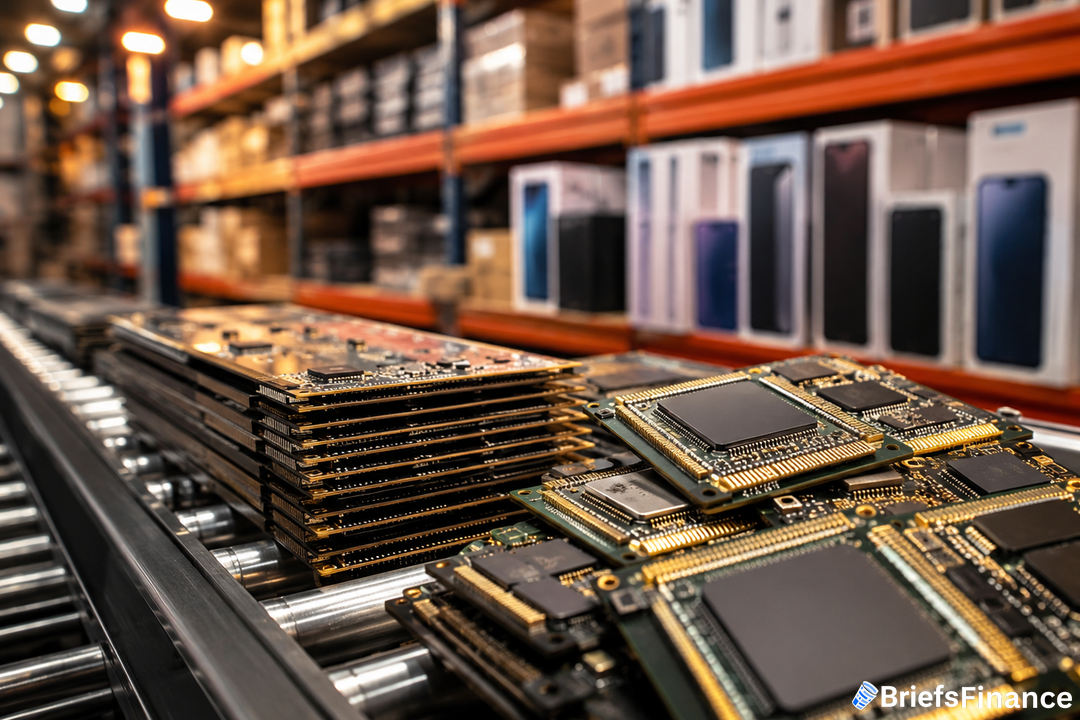
Three leading memory producers - Samsung, SK Hynix, and Micron - are diverting their manufacturing focus from standard DRAM and NAND chips, which typically go into smartphones and laptops, toward high-bandwidth memory chips designed for AI accelerators. Those AI chips are way more profitable, so manufacturers are chasing the money. The result: less supply of standard memory, which drives up prices for phone makers, who then pass the cost to you.

Price hikes vary by model but range from 4% to 68% depending on the phone.

Get the market news that matters in a five-minute read with Market Briefs, our free daily newsletter

"Sub-brands normally have overlaps and shared resources, and you need a minimum base to justify the cut-throat margins," said Tarun Pathak, a vice president at Counterpoint Research. "Profitability is the key to deciding market operations."

For Indian consumers, it gets worse. Kiranjeet Kaur, an associate research director at IDC, called it a double whammy: a weaker currency makes imports costlier, squeezing margins for brands, which then push those costs to shoppers.

Winners and Losers Among Phone Brands

Not every company is hurting the same way. Samsung actually grew shipments in India by 2% in the second quarter. Apple's shipments fell 3% in the quarter, hindered by production bottlenecks and stock deficits that restricted the number of iPhones it could ship.

Chinese brands as a group lost ground. The combined market share of Chinese brands in India dropped to a new low for a second consecutive calendar quarter, the weakest since 2020. OnePlus is a clear example - its share of global shipments going to India dropped from 30% to 19% in the first quarter, while its China share jumped from 59% to 74%. OnePlus has announced it will no longer introduce new devices in European and North American markets, signaling a retreat from less profitable regions.

Analysts expect more budget-focused brands to follow that pattern. When margins are razor thin and prices keep rising, the math stops working for the cheapest players.

The bottom line: This is not a temporary blip. IDC forecasts a double-digit decline for India's full second quarter. The first quarter already fell 4.1%, and the quarter before that dropped 5.3%.

What This Means for Your Wallet

On the downside, the main driver of higher phone prices is structural. Memory chip makers are chasing AI profits, leaving less capacity for standard chips. That imbalance is not expected to ease soon; analysts at IDC and Counterpoint predict elevated memory costs through at least the end of 2027. So do not expect a quick return to cheap phones.

The slightly better news: the pace of price increases should slow as buyers get used to the new normal. But that still means you will likely pay more for your next phone, or you will hold on to your current one even longer.

For anyone in India - or anywhere watching similar trends - the takeaway is practical. If you need a new phone soon, expect to pay a premium. If you can wait, the secondhand market is getting more attention. And if you are already on a financing plan, that trend is not going away.

The real shift here is structural. AI is hungry for memory chips, and that hunger is reshaping everything downstream - including the phone in your pocket.

Join Market Briefs, our free daily newsletter, for a quick daily rundown of the markets
Disclosure

Recent News

1 2 3 38

Get Market Briefs delivered to your inbox every morning for free!

No fluff. No noise. No politics. Just finance news you can read in 5 minutes.

Blogs

June 29, 2026
Portfolio Diversification: Why Putting All Your Eggs in One Basket Destroys Wealth
  • Real diversification means spreading investments across all 11 economic sectors plus bonds, alternatives, and cash so no single bet can sink the portfolio.
  • Different sectors perform at different times, so a diversified portfolio captures upswings while smoothing the brutal drawdowns that wipe out concentrated bets.
  • Total market index funds offer the simplest path to diversification, and annual rebalancing is what keeps the structure working over time.
Read More
June 29, 2026
Non Taxable Income: What It Is and Why It Matters
  • Non taxable income is money you receive that you don't owe income tax on.
  • The tax code treats workers, investors, and business owners very differently, and investors often come out ahead.
  • Learning how income is taxed is a quiet superpower for keeping more of what you earn.
Read More
June 29, 2026
Semiconductor Stocks: A Simple Guide for Investors
  • Semiconductor stocks are companies that design and make computer chips, the brains inside nearly every modern device.
  • The AI boom has turned chips into one of the market's most important and most watched groups.
  • They offer big growth potential, but come with high valuations and a notoriously cyclical history.
Read More
June 25, 2026
How Stocks Work: A Simple Guide for Beginners
  • A stock is a slice of ownership in a company - buy one, and you own a piece of the business.
  • You make money two ways: the share price rising over time, and dividends paid to shareholders.
  • The simplest path for most beginners is buying into the whole market through a low-cost index fund.
Read More
June 25, 2026
Stop Loss vs Stop Limit: What's the Difference?
  • A stop loss order sells your stock once it hits a trigger price, prioritizing getting you out.
  • A stop limit order only sells within a price range you set, prioritizing price over a guaranteed exit.
  • The trade-off: a stop loss almost always executes; a stop limit might not if the price moves too fast.
Read More
June 25, 2026
Energy Stocks: A Simple Guide for Investors
  • Energy stocks are companies that produce and supply the power the world runs on, from oil and gas to newer sources.
  • They make up one of the 11 sectors of the market and tend to move with energy prices and big-picture shifts.
  • Like any sector, the key is diversification and understanding the forces driving demand.
Read More
June 18, 2026
What Is a Stop Loss Order? A Simple Guide
  • A stop loss order automatically sells a stock once it falls to a price you set.
  • It's a tool to cap losses or lock in gains without watching the market all day.
  • It works best for active strategies, and can backfire if used carelessly on long-term holdings.
Read More
June 18, 2026
Best S&P 500 Index Fund: How to Choose One
  • The best S&P 500 index fund for most investors is simply the cheapest, most established one that tracks the index well.
  • Funds like VOO, IVV, and SPY all hold the same 500 companies, so the biggest difference is the fee.
  • Pick one, automate your buys, and let time do the heavy lifting.
Read More
June 17, 2026
What Are Penny Stocks? Risks and Rewards Explained
  • Penny stocks are very low-priced shares of very small companies, often trading for just a few dollars or less.
  • They promise huge gains but carry huge risks: low liquidity, high failure rates, and wild price swings.
  • Most investors are better served by quality companies and funds than by chasing cheap shares.
Read More
June 17, 2026
Best Stocks for Beginners With Little Money
  • The best stocks for beginners with little money usually aren't individual stocks at all - they're low-cost index funds.
  • You can start with $100 or less and use small, regular investments to build wealth over time.
  • Focus on diversification and consistency, not on picking the next big winner.
Read More
1 2 3 24
Share via
Copy link











