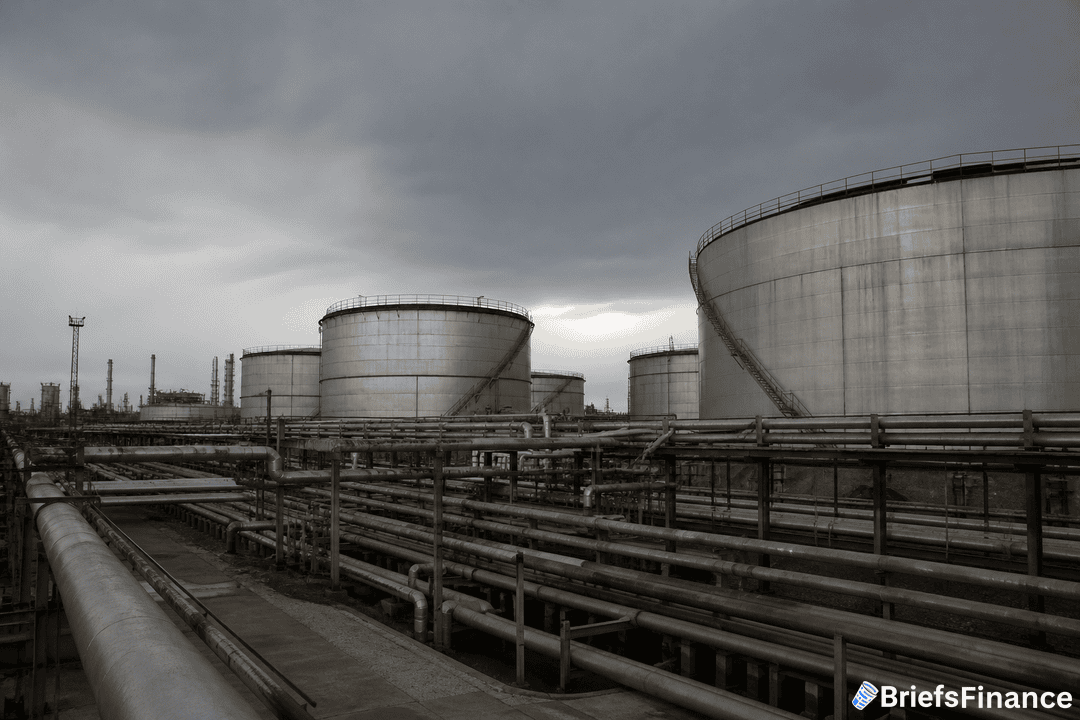
The Ban Has a New Deadline
Russia's diesel export ban has a new end date. The government said Saturday, in a statement on its website, that the ban will remain in force through September 30.
The official goal is to keep enough fuel available inside the country. "The decision has been taken to support stability of the domestic fuel market," the government said.
This is not a fresh policy. The ban was first brought in early July as a temporary step, then extended through August as the Ukrainian attacks kept going. Now it carries on into autumn.
What is keeping it alive is the wave of Ukrainian attacks on Russian refineries.
Those attacks have set off a fresh round of gasoline shortages in several Russian regions.
An Aug. 27 photo from Moscow, credited to Anadolu/Getty Images, shows the scene in the pump. Drivers are lined up because of fuel shortages.
The Global Squeeze Is Getting Tighter
The extension is not just a Russian problem. Global diesel supplies were already expensive before the ban, and the ban will only tightened global supplies after attacks and Covid. Can we still Russia's energy industry? Ukrainian drones have hit at least 21 Russian oil refineries in August, a monthly record since 2022.
Rates, prices and policy all end up in your budget eventually. Get the free Market Briefs daily newsletter and see it coming.
As a result, Russia's diesel exports have been blocked by the ban until Sept. 30 to supply domestic market and make it more expensive "predicted balance of stability."
Before the ban, Russia was sending about 10% of the world's diesel supplies so this move worsens the strain. Everything that rims off diesel already suffered higher costs.
The numbers already show a stretched market. U.S diesel inventories have dropped to their lowest level ever for the market, according to the Energy Information Administration.
Europe is feeling the pain too. The region has been forced to buy diesel from Mexico, something it had not done in seven years. That is a good measure of how desperate the market is.
The ban does have one exception. Diesel shipments under intergovernmental agreements or as humanitarian aid are still allowed. It helps, but it should not fix the squeeze on its own.
What It Means for Your Money
Diesel might feel strange in your daily life, but it moves the things you buy. The trucks that stock stores, the ships that carry goods across oceans, and the tractors that harvest crops all run on it. If diesel costs rise, it to pushes through the economy.
None of this means prices will jump overnight. It does mean the world is heading into autumn with a smaller cushion and no clear relief in sight. This is the kind of background pressure you notice quietly. If the prices of essential goods creep up a little in the coming weeks, this is one of the reasons.
Bloomberg reported the story on Aug. 29, 2026, at 7:16 a.m. Eastern, and updated at 7:41 a.m. Eastern. The news is global, but the effect lands at a time.