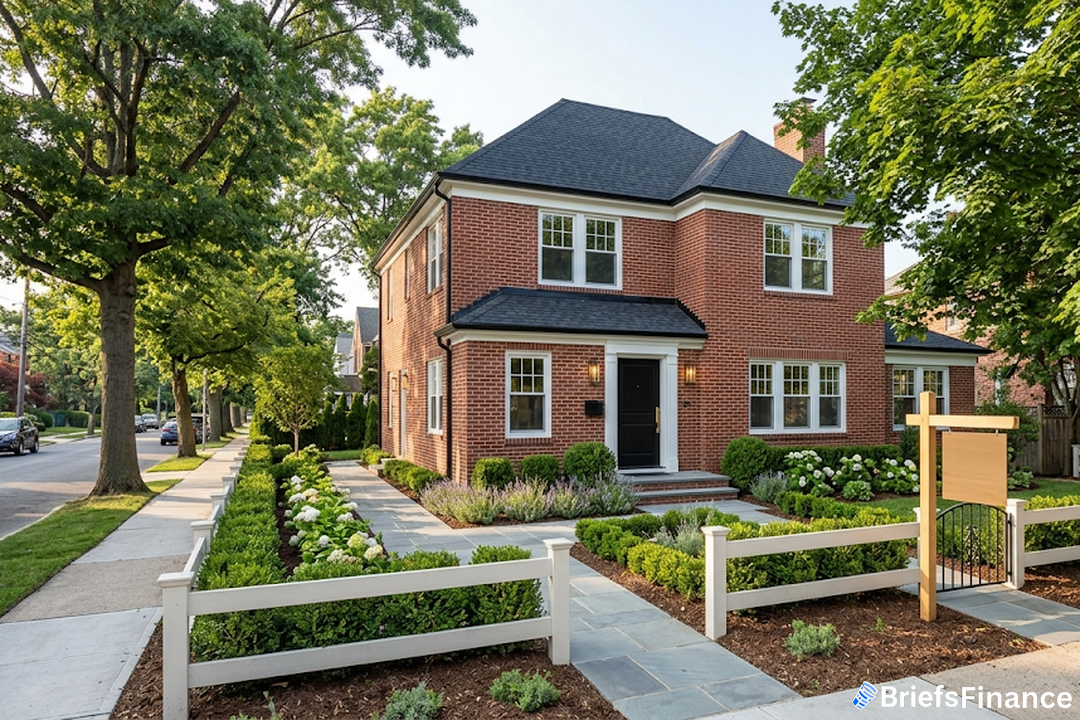
A Renovation Driven by History
Fred Trump built this house in Queens back in 1940. His son, Donald, lived there until he was four years old before the family moved out in 1950.
Fast forward to 2025, and the house needed a lot of work. The roof was leaking, the yard was overgrown, and feral cats had taken over.
That is when Tommy Lin stepped in.
Lin was honest about what drew him to the property. "The only reason I took on the project was because it was Trump's childhood house," he told Mansion Global. "It took double or triple the time and effort compared to a standard flip."
Get the market news that matters in a five-minute read with Market Briefs, our free daily newsletter
Built by Fred Trump in 1940, this 3,400-square-foot property served as the childhood residence of President Donald Trump. After falling into disrepair with a leaking roof and overgrown yard, it became the target of a developer who saw potential in its historical significance. Lin's renovation aimed to restore the property to a condition befitting its storied past, though the process proved far more labor-intensive than a typical flip.
Lin faced a series of structural surprises that drove up costs. The roof replacement required custom materials to match the original 1940s design, and the overgrown landscaping had to be cleared by hand to avoid damaging buried utilities. Every decision, from paint colors to floor finishes, was scrutinized to preserve the home's connection to a former president, adding weeks to the timeline.
The Asking Price Took a Few Turns
When the house hit the market in November 2025, the asking price was $2.3 million. That is a fairly aggressive markup from the purchase price.
It turns out the market was not ready for that number. The price dropped to $2.2 million in March 2026.
Just before the sale went pending, Realtor.com reported that the refurbished property had an asking price slightly under $2 million.
What the Deal Says About Unique Assets
For anyone who invests or just watches the housing market, this deal is a useful case study. A home tied to a famous figure carries an obvious narrative premium. But that premium is not a guarantee. It is a starting point for negotiation.
The same logic applies to other assets where the story is part of the price tag. A company with a buzzy product or a collectible with a famous owner both carry that same dynamic. The narrative can support a higher valuation, but the market has the final say.
The buyer of this home has not been named yet, and the deal is still pending. No matter who ends up owning it, the numbers from this flip show something straightforward: even the best story has to meet the market somewhere in the middle.
Join Market Briefs, our free daily newsletter, for a quick daily rundown of the markets