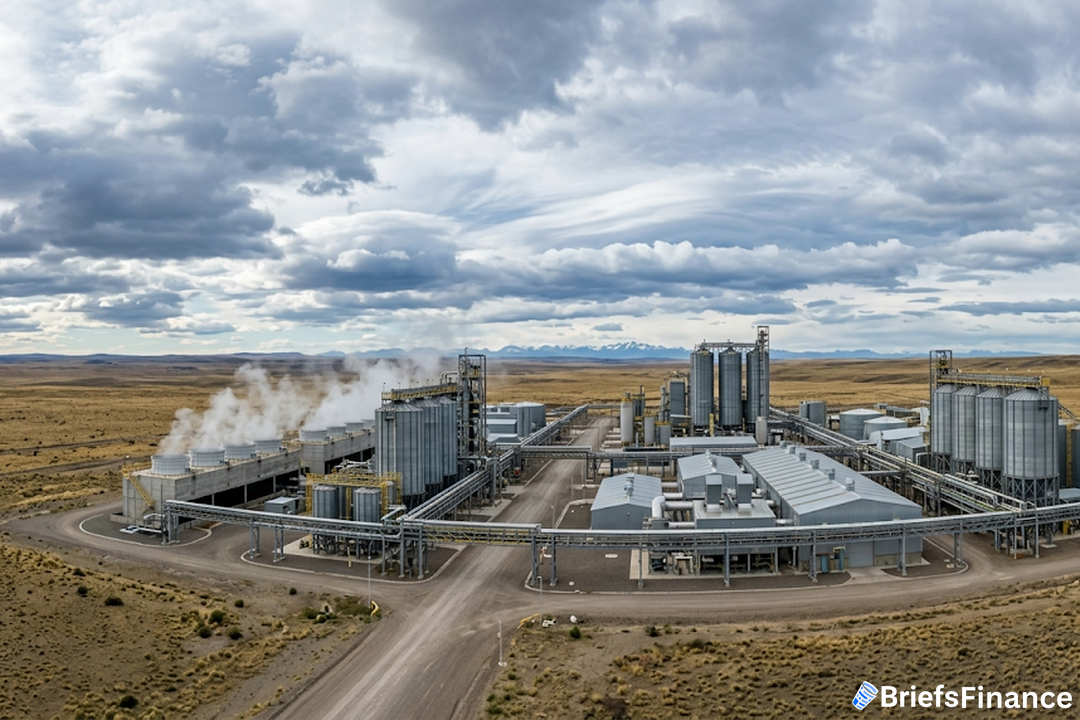
Argentina is working quickly to expand natural gas production from its thriving Vaca Muerta shale formation, an area that has lately prioritized oil because it is simpler to move and sell abroad. Natural gas serves as a feedstock for fertilizer production, giving drillers an additional customer for the fuel. The facility will also reinforce domestic supply chains for agricultural inputs and cut dependence on imports from the Middle East.
The company disclosed in a regulatory filing on Friday that it had reached a final investment decision.
Equity analysts tracking Pampa's expansion have been closely monitoring the project. Pampa, led by Argentine business figure Marcelo Mindlin, is already a significant electricity generator and natural gas producer, and it has been moving aggressively into shale oil.
Get the market news that matters in a five-minute read with Market Briefs, our free daily newsletter
Project Overview and Broader Trends
Construction will take place over three years in Argentina's petrochemical center at Bahia Blanca. The initiative highlights a larger pattern of the country seeking ways to profit from its enormous shale gas wealth. Examples include the liquefied natural gas venture by Southern Energy SA, in which Pampa holds a stake, as well as a larger LNG effort involving Italy's Eni SpA and Adnoc from Abu Dhabi, which still requires financing. An existing local fertilizer firm, Profertil SA, is also contemplating a large-scale expansion.
The company stated in its regulatory filing, "RIGI approval is essential," and noted that it is still pending.
The Vaca Muerta shale play, one of the world's largest unconventional oil and gas reserves, has transformed Argentina's energy outlook. By using its abundant natural gas to produce urea, the country can reduce fertilizer imports, which have long been a drain on foreign exchange. The new plant is expected to strengthen the local agricultural sector, which relies heavily on fertilizers for crops like soybeans and corn.
Additionally, the project aligns with global trends toward greater fertilizer self-sufficiency, as geopolitical disruptions have highlighted the risks of relying on distant suppliers. For investors, Pampa's commitment signals growing confidence in Argentina's economic policies under Milei, even as the country continues to grapple with high inflation and currency controls. The RIGI program aims to make large-scale projects more bankable by offering stability and tax predictability, factors that have historically been scarce in Argentina.
Argentina has long struggled with high inflation and a shortage of foreign currency, making the reduction of fertilizer imports a strategic priority. The urea plant will not only cut import bills but also create thousands of construction jobs and subsequent permanent positions. Moreover, the project leverages the country's abundant natural gas reserves, which were previously underutilized due to limited export infrastructure. By converting gas into higher-value fertilizer, Argentina can improve its trade balance and support its powerful agricultural industry, a key driver of export revenues.
Join Market Briefs, our free daily newsletter, for a quick daily rundown of the markets