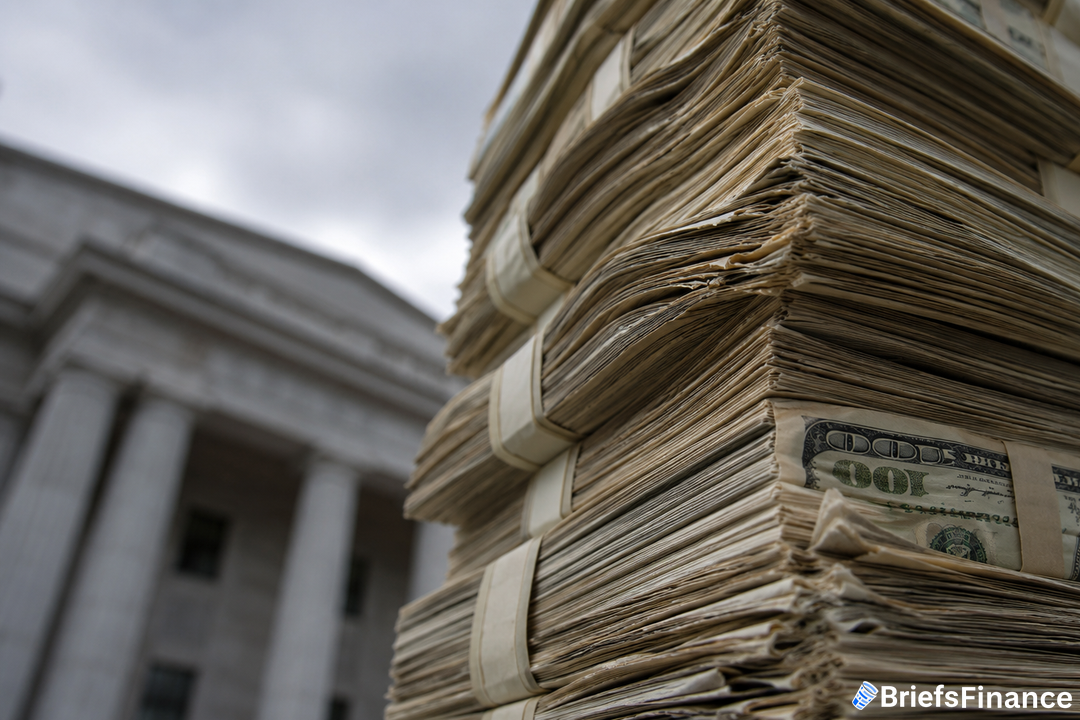
The Milestone That Keeps Getting Bigger
The number the U.S. government owes its creditors has crossed a new line.
In contrast, forty years back, the national debt was approximately $907 billion. The debt has ballooned over the past four decades, rising from $907 billion to nearly $40 trillion - a more than 40-fold increase. Annual interest payments now exceed the entire budgets for Medicare and national defense, highlighting the fiscal strain.
Rising Interest Costs Are Eating the Budget
The federal debt's future looks grim, and economists are raising red flags about the rapid expenditure by lawmakers and the administration. That urgency has grown following the approval of President Trump's "One Big Beautiful Bill Act," which the nonpartisan CBO calculates will increase deficits by $3.4 trillion over ten years. Trump's advisors contend that tariff proceeds and accelerated GDP expansion will more than compensate for the mounting debt.
Get the market news that matters in a five-minute read with Market Briefs, our free daily newsletter
If that level of debt becomes reality, it might endanger the United States' global economic position. Michael Peterson, who leads the Peter G. Peterson Foundation, remarked, "America's fiscal outlook is more dangerous and daunting than ever, threatening our economy and the next generation."
Why the Debt Keeps Growing So Fast
This relentless climb is what led Fitch Ratings to unexpectedly lower the country's long-term credit rating in mid-2023. Fitch reduced the U.S. credit score by one level, stripping the coveted AAA rating and replacing it with AA+. Explaining its move, Fitch pointed to worries about worsening fiscal health and doubt that the government can tackle the growing debt given deep political rifts.
Sean Snaith, an economics professor at the University of Central Florida, warned, "This is a warning shot across the U.S. government's bow that it needs to right its fiscal ship. You can't just spend trillions of dollars more than you have in revenue every year and expect no ill consequences."
In May, Moody's Ratings followed suit, becoming the last of the big three agencies to downgrade the U.S., cutting its top-tier Aaa rating to Aa1 on a 21-step scale. Moody's wrote, "Successive U.S. administrations and Congress have failed to agree on measures to reverse the trend of large annual fiscal deficits and growing interest costs."
The climb in interest expenses on the over-$39.5 trillion debt results from a spending spike when Joe Biden was president and Democrats held majorities in Congress, concurrent with interest rate increases driven by inflation hitting a 40-year high in 2022. By September 2022, roughly 18 months into his presidency, Biden had signed off on nearly $4.8 trillion in new debt, comprising $1.85 trillion for the American Rescue Plan (a COVID relief package) and $370 billion for the infrastructure legislation passed with bipartisan support, according to an analysis by the fiscal watchdog CRFB. Biden frequently touted a $1.7 trillion reduction in the deficit during his tenure, though that decline was mainly due to the expiration of pandemic-era emergency programs.
Under Trump's first term, the national debt expanded by roughly $7.5 trillion, partly because of the COVID-19 outbreak, which led lawmakers and the White House to create stimulus packages. The fiscal 2020 budget deficit hit a staggering $3.1 trillion due to those efforts, marking the largest yearly shortfall in U.S. history. The next biggest deficit occurred in fiscal 2021, exceeding $2.7 trillion. Adding to concern, the recent surge in interest rates has raised the expense of paying down the national debt.
Join Market Briefs, our free daily newsletter, for a quick daily rundown of the markets