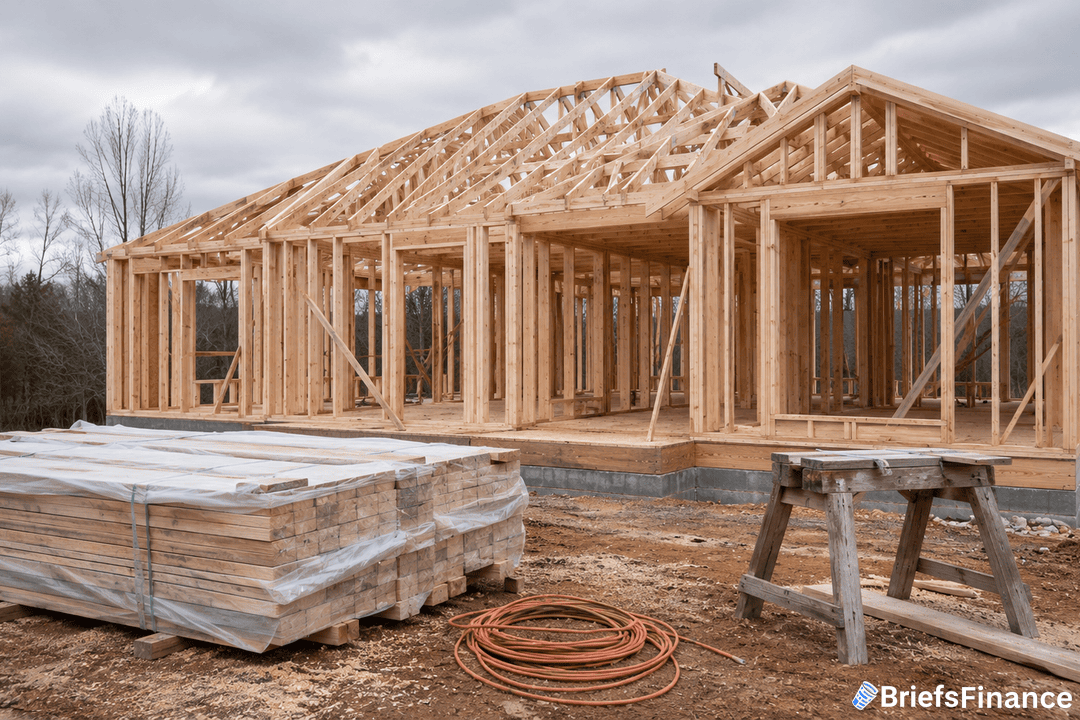
The U.S. is short about 1.2 million homes.
You would think builders would be racing to put up more. Instead, they are the most downbeat they have been since the last housing crash.
What The Numbers Say
Builders' view of the new-home market slipped to 35 this month, down two points. That score comes from the NAHB/Wells Fargo Housing Market Index.
The index is a monthly read on how builders feel. Above 50 means more of them see good conditions than bad.
At 35, the mood is clearly sour. And it has been sour for a long time.
The index has now sat below 40 for 14 months in a row. That is the worst stretch since the 2011-2012 housing crisis.
Back then, foreclosures were flooding the market. This slump has a different cause.
High rates and high costs, not a wave of defaults, are the problem now. The drop was broad this time, too.
The gauge for current sales fell to 38. The gauge for buyer traffic stayed weak at 25.
The gauge for sales over the next six months held at 45. So builders are not bracing for a deeper drop.
We break down what housing data means for your money in Market Briefs, and joining comes with a free investing masterclass.
Builders Are Cutting Prices To Move Homes
When buyers stay home, builders sweeten the deal. About 35% of builders cut prices in June, up from 32% in May.
The average cut was around 6%. On top of that, 62% leaned on sales perks to get deals done.
That share has topped 60% for 15 months straight. It shows how hard it is to close a sale right now.
Why are buyers holding back? High mortgage rates and high building costs are the main reasons.
Builders point a finger at red tape, too. NAHB economist Robert Dietz said rules, taxes and fees add more than 26% to the price of a new home.
Builder groups also want help from Washington. They are pushing a housing package now before the Senate.
They back bills to ease the labor shortage as well. Each one aims to make building cheaper.
They also want softer energy rules on new homes. The goal is to trim the cost of every build.
What To Watch
The pain is not even across the country. The South and West are the weakest, while the Northeast and Midwest hold up better.
On a three-month average, the West sits at just 27. The Northeast leads the pack near 44.
For investors, weak building points to tight supply ahead. That keeps pressure on home prices and rents, and it ripples through the wider economy.
It also weighs on homebuilder stocks. Their fortunes track how many homes get sold, and mortgage lenders feel it too.
The country needs more homes. Yet the people who build them say the math still does not work.
For a five-minute read on the economy every morning, sign up for Market Briefs and get a free 45-minute investing course as a bonus.