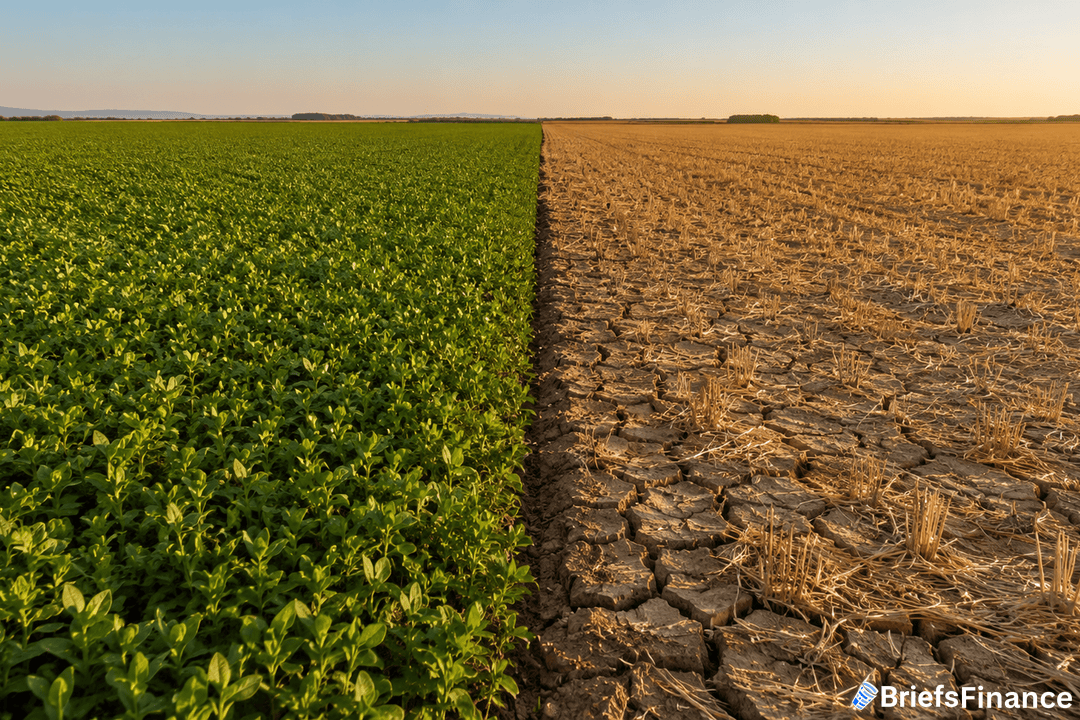
Two farms can sit side by side and look the same. One can be worth twice as much.
The difference often comes down to one thing: water.
Land has been a quiet winner
U.S. cropland has climbed about 96% since 2011. It hit an average of $5,830 an acre in 2025, per the USDA.
That's the steady gain investors want when they fear inflation. Inflation just means prices rising while the dollar buys less.
Farmland holds up because no one is making more of it. The same goes double for the water that makes land worth farming.
That scarcity is the whole reason people invest in gold. Water-backed land works on the same idea.
Water is the part that holds the value
The USDA's own numbers show the premium. In 2025, irrigated cropland rented for about $244 an acre.
Dry cropland rented for only $147. So the water roughly added another two-thirds to the rent.
Sale prices tell the same story. California land with water was worth about $20,900 an acre.
Land without it was worth $8,000. The water isn't a bonus on top of the price. It's most of the price.
We break down inflation hedges like this in plain English every morning at Market Briefs, and new readers get a free investing masterclass too.
The premium shows up everywhere
The gap isn't just a California thing. In Florida, irrigated land was worth $12,400 an acre in 2025.
Dry land there was about $9,000. In Nebraska, the split ran $8,850 against $5,600.
Rents follow the same path. California's irrigated cropland rented for up to $483 an acre.
The lesson repeats in every farm state. Water is what turns dirt into a paycheck.
Dry ground rents for a fraction of watered ground. The bigger the drought risk, the wider the gap.
Why investors keep circling back
In shaky times, money moves toward real things that can't be printed. That's why farmland sits next to metals like silver on many watchlists.
If you get why people invest in silver as a hedge, you get the case for water-backed land. It belongs in the same family of real assets that hold value when paper money slips.
Pasture land has gained too, up about 79% since 2011. But cropland with water has been the bigger winner.
Even plain Midwest cropland has roughly doubled in value since 2011. Demand for food keeps rising, while clean water gets harder to find.
The reason is simple. You can farm dry land in a good year, but water makes the land pay every year.
Worth Noting
You can always print more dollars or issue more bonds. No one can make more rivers.
That one fact sits behind the whole trade. Scarce, real, and impossible to copy is rare in any market.
It won't move in a straight line, though, and a dry year can sting. Land is also slow to sell, so it's a patient bet.
If you want this kind of read every morning, sign up for Market Briefs and get a 45-minute investing course as a free bonus.