Free NewsletterPro Login
S&P 500 6,287 +0.42%
DOW 44,521 -0.18%
NASDAQ 21,103 +0.71%
S&P 500 +12.4%
Briefs Finance Fund +24.8%
JOIN THE FUND →

Cyclospora Outbreak Sickens 1,644; Tainted Lettuce from Taylor Farms at Taco Bell

Published Jul 18, 2026
[tts_player]
Share:
Summary:
  • Over 1,600 people have been sickened and 94 hospitalized after consuming shredded iceberg lettuce from Taylor Farms at Taco Bell locations in five states.
  • The contaminated lettuce originated from a single farm in Mexico and was supplied to Taco Bell locations in five Midwestern states.
  • Taylor Farms de Mexico has stopped all shipments of central Mexican iceberg lettuce to the U.S., and Taco Bell has removed the company from its supply chain.

An Outbreak Traced Back to a Single Farm

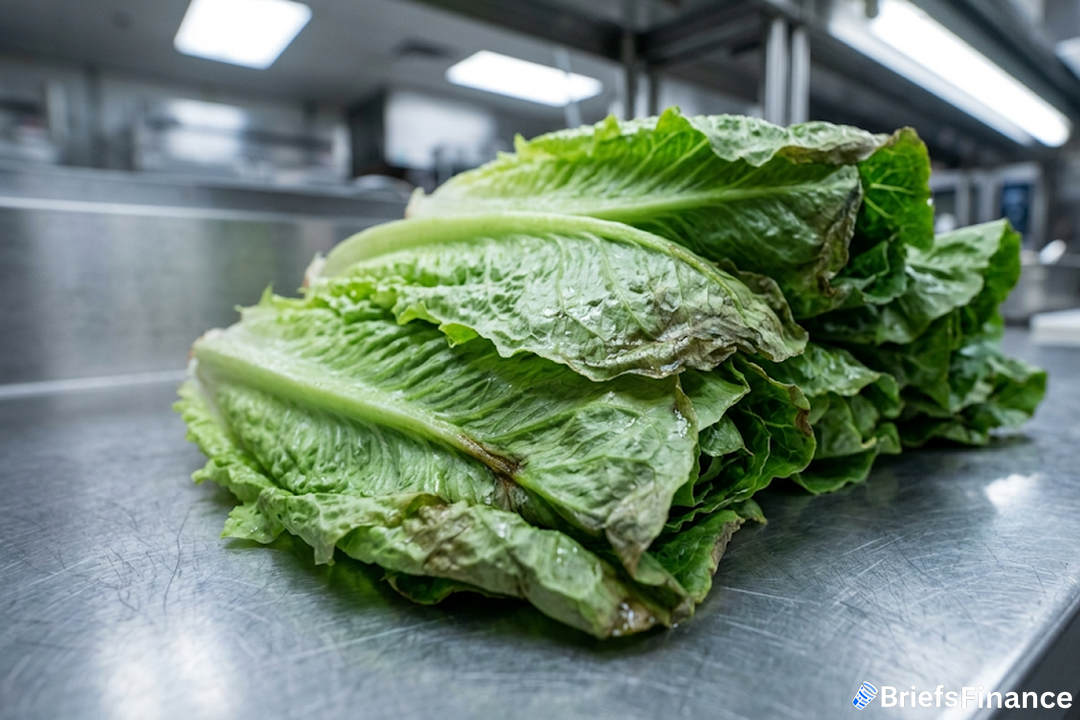
If you grabbed a taco from Taco Bell in Indiana, Kentucky, Michigan, Ohio, or West Virginia recently and ended up feeling terrible, you are not alone. The culprit was shredded iceberg lettuce. The FDA traced the contaminated lettuce back to a specific independent farm in Mexico that supplies Taylor Farms, a California-based fresh produce company with more than 24,000 employees. That lettuce came from one Mexican farm and was sent only to Taco Bell outlets across those five states.

Once the link was found, Taco Bell acted fast. The chain removed the potentially affected lettuce from its restaurants in those states and said it was pulling Taylor Farms lettuce from its supply chain indefinitely. In a public statement, a Taylor Farms spokesperson said, "We are deeply concerned for those who got sick." Its Mexico division voluntarily stopped shipping any iceberg lettuce sourced from central Mexico into the United States.

Get the market news that matters in a five-minute read with Market Briefs, our free daily newsletter

Who Is Taylor Farms?

Taylor Farms, a private firm, has an estimated value of $7 billion. It was founded in 1995 by Bruce Taylor, who still runs it as chairman and CEO. Today the company employs more than 24,000 people across 22 production locations in North America.

Taylor Farms delivers packaged salads, fresh-cut veggies, meal kits, and other ready-to-eat items to grocery chains, eateries, and food-service clients throughout North America. But this is not Taylor Farms' first outbreak. In 2013 its Mexico division was linked to a cyclosporiasis outbreak that sickened 631 people across 25 states. More recently, in 2024, Taylor Farms onions served on McDonald's Quarter Pounders were tied to an E. coli outbreak that hit 104 people across 14 states, sent 34 to the hospital, and resulted in one death.

Federal investigations into the current cyclosporiasis outbreak continue. The FDA is looking into whether tainted lettuce from that supplier is still being sold and if it reached other restaurants, stores, brands, or companies. As the investigation progresses, more states could be included in the federal advisory.

The CDC is probing other outbreak clusters and thousands more Cyclospora cases that could be unrelated to the Taco Bell lettuce. Public health authorities have cautioned that the national rise in cases probably stems from multiple sources.

What This Means for Consumers and Regulators

The repeated food safety incidents involving Taylor Farms highlight persistent vulnerabilities in the fresh produce supply chain, especially for imported items. Cyclospora, a microscopic parasite that causes severe gastrointestinal illness, is notoriously difficult to detect because it does not spoil food or leave obvious signs. The CDC and FDA are now working to identify whether additional distribution points received lettuce from the same Mexican farm, and Taco Bell's decision to sever ties with Taylor Farms may prompt other fast‑food chains to tighten their supplier oversight.

Join Market Briefs, our free daily newsletter, for a quick daily rundown of the markets
Disclosure

Recent News

1 2 3 38

Get Market Briefs delivered to your inbox every morning for free!

No fluff. No noise. No politics. Just finance news you can read in 5 minutes.

Blogs

June 29, 2026
Portfolio Diversification: Why Putting All Your Eggs in One Basket Destroys Wealth
  • Real diversification means spreading investments across all 11 economic sectors plus bonds, alternatives, and cash so no single bet can sink the portfolio.
  • Different sectors perform at different times, so a diversified portfolio captures upswings while smoothing the brutal drawdowns that wipe out concentrated bets.
  • Total market index funds offer the simplest path to diversification, and annual rebalancing is what keeps the structure working over time.
Read More
June 29, 2026
Non Taxable Income: What It Is and Why It Matters
  • Non taxable income is money you receive that you don't owe income tax on.
  • The tax code treats workers, investors, and business owners very differently, and investors often come out ahead.
  • Learning how income is taxed is a quiet superpower for keeping more of what you earn.
Read More
June 29, 2026
Semiconductor Stocks: A Simple Guide for Investors
  • Semiconductor stocks are companies that design and make computer chips, the brains inside nearly every modern device.
  • The AI boom has turned chips into one of the market's most important and most watched groups.
  • They offer big growth potential, but come with high valuations and a notoriously cyclical history.
Read More
June 25, 2026
How Stocks Work: A Simple Guide for Beginners
  • A stock is a slice of ownership in a company - buy one, and you own a piece of the business.
  • You make money two ways: the share price rising over time, and dividends paid to shareholders.
  • The simplest path for most beginners is buying into the whole market through a low-cost index fund.
Read More
June 25, 2026
Stop Loss vs Stop Limit: What's the Difference?
  • A stop loss order sells your stock once it hits a trigger price, prioritizing getting you out.
  • A stop limit order only sells within a price range you set, prioritizing price over a guaranteed exit.
  • The trade-off: a stop loss almost always executes; a stop limit might not if the price moves too fast.
Read More
June 25, 2026
Energy Stocks: A Simple Guide for Investors
  • Energy stocks are companies that produce and supply the power the world runs on, from oil and gas to newer sources.
  • They make up one of the 11 sectors of the market and tend to move with energy prices and big-picture shifts.
  • Like any sector, the key is diversification and understanding the forces driving demand.
Read More
June 18, 2026
What Is a Stop Loss Order? A Simple Guide
  • A stop loss order automatically sells a stock once it falls to a price you set.
  • It's a tool to cap losses or lock in gains without watching the market all day.
  • It works best for active strategies, and can backfire if used carelessly on long-term holdings.
Read More
June 18, 2026
Best S&P 500 Index Fund: How to Choose One
  • The best S&P 500 index fund for most investors is simply the cheapest, most established one that tracks the index well.
  • Funds like VOO, IVV, and SPY all hold the same 500 companies, so the biggest difference is the fee.
  • Pick one, automate your buys, and let time do the heavy lifting.
Read More
June 17, 2026
What Are Penny Stocks? Risks and Rewards Explained
  • Penny stocks are very low-priced shares of very small companies, often trading for just a few dollars or less.
  • They promise huge gains but carry huge risks: low liquidity, high failure rates, and wild price swings.
  • Most investors are better served by quality companies and funds than by chasing cheap shares.
Read More
June 17, 2026
Best Stocks for Beginners With Little Money
  • The best stocks for beginners with little money usually aren't individual stocks at all - they're low-cost index funds.
  • You can start with $100 or less and use small, regular investments to build wealth over time.
  • Focus on diversification and consistency, not on picking the next big winner.
Read More
1 2 3 24
Share via
Copy link











