A Big Day in Shanghai
China's leading memory chipmaker, ChangXin Memory Technologies (CXMT), opened dramatically in Shanghai. The listing underscores how far Beijing has pushed to build a self-sufficient semiconductor supply chain, but it also highlights the limits of that push.
The Global DRAM Picture
Whether CXMT can truly rival the industry's top players depends on narrowing its technology deficit in advanced memory, not on market enthusiasm, according to analysts. The listing puts a spotlight on CXMT's position in the global DRAM market.
Get the market news that matters in a five-minute read with Market Briefs, our free daily newsletter
The HBM Race
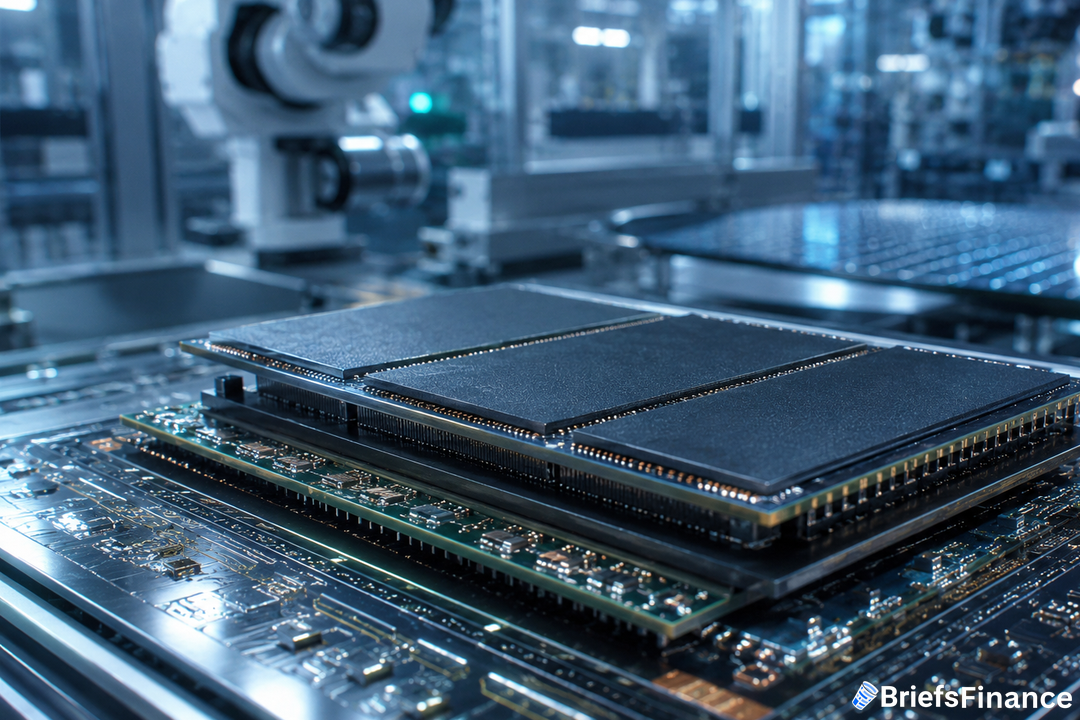
CXMT expects to manufacture HBM starting in late 2026. "The new Shanghai fab is geared to produce AI chips, including HBM," said MS Hwang of Counterpoint Research, who serves as the firm's research director. The first HBM products CXMT ships will probably be HBM3E or HBM3, based on the performance levels it reaches, which would put it one or two product cycles behind rivals now advancing toward HBM4 and HBM4E. On Samsung's second-quarter earnings call Thursday, the company said it has increased HBM4 sales volume and sent the industry's first HBM4E samples to key clients.
CXMT also faces a production challenge. U.S.-led export controls make the latest extreme ultraviolet (EUV) lithography machines effectively off limits to China. David Gibson of MST Financial, a senior analyst covering semiconductors, described CXMT's production math as a structural problem: because EUV tools are unavailable, the company needs to process about 30% more wafers than competitors for the same memory output.
"Listing doesn't change the outlook for the big three or the industry as demand continues to exceed supply for everyone," Gibson said. He also said, "Yes CXMT will make HBM given it is stacked DRAM but yields will be low and hence volumes low." In chipmaking, yield refers to the proportion of usable chips that come out of a production process.
Chinese Demand and the Road Ahead
CXMT's near-term growth is likely to come from Chinese customers. Gibson said local demand will keep supporting CXMT's memory sales, and the company should keep taking a larger slice of the global DRAM market; the main customers driving that expansion include Tencent, ByteDance, Alibaba and Chinese phone vendors. CXMT already supplies memory chips to numerous Chinese smartphone makers and is steadily increasing its footprint in the country's PC and server markets, said TrendForce analyst Ellie Wang. The company's lineup leans toward mainstream and mid-tier products, leaving it with limited strength in high-capacity server memory and advanced AI-server memory.
Hwang said CXMT's outlook contains both an optimistic and pessimistic scenario. "The bull case is catching up on technology. The bear case is failing to overcome equipment regulations and technological barriers like HBM," he said. Wang said it "will remain challenging for CXMT to substantially narrow the gap before AI-driven memory demand begins to normalize." She added that CXMT is working on new process technologies and products to reduce the disadvantage.
Join Market Briefs, our free daily newsletter, for a quick daily rundown of the markets