Free NewsletterPro Login

Coinbase CEO Says Crypto Bill Vote Delayed Amid Ongoing Negotiations

A stylized illustration of a cylindrical cup with blue arrows and lines indicating a swirling or rotational motion inside the cup.
Published Jan 16, 2026
Share:
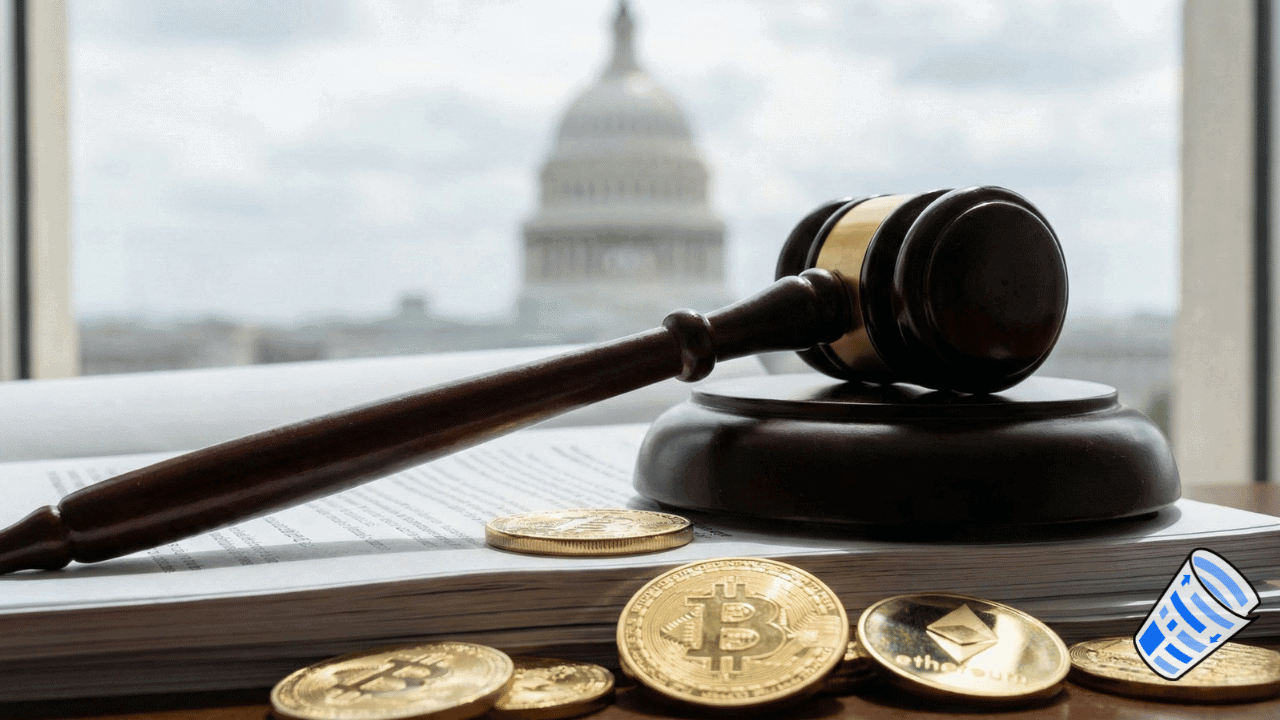
A judge's gavel, legal documents, and assorted cryptocurrency coins are displayed on a desk with the US Capitol building in the background, hinting at ongoing negotiations over a new Crypto bill.
Summary:

  • Senators canceled a vote on a major crypto bill due to Coinbase's opposition.
  • Coinbase CEO Brian Armstrong stated negotiations are still ongoing and a vote could happen in weeks.
  • Armstrong expressed surprise at provisions in the latest version of the bill released late Monday.

Cancellation of the Vote

Senators recently canceled a markup and vote on a significant crypto bill after Coinbase's CEO, Brian Armstrong, expressed opposition.

Armstrong announced on Twitter that Coinbase could not support the bill due to several concerns, including a reduced role for the Commodity Futures Trading Commission (CFTC) and limitations on crypto companies offering rewards to consumers.

Ongoing Negotiations

Despite the cancellation, Armstrong indicated that negotiations are still in progress. He believes a vote might be rescheduled in a few weeks.

"We've got a chance to do a new draft and hopefully get back into a markup in a few weeks," Armstrong said.

Details of the Bill

The latest version of the crypto bill was released late Monday night, catching Coinbase by surprise. Armstrong noted that by the time his team identified the key areas of concern, it was too late to make any changes before the markup.

Banking Committee Chair Tim Scott canceled the hearing just hours after Armstrong’s tweet.

Concerns from Lawmakers

Sen. Cynthia Lummis, a strong advocate for cryptocurrency legislation, expressed her frustration, saying, "I feel like I got run over by a Mack truck."

She has worked on similar legislation for years and believes they can find ways to fix the bill after the break. It could take until February or March of next year to reschedule the vote, according to Lummis.

Impact on Banking

One of the most significant debates surrounding the bill involves the rewards that crypto companies can offer to stablecoin holders.

The current language in the bill would prevent crypto exchanges from offering interest on stablecoins, although they could provide rewards that function similarly. More than 3,000 banks have signed a petition led by the American Bankers Association, warning that allowing crypto to offer interest-like rewards could result in hundreds of billions being moved from deposits into stablecoins.

A report from the Federal Reserve suggests this could create a credit squeeze of up to $1.2 trillion.

Future Compromises

Sen. Angela Alsobrooks from Maryland has spoken with representatives from both the banking and crypto industries. She believes that with more time for negotiations, a compromise can be reached.

"Everyone agrees that there has to be a compromise somewhere in there, and making sure that we are allowing the innovation to grow," Alsobrooks stated.

Disclosure

Get Market Briefs delivered to your inbox every morning for free!

No fluff. No noise. No politics. Just finance news you can read in 5 minutes.

Blogs

May 30, 2026
Financial Literacy Books That Actually Build Wealth
  • The best financial literacy books don't just teach budgeting, they shift how you think about money.
  • Two classics stand out: The Intelligent Investor for valuing investments, and Rich Dad Poor Dad for the owner's mindset.
  • Reading is only step one. The real wealth comes from acting on what you learn.
Read More
May 30, 2026
What Is a Roth Conversion? A Simple Guide
  • A Roth conversion moves money from a traditional retirement account into a Roth account.
  • You pay taxes on the money now, in exchange for tax-free growth and withdrawals later.
  • It can pay off if you expect higher taxes or more income in the future, but the timing and tax hit matter a lot.
Read More
May 30, 2026
Trailing Stop Loss: How to Protect Your Gains
  • A trailing stop loss is an order that automatically sells a stock if it falls a set percentage from its recent high.
  • As the stock rises, the sell point rises with it, locking in gains while capping losses.
  • It's most useful for active strategies like momentum investing, not for long-term buy-and-hold.
Read More
May 30, 2026
5 Types of Wealth: Why Money Is Only One of Them
  • Real wealth is more than a bank balance. It spans your finances, health, mind, purpose, and freedom.
  • Money is powerful, but it amplifies the life you already have rather than fixing a broken one.
  • True financial wealth means your cash flow covers your expenses, so your money works while you live.
Read More
May 30, 2026
How to Invest in Private Equity: A Beginner's Guide
  • Private equity means investing in companies that aren't listed on the stock market.
  • Traditional private equity is built for experienced, high-net-worth investors with large amounts to invest.
  • New rules have opened more accessible paths, like startup crowdfunding and real estate deals, often starting around $100.
Read More
May 30, 2026
What Is a Call Option? A Simple Guide With Examples
  • A call option gives you the right to buy a stock at a set price by a set date.
  • Investors buy calls when they expect a stock to rise, using less money than buying the shares outright.
  • The most you can lose buying a call is the premium, but time works against you, so it's an advanced tool.
Read More
May 30, 2026
EBITDA Formula: How to Calculate It Step by Step
  • EBITDA stands for Earnings Before Interest, Taxes, Depreciation, and Amortization, a measure of a company's core profit.
  • The formula adds those four items back to net income to show what the underlying business earns.
  • Investors use EBITDA to compare companies and to judge how many times earnings a stock is selling for.
Read More
May 30, 2026
What Is a Stock Option? A Plain-English Guide
  • A stock option is a contract giving you the right, but not the obligation, to buy or sell a stock at a set price by a set date.
  • There are two types: calls (the right to buy) and puts (the right to sell).
  • Options are powerful but risky, so they suit investors who already have the basics down.
Read More
May 30, 2026
Put Option: What It Is and How It Works
  • A put option gives you the right to sell a stock at a set price by a set date.
  • Investors use puts to bet a stock will fall, or as insurance to protect shares they own.
  • The most you can lose buying a put is the premium you paid, which makes it a defined-risk tool.
Read More
May 30, 2026
Operating Margin: What It Is and How to Calculate It
  • Operating margin shows how much profit a company keeps from its core business after paying its running costs.
  • The formula is operating income divided by revenue, shown as a percent.
  • A strong, steady operating margin signals a well-run business that controls its costs.
Read More
1 2 3 22
Share via
Copy link