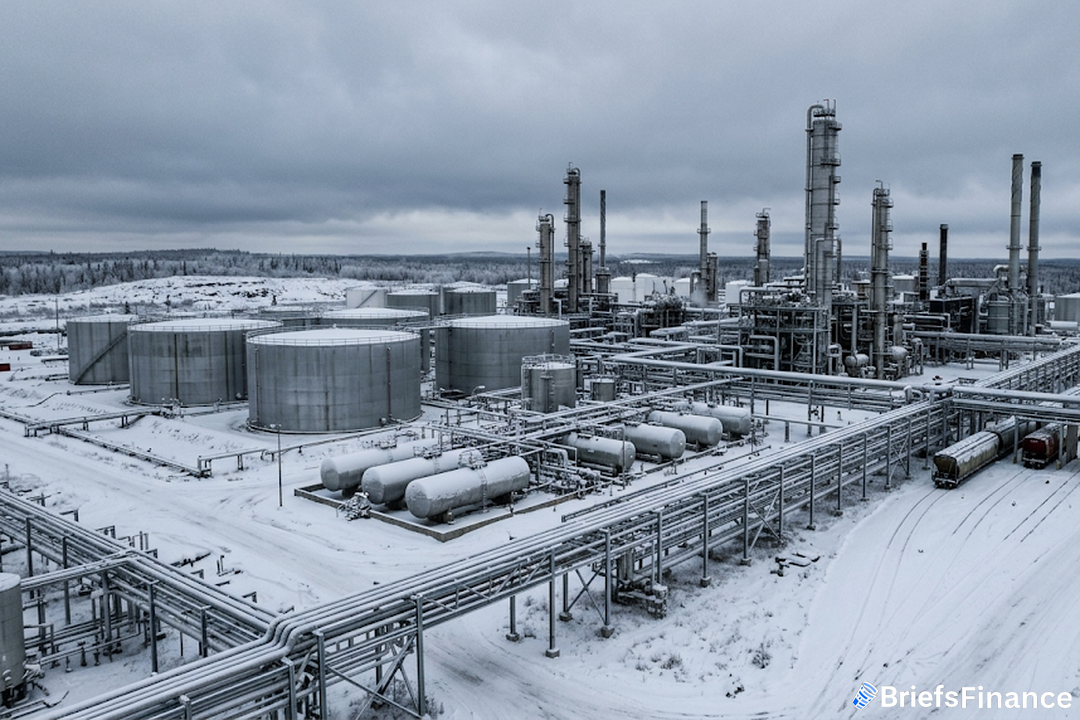
The Refinery and the Shutdown
Irving Oil runs the biggest oil refinery in all of Canada, and it sits in Saint John, New Brunswick. That plant handles about 300,000 barrels of crude every day, turning it into gasoline, diesel, and heating oil. A lot of that fuel heads south into the northeastern United States, where states like Maine and Massachusetts depend on it.
Now the plant is going offline for a while. That is roughly a period of about two and a half months.
A refinery shutdown for routine checks and repairs is normal. But the timing here is not great.
The Saint John refinery has been a critical fuel source for the Northeast for decades. During its 2024 turnaround, which lasted five weeks, regional fuel prices saw temporary spikes.
Get the market news that matters in a five-minute read with Market Briefs, our free daily newsletter
Already Tight Fuel Markets
Oil markets were already feeling squeezed before this news. The US-Israeli war on Iran has disrupted flows in a key oil region. Russia's war on Ukraine has been shaking up global energy supplies for years. Together, those conflicts have kept fuel inventories lower than usual.
Right now, the average price at the pump across the United States is above $5 per gallon. Crude oil itself is trading at $82.49 per barrel. Those are elevated numbers by historical standards, and they reflect a market where supply is struggling to keep up with demand.
So when a refinery that supplies a big chunk of the Northeast shuts down for two and a half months, it does not help. Less supply in an already tight market usually means higher prices at the pump. That is simple economics.
What It Means for Your Wallet
The Northeast does not just use gasoline and diesel from this plant. It also gets a lot of its heating oil from the Saint John refinery. And the shutdown runs right into the start of winter.
Heating oil demand typically picks up as temperatures drop, which pushes inventories lower and prices higher. That happens every year. But with one of the region's main suppliers offline for part of that period, the seasonal squeeze could be worse than usual.
So what does that mean for you? If you live in the Northeast, you might want to keep an eye on heating oil prices this fall. The shutdown could add to the normal winter bump. And for anyone filling up a gas tank, expect that the pressure on prices is not going away anytime soon.
This is not a crisis - just a reality check. A big piece of the supply chain is taking a break, and the market is already running on thin margins. Whether that pushes pump prices higher or just keeps them from falling depends on a lot of factors. But the risk is real enough that anyone who relies on heating oil in the Northeast should plan for a pricier winter.
Join Market Briefs, our free daily newsletter, for a quick daily rundown of the markets