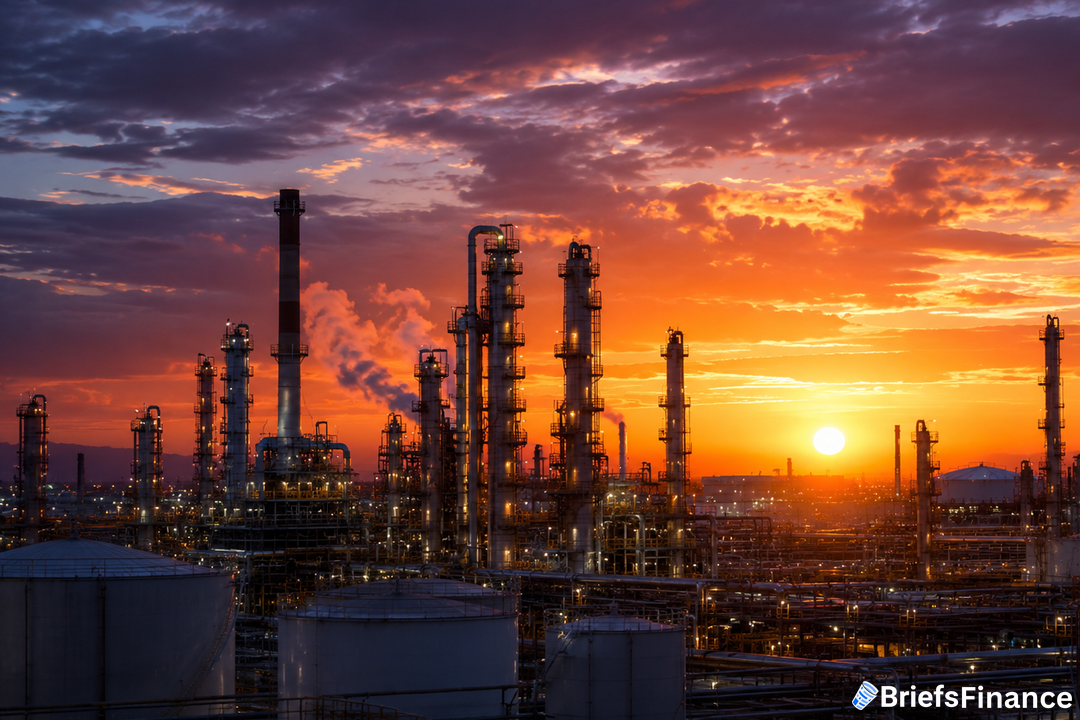
The Money Came In, and the Bills Went Down
Oil giants had a very good spring. Second-quarter profits for the biggest US producers more than doubled as fuel prices climbed and refining margins neared record levels. But the companies were wary that conflict-fueled price surges might not last.
That is why the money went to the balance sheet first. Shell followed a similar path, cutting net debt by about $10.8 billion and lowering its net-debt-to-equity ratio from above 23% to under 19%.
Chevron's chief financial officer, Eimear Bonner, said: "We were able to reduce debt. And keep more cash on the balance sheet, given the volatile times that we're operating in."
A Record Quarter With a Small Miss
Chevron's quarter was clean. Its net-debt-to-cash-flow ratio fell by more than half.
Production climbed by a fifth to 4.07 million barrels of oil equivalent per day, helped by output in the Gulf of Mexico and Kazakhstan plus the absorption of Hess Corp. assets bought in the $55 billion takeover last year. Its stateside production hit a record high. Share repurchases moved higher, yet the total came in close to the smallest amount the company had forecast.
Get the market news that matters in a five-minute read with Market Briefs, our free daily newsletter
Refining was also a bright spot. Chevron pushed its US refineries to near maximum utilization, above 97%, and its fuel-making profit hit $2.4 billion, more than 10 times what it made in the prior quarter. With US gasoline prices back above $4 a gallon, that tracks.
ExxonMobil narrowly missed profit forecasts. Adjusted earnings per share came in at $3.52, missing the average Bloomberg estimate by $0.02. The miss came partly from refinery maintenance, which limited how much it could cash in on high fuel prices.
Even with that miss, the firm earned $14.7 billion in the second quarter, its strongest profit since Russia's 2022 invasion of Ukraine. ExxonMobil's refining profit hit $4.1 billion, the highest in four years, but that was below the $5.37 billion analysts expected.
Why Not Just Hand It All Back?
So why prioritize debt over bigger payouts? The profit surge came as buyers scrambled to substitute for Persian Gulf supplies, a region that handles 20% of the world's petroleum.
ExxonMobil's CFO, Neil Hansen, described the oil industry as a "pretty low margin business." "We're not big enough to impact price, really no company is," he said.
Shell kept its share buybacks at $3 billion rather than pushing higher. Holding buybacks steady underscored Big Oil's uncertainty about whether the conflict-driven price surge would last. Crude has already dropped from its April spike as the US and Iran have held on-and-off discussions.
What It Means for Gas Prices
Gulf Coast refiners are now earning a record premium for making fuel, and diesel prices stand more than 40% above their pre-war levels.
President Trump has ordered a Justice Department investigation into gasoline prices, saying they were not falling fast enough. The US-Iran conflict has entered its sixth month.
Rather than sharply increasing buybacks, the firms have prioritized paying down debt and preserving cash.
Join Market Briefs, our free daily newsletter, for a quick daily rundown of the markets