What changed and why
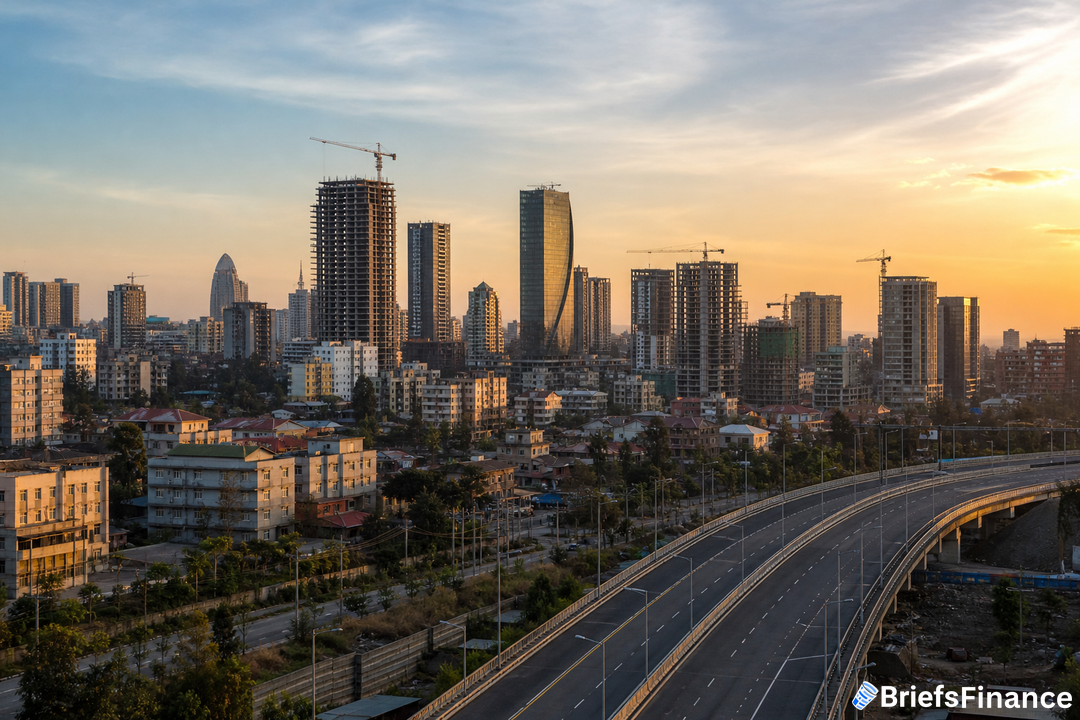
Ethiopia shifted its GDP base year from 2015-16 to 2024-25; according to Fitsum Assefa, the old benchmark failed to capture structural changes, expansion across sectors, and emerging areas like digital finance and services. The update uses a recent agriculture census plus household polling, and, for the first time, incorporates information from state-owned enterprises and non-profit institutions.
Two numbers frame the move. Fitsum said GDP for the year through July was $210.7 billion, and on the new base year the economy is put at $201.4 billion, which is 59% higher than the earlier figure. Including emerging sectors helped lift Ethiopia to Africa's fifth slot by size.
Fresh information and smarter tools can reshape an investor's perspective and choices. We're hosting our first ever investor livestream on 11/17 to show you how to use ChatGPT and Claude to invest like a pro, hosted by Briefs Finance CEO Jaspreet Singh. Save your seat.
The new breakdown
Services now make up nearly 36% of output, which includes transport and contributions from Ethiopian Airlines, Africa's biggest carrier. Agriculture accounts for 32% and industry 30%. A related comparison notes South Africa's figures are shown in current dollars, while Ethiopia's figures reflect the fiscal year through July 2025, and that South Africa's own rebasing last week also changed its debt ratios.
Why it matters for your portfolio
According to Oxford Economics, the expansion of the GDP base will cause Ethiopia's debt-to-GDP readings to appear lower, which could bolster headline debt sustainability indicators as the country continues to restructure loans through the G20 Common Framework. As Alexander Venter put it, "However, outstanding debt, servicing costs, and foreign-currency financing requirements remain unchanged." Ethiopia, the continent's second-most populous nation, projects 10.2% growth this fiscal year, supported by reforms to attract foreign investment and open previously restricted sectors like telecommunications and banking. Authorities also allowed a freely floating currency two years ago as part of an IMF-backed program. The bottom line: the optics on debt improve, but the obligations do not, while faster growth and liberalization could shift where capital flows next.
Learning to use emerging tools thoughtfully can add a quiet edge to your portfolio management. On 11/17, our CEO Jaspreet Singh goes live for our first ever investor livestream on how to use ChatGPT and Claude to invest like a pro. Register to join him.