Results and market reaction
AMD beat expectations on both profit and sales, with sales increasing 45% and data center revenue almost twofold compared with a year ago. The stock climbed 8% in late trading. Earlier in the day, CoreWeave and Nebius rallied and stayed up after the print.
The company said third-quarter adjusted earnings were $2.09 per share against $1.95 expected, on revenue of $13.38 billion vs. $13.09 billion projected. Sales rose from $9.25 billion in the same period last year. The shares are up about 125% year to date, even after three down sessions before Tuesday's bounce amid broader worry about AI spending.
Data centers, AI, and supply readiness
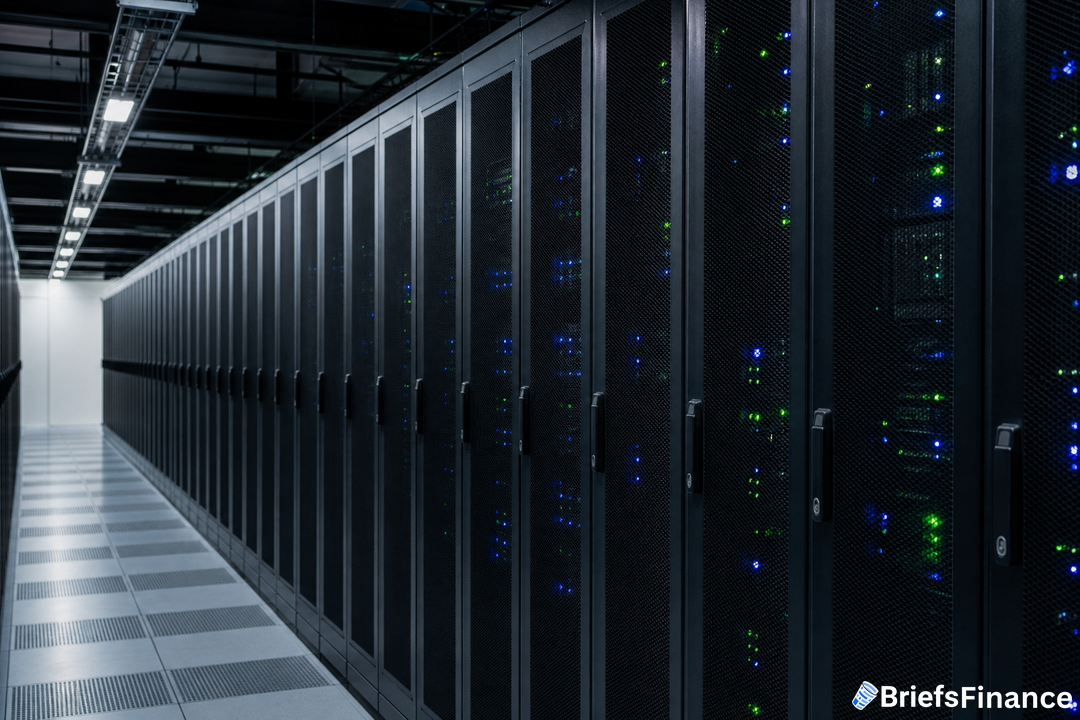
Data center is now the center of gravity for AMD's business. It accounted for 64% of company revenue, compared with 47% in the same period a year earlier, and management expects it to provide most of AMD's growth in both revenue and earnings. CEO Lisa Su said she expects server revenue to be twice as large year over year in 2027, and she noted that data center AI growth is set to accelerate faster than AMD projected 90 days earlier.
Su emphasized supply preparation: "We have worked across our supply chain to secure the wafers, substrates, advanced packaging, memory, and other key components needed to support much higher growth next year." She also flagged agent-focused AI demand, saying, "Adoption is just starting, and we expect demand to grow sharply as agents are deployed more broadly and take on more complex work." The company noted that agentic AI demand helped drive AMD shares to an all-time high in October.
Products, partnerships, and the broader chip backdrop
AMD sells data center GPUs and full rack systems called Helios that go up against Nvidia's Grace Blackwell and Vera Rubin systems. Meta, Microsoft, Anthropic, OpenAI, and Oracle are beginning to deploy Helios, and Meta said last week its racks are operational. AMD also agreed to put $1 billion into Meta's equity offering and committed up to $5 billion to Anthropic, which released its prospectus last week as it moves toward a potential IPO.
AMD announced in September that it planned to acquire World Labs in an all-stock transaction worth $8.2 billion. The San Francisco lab, founded by Fei-Fei Li, is building a world model that simulates 3D environments for robotics and other physically grounded AI.
The right tools can help investors find an edge in shifting markets. We're hosting our first ever investor livestream on 11/17 to show you how to use ChatGPT and Claude to invest like a pro, hosted by Briefs Finance CEO Jaspreet Singh. Save your seat.
The competitive context is shifting too. Intel recently reported its data center segment grew 78% in the third quarter, but its shares dropped 29% on Friday on worries about soft guidance and whether it can meet demand. On supply, Su said on an October trip to Taiwan that she plans to "substantially increase our supply in 2027." She and Nvidia's Jensen Huang have made multiple visits to Taiwan and South Korea this year, meeting with Taiwan Semiconductor Manufacturing Company and memory suppliers SK Hynix and Samsung.
The PC backdrop remains weak. Counterpoint Research estimates global PC shipments fell 4% in the second quarter year over year because of higher component costs. AMD combines PC and gaming chips in one segment, which fell 8% to $3.7 billion, with gaming alone down 40%.
Outlook and what it means for your portfolio
For the fourth quarter, AMD guided to about $17 billion in revenue, ahead of the $16.2 billion LSEG consensus. It expects gross margin of 55%, a touch below the 55.3% StreetAccount figure. The bottom line: AMD is leaning into data center and AI systems while PCs and gaming lag, with supply positioned for 2027 and agentic AI as a new tailwind.
Curious investors often gain an advantage by learning to use smarter tools. On 11/17, our CEO Jaspreet Singh goes live for our first ever investor livestream on how to use ChatGPT and Claude to invest like a pro. Register to join him.