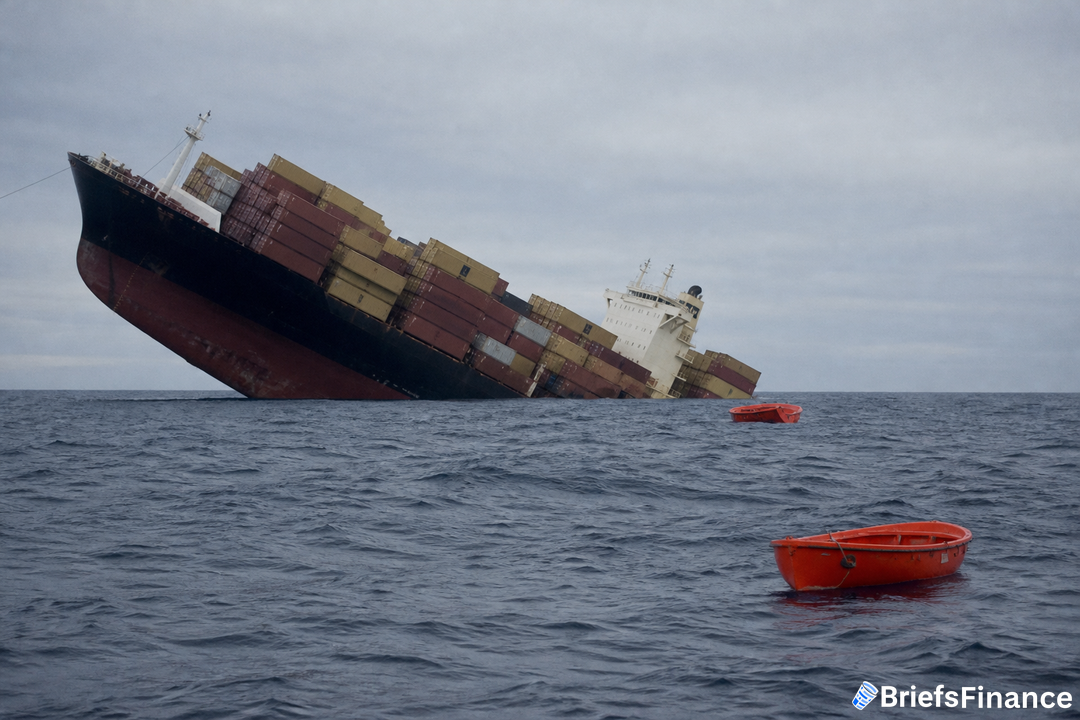
What happened at sea
A midweek attack turned deadly for the vessel, not the people. The GFS Pride was struck by an unknown projectile on Wednesday in the Strait of Hormuz, ignited, and later went under. Singapore's Maritime and Port Authority said all 21 crew members got off safely and no injuries were reported. After the sinking, Pakistani maritime authorities issued a navigational alert noting that containers were spotted drifting in the area.
On the same day, a second Singapore-registered boxship, the GFS Giselle, was also hit by an unidentified projectile and sustained damage to its hull. It made it to a safe anchorage, and the crew was unharmed, the Singapore authority said.
Shipping incidents reach insurance costs and freight rates quickly. Market Briefs covers that chain free every weekday.
Conflicting accounts and security responses
Early Wednesday, the state news agency Tasnim carried a statement from Iran's Revolutionary Guard claiming that a naval mine strike caused a container vessel to blow up and go under. Marisks, a maritime security firm, said there is no independent confirmation that a mine caused the Pride to go down and assessed Iran's claims as "consistent with an ongoing psychological operations campaign aimed at generating fear, increasing uncertainty and discouraging commercial shipping" in Hormuz.
Singapore's maritime authority called the incidents "Such attacks are unprovoked, unjustifiable and a breach of international law." The United Kingdom Maritime Trade Operations Centre has logged over 20 attacks this month across the Strait of Hormuz, the Persian Gulf, and the Gulf of Oman, most of them involving oil tankers.
Energy flows and what it means for your portfolio
Tehran has stepped up strikes on commercial ships moving through Hormuz in recent weeks as it seeks to curb a rebound in crude exports via the strait. Exports through Hormuz returned to prewar levels in September when the U.S. military was guiding tankers through, but volumes have eased back as attacks accelerated.
According to Kpler, in the week ending Oct. 12, traffic via Hormuz ran at an average of 8.5 million barrels a day - about 40% beneath pre-war norms. And day to day, it has been choppy: Kpler tracked about 3 million barrels transiting Hormuz on Monday and 6 million barrels on Friday. The International Maritime Organization reports that this month's spate of assaults has resulted in two sailors unaccounted for and 12 wounded.
Losses on key routes get priced into everything carried on them. Join Market Briefs free and follow it.