Deal basics and who owns what
GlobalFoundries is adding two factories at its upstate New York site that will be jointly owned by the U.S. and Japan and run within the same operating model the company uses today. The plants will be financed through Japan's broader promise to invest $550 billion in the U.S.
Alongside the plant funding, the U.S. Commerce Department will acquire roughly a 4% equity position in GlobalFoundries, described as a way for the public to participate in the company's growth. Profits from the new facilities will be split among the owners and GlobalFoundries using a framework tied to last year's U.S. trade agreement with Japan, which limited tariffs on Japan to 15% in return for a pledge to invest in U.S. projects by the close of President Donald Trump's term.
What is getting built and why it matters
These fabs will turn out what GlobalFoundries calls essential chips, the workhorse semiconductors that are less complex but crucial for cars, factory gear and communications equipment. Demand has stayed strong as more everyday products add electronics.
The AI surge has stretched supplies further because the industry has prioritized cutting edge chips like Nvidia's AI accelerators. GlobalFoundries does not produce the latest processors or memory chips that have led the recent demand spike, but it is a key provider of other vital components that support high end semiconductors by handling power and translating signals.
Fab investment decisions lock in supply for the better part of a decade. Market Briefs covers semiconductors free every morning.
Money flows, grants and governance
GlobalFoundries will repurpose money from a prior Chips and Science Act grant to enhance production, with projects spanning silicon photonics, advanced packaging for chips, and silicon germanium. Separately, the Commerce Department said it is shifting $955 million of Chips Act incentives to help pay for GlobalFoundries' factory expansion and modernization. The company will also put $5 billion into capital projects at its New York and Vermont sites.
Within the U.S.-Japan framework, the Trump administration chooses which projects proceed based on submissions reviewed by an investment committee chaired by Commerce Secretary Howard Lutnick. Japan can opt out of a project it views as commercially weak or overly risky. Once Japan has recovered its principal and interest, profits from the investments are shared 90 to 10 in Washington's favor.
Japan's commitment to GlobalFoundries marks its first move into U.S. chip manufacturing through this initiative. Earlier tranches funded $36 billion in U.S. oil, gas and critical minerals projects and $73 billion in nuclear power and natural gas power plants.
Timing, customers and the market read
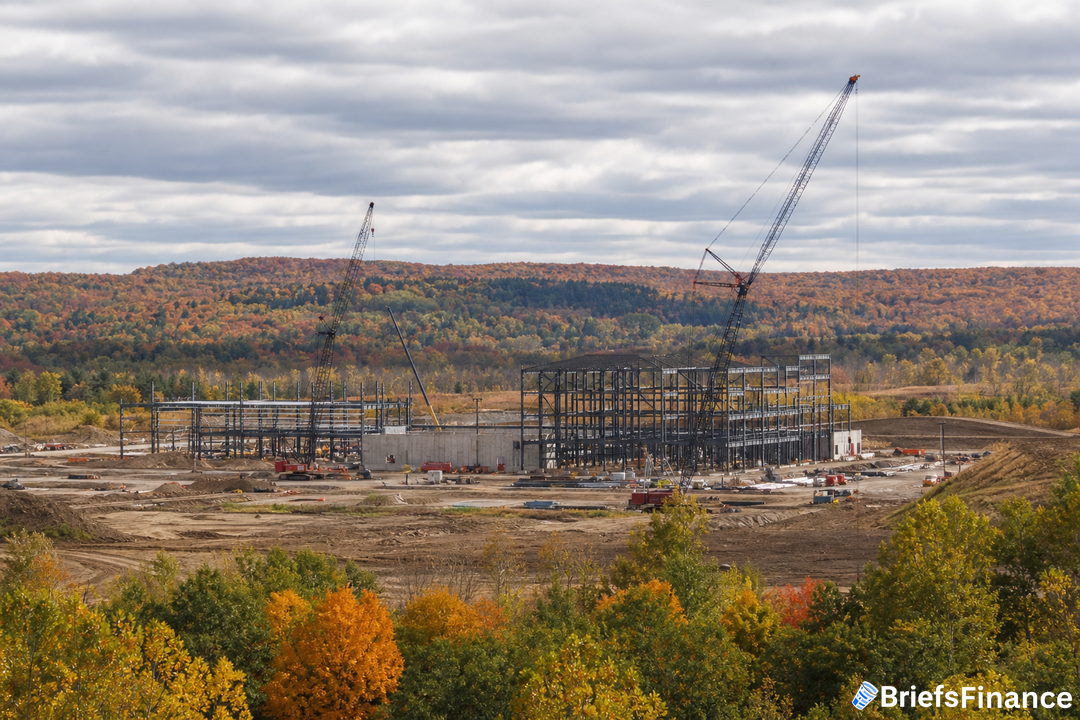
GlobalFoundries has started work on the first plant by its home base in Malta, New York, aiming to bring it online in 2029. A second plant would follow as quickly as feasible after the first is complete, though the go decision will depend on demand. "We need to respond to what our customers need," Chief Executive Officer Tim Breen said. "Right now, the whole industry is in short supply." He added the expansion is "market-dependent" and that "every indicator I see today is flashing green around market demand." Breen also called the plan "a pretty exciting win-win in terms of the economics of it."
The new facilities will operate like GlobalFoundries' existing fabs that serve clients including Apple and Japan's Renesas. Shares rose as much as 6.6% after Wednesday's announcement and were up 34% for the year through Tuesday's close.
Industry context and what to watch for your wallet
GlobalFoundries is one of the few U.S.-based chipmakers still manufacturing stateside. Intel is another, and through an unusual arrangement struck last year, the federal government has become one of Intel's largest investors. GlobalFoundries, formed from AMD's former plants plus other acquired facilities, stepped away from the most advanced, most expensive manufacturing needed for products like Nvidia's AI processors.
That conservatism has kept it profitable but has often muted revenue growth. Last year the company spent under $1 billion on new plants and equipment, while Taiwan Semiconductor Manufacturing Co. spent more than $40 billion.
For everyday investors, the takeaway is simple: this is a big real money push into the less flashy chips that go into cars, appliances and even space gear. The long term payoff depends on execution, demand for these essential chips, and how the profit sharing rules flow once Japan recovers its capital.
Where chips get made is now an industrial policy question. Get the free Market Briefs daily newsletter and follow the build.