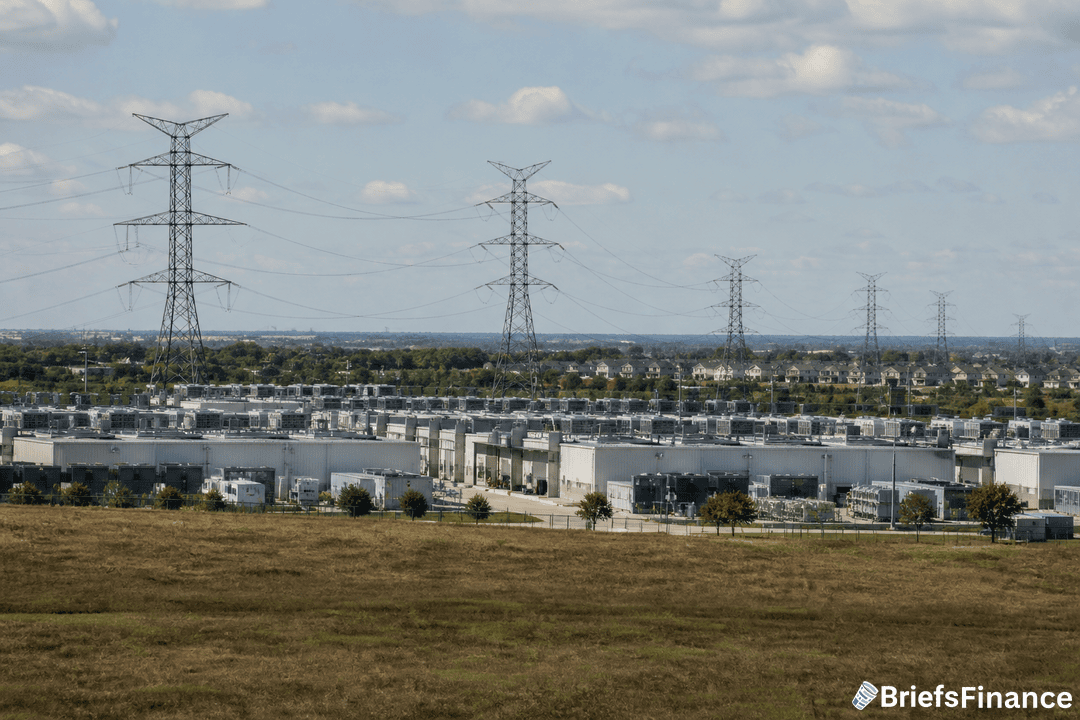
Why data centers are suddenly a kitchen table issue
Those big, windowless server halls are now a campaign trail talking point. People living near proposed sites worry about heavy power and water use, plus the noise and heat. And with household electricity costs climbing, data centers have become an easy villain, especially since AI-scale facilities can consume power on the scale of a small city. According to Data Center Watch, community resistance has stalled at least 120 projects, collectively priced at nearly $200 billion, over the year's first half.
Voters are wary. A Pew Research Center survey in July and August found that 60% would be uncomfortable with a new data center nearby, and 50% said these facilities tend to hurt household energy bills. That frustration has turned into a political liability for Republicans seeking to keep control of both chambers in November, even as President Donald Trump said he would cut electricity prices by 50% if he were reelected to the White House.
What has happened to electricity prices
From January 2025, when Trump took office, through July of this year, the national average monthly residential electricity price increased 15% in nominal terms. Looking at a broader window, for the first seven months of 2026, average residential prices were nearly 40% above the same span in 2019.
The pain is uneven. Maine saw the biggest jump at around 90%, with California and New York closer to 70%. Iowa and Nevada were much tamer, with increases under 15%.
"There isn't a single unified story of what's going on nationally," said Severin Borenstein, an economist at the University of California, Berkeley. On the West Coast, wildfire damage has lifted bills even where wholesale costs held steady, whereas on the East Coast - especially within PJM - surges in wholesale prices have passed through to retail rates. Common threads include pricier natural gas and a wave of spending to replace old grid equipment.
"There are portions of the power grid that are 80 years old at this point," said Ryan Hledik, a principal at The Brattle Group. The gear to fix it is also pricier and slower to arrive, from gas turbines to transformers, and that supply squeeze is partly tied to data center demand.
Electricity bills are becoming the most visible cost of the AI boom. Market Briefs covers that collision free every weekday.
How data centers strain the grid and hit bills
Running thousands of chips plus cooling gear takes serious juice. A single 1 gigawatt site can draw roughly what about 800,000 homes use, according to the Electric Power Research Institute. In areas with heavy data center footprints, a 2025 Bloomberg News analysis found monthly wholesale prices were as much as 267% above 2020 levels.
The US grid was not built for these massive, sudden loads. Connecting a large facility may demand investments of hundreds of millions of dollars in new generation, transmission, and related upgrades. Historically those costs have been spread across all customers, which can lift everyone's bill.
The dynamic is most visible on PJM Interconnection's system, spanning 13 states and including Northern Virginia's Data Center Alley. During the first seven months of 2026, PJM's average wholesale price rose 47% year over year, coming in at nearly $117 per megawatt-hour, the market monitor Monitoring Analytics reports. The independent market monitor said prices would have been around $10 lower without data center demand. The buildout has also pushed PJM to procure more backup capacity to cover future peaks.
Planning is hard when the target keeps moving. Developers have submitted "phantom" interconnection requests, marketing an identical project to several utilities to secure the fastest connection, which clouds demand forecasts. There is also the risk utilities invest in upgrades for projects that never get built if AI appetite cools, leaving remaining customers to cover the bill.
A large number of utilities are gearing up to serve data centers by either constructing or signing contracts for new natural gas-fueled plants. RMI, a clean energy think tank, estimates that overbuilding gas capacity could raise the average US household's electric bill by up to $118 per year.
The political counteroffensive
Courting data centers used to be an easy jobs pitch. Now it is a headache for both parties. In September, the House passed a bipartisan measure requiring states to consider a federal standard that would make large data centers pay for the new power infrastructure they need. The bill stalled in the Senate, with Democrats calling it "toothless" because state regulators would not have to adopt the standard.
Trump has taken aim at attempts to halt new sites, contending they are crucial for the US to prevail in the AI race with China, while also asserting that tech firms should pay the costs associated with the additional electricity they need. His "Ratepayer Protection Pledge" has signatures from utilities and hyperscalers with the largest data center portfolios, including Microsoft, Alphabet's Google, and Amazon. The initiative is non-binding and offers no details on how it would mesh with the complicated rate-setting landscape.
States are moving faster. In Texas, Governor Greg Abbott has, in practice, put new data center approvals on hold until a comprehensive audit is finished. New York Governor Kathy Hochul imposed a 12-month halt on granting permits for large data centers while the state develops a framework to evaluate environmental impacts and implications for energy costs. Over a dozen additional states have proposed or weighed comparable measures, according to the National Conference of State Legislatures.
What it means for your wallet: outcomes will hinge on where you live. If your region is courting big facilities or your grid is already running hot, watch how regulators allocate upgrade costs, whether utilities lean on new gas plants, and how they handle rising equipment prices. Those choices show up in the line items on your monthly bill.
When infrastructure shows up on household bills, politics follows. Join Market Briefs free and follow the fight.