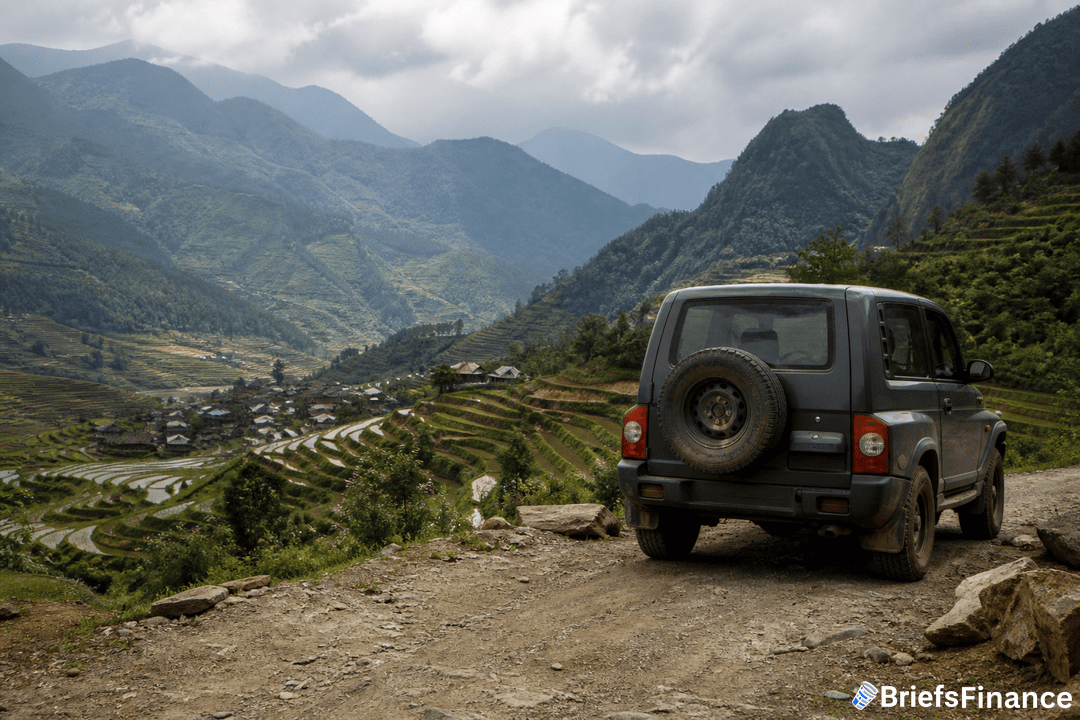
A downsized Land Cruiser for tight streets and shifting rivals
Toyota Motor Corp. built the Land Cruiser FJ after customers asked for a version that fits Asia's often narrow roads. Priced from around ¥4.5 million, or about $28,500, the smallest Land Cruiser is beating expectations at home and seeing solid uptake abroad, according to Masaya Uchiyama, the line's chief engineer. "We're trying to reach people who may previously have avoided the Land Cruiser because of its size," he said. He also noted the competition, adding, "The Chinese are producing SUVs and incorporating technology that's very impressive," while positioning the Land Cruiser's strength as reliability and durability.
The FJ is shorter and narrower than its three larger Land Cruiser siblings. It uses a 163-horsepower engine and includes driver assists such as a system that helps the vehicle descend steep slopes without locking the tires. In a recent off-road run in Toyota City, it handled climbs, rocks and potholes with relative ease. The hydraulic steering needs more muscle for tight turns than the bigger models but gives more immediate road feel.
Sales snapshot and price stack
The Thailand-built FJ debuted there in March, setting the stage for sales in Southeast Asia. Toyota says about 12,000 FJs were added to Japan's registry between mid-May and August, far above a 1,300-per-month target. In Thailand, the Philippines and Vietnam combined, sales are around 3,000. For context, Toyota's smaller, city-leaning Yaris Cross often moves north of 3,000 units in a single month in Thailand.
Competition is lively. Pricing for the five-door Suzuki Jimny begins at roughly ¥2.9 million. In Thailand, the FJ is priced at 1.29 million baht, while Chery's V23, a retro-styled electric SUV, starts near 700,000 baht, about $20,800.
Which vehicles a carmaker bets on reveals where it sees margins going. Market Briefs covers the auto business free every weekday.
Why Southeast Asia is the real battleground
Southeast Asia is among the fastest-expanding car markets and has served as a central production hub for Toyota and Honda for decades. But tides are shifting as Chinese exporters push in. In Thailand, thanks to ample EV incentives and reduced import duties, Chinese brands have grown to nearly 30% of car sales, up from about 4% five years ago. Names like BYD, Chery, Jaecoo and MG are grabbing attention with aggressive pricing.
That is the backdrop for the FJ. "The Chinese are producing SUVs and incorporating technology that's very impressive," Uchiyama said, but the Land Cruiser pitch leans on durability and reliability. Bloomberg Intelligence analyst Tatsuo Yoshida adds that the FJ's smaller footprint could broaden the Land Cruiser's reach, staying practical in cities while keeping real off-road chops.
What's next and what to watch
Toyota plans to bring the FJ "in all markets where it makes sense to have a more compact Land Cruiser," with strong demand expected beyond Japan and Southeast Asia, including in Africa and the Middle East. The model also taps a deep brand well: the Land Cruiser has a 75-year track record, stretching from a 1950s predecessor climbing to Mount Fuji's sixth station to later versions serving as ambulances, firetrucks and safari vehicles.
Rival moves are coming too. Mitsubishi Motors plans to bring back the Pajero following its 2021 production halt, a model likely to compete with the Land Cruiser 300, priced from about ¥6.3 million in Japan. For context on who is winning the broader auto wealth game, the Bloomberg Billionaires Index provides a day-by-day list of the world's richest people. For your wallet, the takeaway is simpler: if Toyota can keep urban drivers interested while holding its off-road identity, the FJ could help the brand stay relevant in a region where the playbook is changing fast.
Smaller, cheaper models are where volume growth increasingly lives. Join Market Briefs free and follow the strategy.