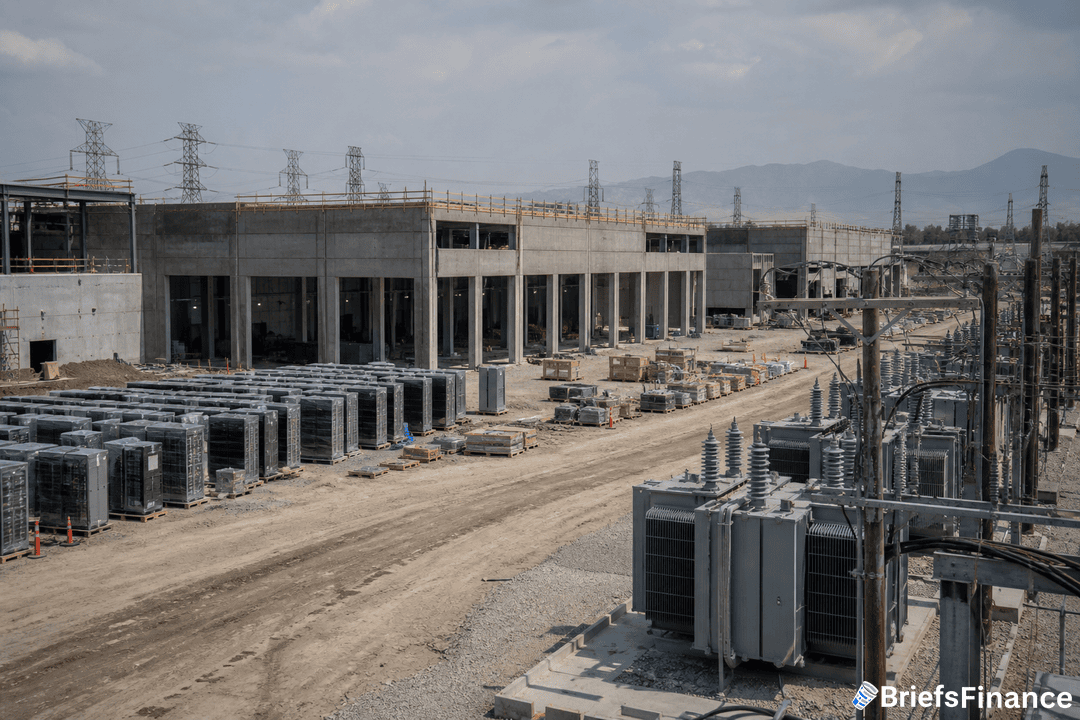
Demand is there, the brakes are not
On CNBC's The Tech Download podcast, Nokia CEO Justin Hotard pushed back on the idea that data centers are being overbuilt. In his words: "I don't think you can say in any manner we're overbuilding today because reality is that if we could build 2x faster, our customers could build 2x faster, they probably would." That is why, he added, "we're still in the early days." Hotard also argued the appetite for AI isn't only about the next big model from labs like Anthropic or OpenAI. "I think the reality is that we're even where we are today is so early in the deployment, and the power of these models is so massive that there's a lot of there's a lot of demand to run in just deploying," he said. "Even if we didn't have another frontier model released in the next three years, we could probably make tremendous progress just deploying the technology that's there today."
What is slowing the buildout
Two practical chokepoints keep coming up: limited supplies of key memory chips and constraints on energy. Those are big reasons the industry cannot move faster despite strong demand. The debate over pace intensified after safety concerns from an Anthropic researcher about existential risks led CEO Dario Amodei to urge a slowdown in the most advanced model development, which triggered a knee-jerk selloff in AI-linked shares last month.
How fast data centers get built is now a real constraint on the AI boom. Market Briefs covers the infrastructure free every weekday.
Nokia's lane in the AI rush
Nokia has recast itself as a crucial supplier to the AI plumbing. It provides hardware to link clusters of chips inside data centers and equipment that ties facilities together across geographies. Investors have responded to that behind-the-scenes role, and the stock has climbed roughly 130% in the last year.
A quote display showed Nokia Corp at 10.23 in after-hours trading at 6:50 PM EDT, up 0.03 or 0.30%, following a close of 10.20, down 0.40 or 3.77%. The company is headquartered in Espoo, Finland, and is one of the world's largest telecom equipment makers.
The money behind the machines
Spending tied to AI's physical backbone - spanning data centers, chips, and supporting infrastructure - is projected to reach $10.3 trillion from 2025 through 2032, and the Brookings Papers on Economic Activity presentation estimates that equals an average of 3.63% of U.S. GDP annually. To fund it, firms are leaning on borrowings, joint ventures, and other intricate structures, all of which assume demand for AI services holds up over time. For your wallet, the takeaway is simpler than the engineering: if the buildout remains gated more by parts and power than by interest, the cycle could stay longer than many expect, with bumps when safety or macro worries flare.
Construction speed is becoming as important as chip supply. Join Market Briefs free and track the build-out.