A Partnership That Started With Cars Just Got Much Bigger
That relationship just took a huge leap.
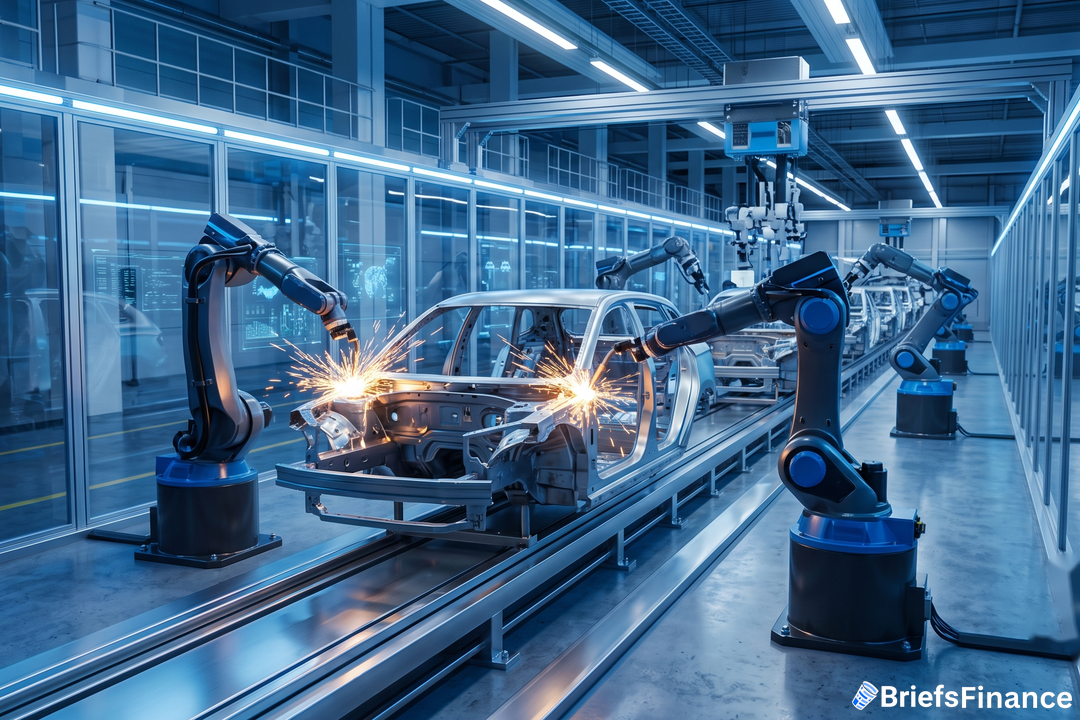
Now Toyota will use Nvidia's chips and software in smart cities, traffic-management systems, and the factories that build its vehicles. The new deal follows an earlier expansion: during the previous year, Toyota agreed to equip its next-generation commercial vehicle fleets with Nvidia's Drive AGX Orin platform. So this is not a small experiment - it is a full-scale expansion.
Deepu Talla, who leads Nvidia's robotics and edge AI division, said, "We are expanding our partnership to advance physical AI across not only automotive but also robotics and smart cities."
Physical AI is a term for AI that works in the real world - in machines, robots, and buildings - rather than just crunching numbers in a data center. That is the big push across the tech industry this year: getting AI out of the cloud and into everyday stuff.
Get the market news that matters in a five-minute read with Market Briefs, our free daily newsletter
Why This Matters Beyond the Headlines
The broader story here is that AI is moving beyond data centers and into physical spaces. Toyota is one of the biggest makers of vehicles and industrial equipment on the planet. If they are loading Nvidia's AI into factories and traffic lights, that is a real signal about where the industry is headed.
He is telling them not to worry about overinvestment, basically saying the risk of missing out is bigger than the risk of spending too much.
The partnership's expansion builds on earlier collaborations. Previously, Toyota and Nvidia worked with US-based Ready Robotics to create software aimed at boosting factory-floor safety and productivity. That pilot project demonstrated how Nvidia's AI could control industrial robots, paving the way for the current broadened deal.
As one of the world's largest automakers, Toyota's adoption of Nvidia's physical AI across its factories and urban systems could accelerate the technology's deployment in other industries.
What It Means for Your Portfolio
For investors, the key takeaway is that the AI boom is not just about the chips that train the models. It is also about the chips that run inside machines out in the real world. Toyota is a massive customer, and this deal shows that Nvidia's technology is finding its way into industries far beyond the usual tech names.
The wider trend is worth watching. If the biggest automaker in the world is betting on AI for city infrastructure and factory automation, other companies are likely to follow. That could mean more business for suppliers like Nvidia - and more competition for the companies that build industrial robots and traffic systems the old way.
The bottom line: AI is no longer just a story about data centers and chatbot apps. It is showing up in factories, on roads, and in the smart cities that are being built right now. For your portfolio, it is worth paying attention to which companies are actually putting AI to work in the real world - because that is where the next wave of growth may come from.
Join Market Briefs, our free daily newsletter, for a quick daily rundown of the markets