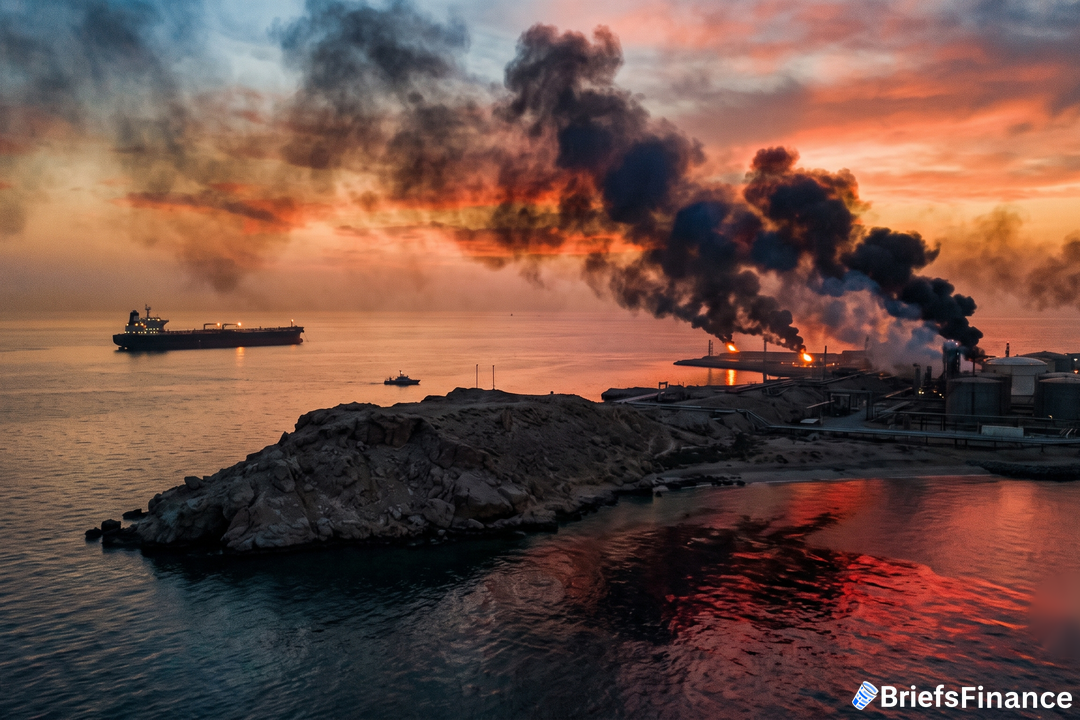
Why the Fighting Escalated
A month ago, the US and Iran had a temporary peace deal. It fell apart fast.
The two sides could not agree on who controls the Strait of Hormuz, the narrow channel that connects Persian Gulf oil exporters to the rest of the world. Iran started attacking ships it said were crossing without permission. President Trump responded by ending a waiver on Iranian oil sanctions, putting a naval blockade in place, and ordering airstrikes.
The newest airstrike targeted missile depots and launch positions on Greater Tunb Island. The US military said the 90-minute strike "further degraded Iran's ability to attack commercial shipping" in the strait. But this was not a one-off. As of July 15, 2026, the US has carried out attacks on five straight days.
Iran says more than 30 civilians have been killed by US strikes in recent days. It also reported that seven people died in a missile attack on a military barracks in Iranshahr.
Get the market news that matters in a five-minute read with Market Briefs, our free daily newsletter
Trump is not backing down. He said the bombing will get worse unless Iran negotiates. "Next week comes the power plants. We're going to knock out all of their bridges," he said.
What Happened to Oil Prices
Oil markets do not like uncertainty in the Persian Gulf. They really do not like a blocked Strait of Hormuz.
Before the war, roughly one-fifth of all global oil and liquefied natural gas flowed through that waterway. The European Union's aviation safety regulator also raised the threat level for airlines flying over the Middle East.
For now, the waterway is simply closed. Iran's Revolutionary Guard put it bluntly: "The region's oil and gas exports are either available to all or available to none."
What Comes Next
Trump said he will keep bombing unless Iran agrees to reopen the strait and stop attacking ships. Iran's military said the strait stays closed until the US stops the strikes and lifts the blockade. So both sides are dug in, and negotiations on a broader peace deal are stalled.
The IMO warning and the EU aviation alert mean the situation is not calming down anytime soon. For investors, that creates a tricky environment. Oil at $85 and rising hits your portfolio in two ways: higher energy stocks might look good, but every other company that depends on fuel or shipping faces squeezed profits.
The biggest question is how long this lasts. If the strait stays closed for weeks, oil could go higher. If a new deal emerges, prices could drop just as fast. Neither side looks ready to blink.
The bottom line: The Strait of Hormuz is the world's most important oil chokepoint, and right now it is not working. That uncertainty is built into oil prices already, but another escalation - or a sudden peace - would move markets fast. Keep an eye on the headlines from the Gulf, because what happens there does not stay there. It shows up in gas prices, shipping costs, and the stocks you own.
Join Market Briefs, our free daily newsletter, for a quick daily rundown of the markets