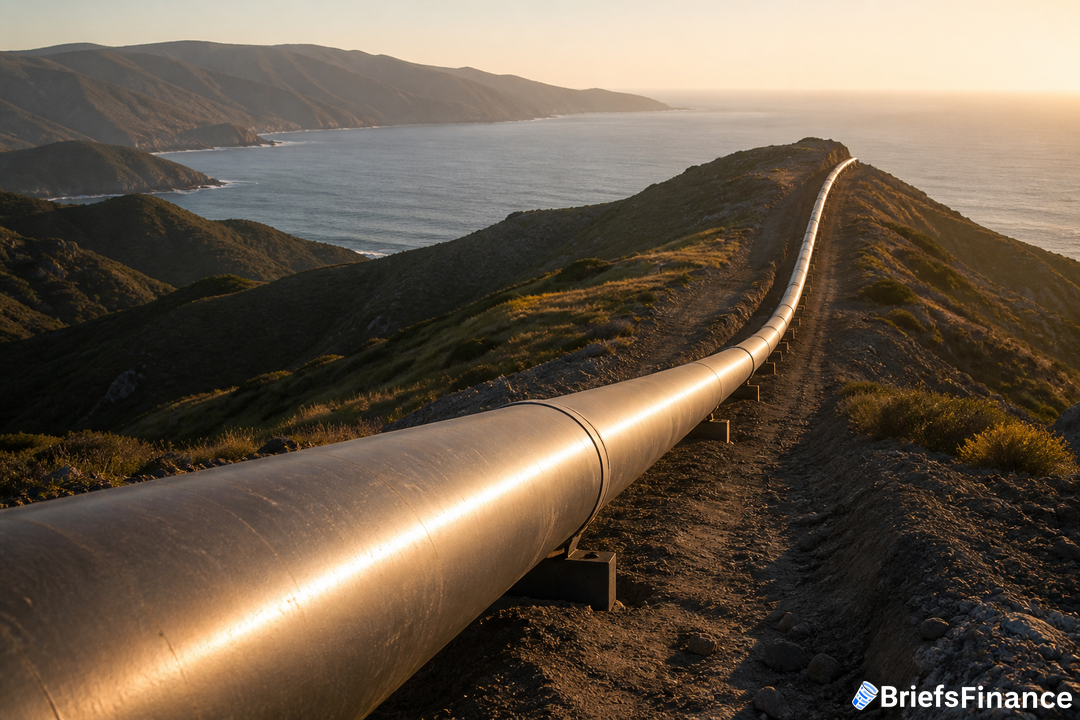
What Ottawa announced and why it matters
Prime Minister Mark Carney said Ottawa will mark the Pacific Link as a project of "national interest." That status triggers a law that treats the pipeline as approved in principle, and refocuses regulators on deciding the conditions it must meet before it can be built.
Hodgson framed the move as a message to investors. He called the Pacific Link "the litmus test" and said the designation tells capital providers early in the process whether the government backs it. In his words, "we are going to give you a clear indication early in the process whether or not the government supports it." He added, "It is demonstrating to capital allocators in Canada and around the world that we will know how to build major infrastructure projects again the right way."
The plan, the players, and the money
Pacific Link is slated to transport 1 million barrels per day originating in Alberta's oil sands to a new export terminal near Vancouver. The goal is to break ground in roughly a year and start shipping oil in the early 2030s.
Right now, nearly all the funding comes from the federal and Alberta governments. Hodgson told Bloomberg News that private investors remain wary because big oil pipelines have been "incredibly hard to build in Canada, historically," with timelines and budgets blown apart by regulatory and political holdups.
Pembina Pipeline Corp. is the only private investor to sign on so far, committing to at least 10 percent with an option to lift that to 20 percent. Beyond Pembina's piece, Canada and Alberta will jointly own the project, and the structure would let Indigenous groups buy no less than 10 percent of the equity. Development will be led by Trans Mountain Corp., the government-owned operator of the country's only other pipeline that reaches a coastal port.
Even amid big project decisions, disciplined saving and investing pay off over time, so download the free Always Be Buying E-Book today
Legal risks and Indigenous consultation
Courts have not yet weighed in on this "national interest" mechanism, and environmental organizations along with some Indigenous communities are widely expected to mount challenges. Canada has a constitutional obligation to consult affected Indigenous communities on major projects, and the accelerated process could be overturned if that standard isn't met.
Hodgson said he is confident the new law is compliant because it requires consultation before listing, which he said has already taken place, and again when setting conditions. He said the process would involve wide-ranging public forums along with dedicated engagement with Indigenous communities, with Canada's energy regulator overseeing much of it. "It will be a public process, it will be a transparent process," he said, covering technical, environmental, social, cultural, health, safety and security issues.
While some Indigenous leaders stood with Carney at the announcement, others vowed to fight the proposal. Grand Chief Stewart Phillip, president of the Union of BC Indian Chiefs, said, "The Pacific Link pipeline is unique in that it has tossed aside the fundamental pillars of our relationship in terms of respect, in terms of shared communication, and taking up lands in our territories without any form of credible consultation." He added, "We have a duty and an obligation to protect our rights to the fullest extent of the law and we have every intention of doing that."
How this could affect your portfolio
Investors will be judging whether Pacific Link can avoid the overruns and delays that plagued prior projects. The obvious comparison is the Trans Mountain expansion, which came in at about C$34 billion, or $23.9 billion, more than six times its original estimate, and began operations years later than first planned. If Pacific Link breaks that pattern, Hodgson said private capital would likely be eager to expand its role.
For everyday investors, the signal to watch is execution. A cleaner permitting path and on time delivery could pull in more private owners and reduce financing risk. Miss the marks, and the timeline and legal fog could thicken, leaving public money carrying more of the load for longer.
When long timelines matter, the smartest move is consistent contributions you can sustain, get your free Always Be Buying E-Book