Free NewsletterPro Login
Free Live Investors Workshop
Seats limited
Tue, Sep 29.
The dollar is losing value.
Here’s how investors can still profit.
Hosted By
Jaspreet Singh
Founder, Briefs Finance
X

Warning: Undefined variable $stocks in /var/www/briefs.co/htdocs/wp-content/plugins/oxygen/component-framework/components/classes/code-block.class.php(133) : eval()'d code on line 448

Warning: foreach() argument must be of type array|object, null given in /var/www/briefs.co/htdocs/wp-content/plugins/oxygen/component-framework/components/classes/code-block.class.php(133) : eval()'d code on line 448

Warning: Undefined variable $funds in /var/www/briefs.co/htdocs/wp-content/plugins/oxygen/component-framework/components/classes/code-block.class.php(133) : eval()'d code on line 472

Warning: foreach() argument must be of type array|object, null given in /var/www/briefs.co/htdocs/wp-content/plugins/oxygen/component-framework/components/classes/code-block.class.php(133) : eval()'d code on line 472
/* the link was here */

British Columbia Premier Calls Early Election, Citing US Trade Fight

Published Sep 23, 2026
Share:
Summary:
  • British Columbia Premier David Eby set a provincial vote for Oct. 24, seeking a stronger mandate amid an escalating US trade clash.
  • He cast the election as necessary to counter "shocks coming from the United States," accusing President Donald Trump of targeting Canadian workers and businesses.
  • In Canada's third-most-populous province, voters will be considering trade threats, BC's export orientation toward Asia, and the steep cost of living.

Why Eby called the vote

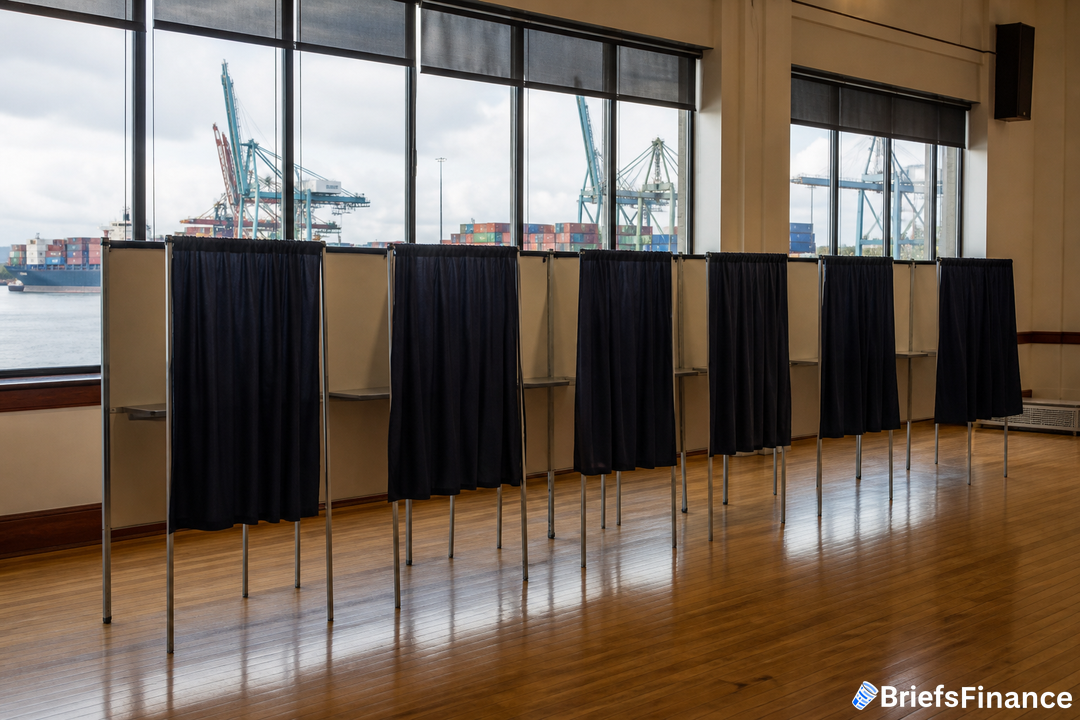
David Eby, who leads the New Democratic Party, is going to the polls on Oct. 24, arguing he needs a renewed mandate while opponents are splintered. He framed the stakes around the US-Canada trade conflict, saying, "For British Columbians and for Canadians, this is an existential moment." Eby accused US President Donald Trump of attacking Canadian workers and firms and said, "That is exactly why we need to act." His pitch: "To protect British Columbians from the shocks coming from the United States." A former activist civil rights lawyer, Eby has been among Canada's most vocal politicians taking on Trump.

The political map he is trying to redraw

Eby replaced John Horgan in 2022. In 2017 John Horgan brought the NDP into government, a feat the party repeated in 2020. In the October 2024 election under Eby, the NDP secured 47 of 93 seats, clinching the deciding seat by a 22 vote recount. That razor thin cushion meant even a single absence could derail legislation.

That same race vaulted the once marginal right-wing Conservative Party of BC into the official opposition with 44 seats, overtaking the center right BC United, a party that previously governed when it was known as the BC Liberal Party. Since then, the Conservatives have been racked by turmoil. Over the past few months, multiple legislators walked away, saying they lacked confidence in leader Kerry-Lynne Findlay, who stepped down on Sunday after holding the post for less than four months. As election talk heated up, some returned to the fold while others moved to a new group, CentreBC.

Interim Conservative leader Lorne Doerkson, at a downtown Vancouver press conference with candidates and former leadership contenders, warned, "I think David Eby is going to regret this." He rejected suggestions his party aligns with Trump, calling him "an absolute bully," and argued "the NDP has spent 10 years dismantling industry in this province and made it so much more able to be attacked."

What is on the economic line

BC's 5.7 million residents will be weighing policy through a trade lens. The US fight has hammered sectors differently across Canada. In BC, forestry is the most exposed industry.

The province's forestry industry ranks as Canada's biggest, and it is under pressure from escalating US import levies, including new 50% duties imposed in August that affect additional wood products. Aluminum fabricators are feeling the pressure, and booze exporters face a US ban. BC was among provinces that pulled American alcohol from store shelves, and while urging Canadians to skip trips south, Eby scrapped a 2025 family vacation to one of Walt Disney Co.'s theme parks in the US.

When external pressures stir uncertainty, a steady investment approach helps protect your savings. Join Briefs Finance CEO Jaspreet Singh on September 29th for a FREE live investor workshop, How to Profit From A Dollar That's Losing its Value, where he shows how we're spotting investment opportunities as the dollar falls. Save your spot.

His stance on energy has also shifted. Prior to assuming office in 2022, he cautioned against building additional fossil-fuel infrastructure. Now, seeking growth and jobs to fund bigger health care and social programs, he backs shipping more natural gas to Asia. He has also not opposed Alberta's plan for a new crude pipeline to BC's south, after previously fighting a similar project and losing in court.

Policy friction, Indigenous rights and the pocketbook

Earlier this year, Eby could not unify his party on how to change consultation rules with Indigenous peoples, a major uncertainty for land and resource projects across a part of Canada that includes more than 200 First Nations. Unlike much of the country, many Indigenous groups in BC do not have treaties, leaving key relationships unsettled.

BC is also one of the costliest places in Canada for housing, food and gasoline. The real-estate-heavy economy has slowed as costs and interest rates have risen since the pandemic, a deceleration compounded by recent large cuts to immigration. Meanwhile, provincial deficits and debt have swelled, prompting a series of bond rating downgrades.

What to watch next

Local mayors asked Eby not to go early because municipal elections happen a week before the provincial vote, creating overlapping campaigns. He is moving roughly two years before his current term from the 2024 election would have ended. Polls in September showed the Conservatives slipping and the NDP ahead by varying margins, with Ipsos putting the lead at 10 percentage points and Angus Reid at four.

For your money, watch how trade policy, resource shipments to Asia and sector specific strains in forestry, aluminum and alcohol shape the platforms. Those choices will set the tone for BC's growth, jobs and day to day costs after Oct. 24.

Keeping a clear plan lets you preserve and grow capital through changing times. Our CEO Jaspreet Singh is hosting a FREE live investor workshop, How to Profit From A Dollar That's Losing its Value, on September 29th. Sign up free to join him live.

Disclosure

Recent News

1 2 3 83

Get Market Briefs delivered to your inbox every morning for free!

No fluff. No noise. No politics. Just finance news you can read in 5 minutes.

Blogs

September 22, 2026
Will Interest Rates Go Down in 2026? Where the Money Moves Either Way
  • The Fed is leaning toward higher rates to fight 4% inflation, while the White House and a cracking job market push the other way.
  • If rates rise, money has tended to move toward short-term Treasuries, floating-rate loans, energy, banks and dividend payers.
  • If rates fall, it has tended to move toward gold, silver and Bitcoin, real estate, small caps, the S&P 500 and speculative bets.
Read More
September 21, 2026
How the Federal Reserve Makes Money - and Why It Just Posted Its Biggest Loss Ever
  • For 109 years the Federal Reserve created money, lent it to the U.S. government and handed the interest it collected back to Washington - almost $1 trillion in the decade starting in 2011.
  • Pandemic-era lending locked the Fed into earning about 2% on trillions of dollars while it now pays banks around 4%, producing a record loss of hundreds of billions in 2026.
  • The Fed covers its losses by creating money and the government covers its lost revenue by borrowing, and both feed the inflation that eats at the dollars in your account.
Read More
September 18, 2026
Kevin Warsh Just Defied Trump: What the Fed Rate Hike Means for Your Money
  • The Fed raised rates for the first time since 2023 in a unanimous vote led by Kevin Warsh, the chairman President Trump appointed to cut them.
  • Higher rates make the $40 trillion national debt, business loan resets and mortgages more expensive, but they strengthen the dollar and pay investors holding cash.
  • The war with Iran is pushing up oil, grocery and chip prices, another hike is likely in 2026, and recession talk is about to get louder.
Read More
September 17, 2026
Why America Bailed Out the Yen: The Japan Carry Trade, the Dollar and Your Mortgage Rate
  • In July 2026 the US sent money to steady the yen because Japan is the largest foreign owner of US debt, and Washington needs Japan to keep lending.
  • For decades the Japan carry trade let Wall Street borrow yen at essentially 0% and pour it into US stocks, real estate and Treasuries, and rising Japanese rates are shutting that off.
  • A weaker yen means fewer buyers for the dollar and for US debt, which pushes Treasury rates up and drags mortgage, car loan and credit card rates up with them.
Read More
September 16, 2026
Treasury Yields Are Spiking Because Lenders Are Backing Away From U.S. Debt
  • The U.S. is paying its highest 30-year borrowing rate in about two decades because its biggest lenders, the Fed, foreign governments, and banks, are all pulling back from Treasuries.
  • Every mortgage, car loan, credit card, and business loan is priced off the 10-year Treasury yield, so when Washington pays more to borrow, so do you.
  • With about $40 trillion of debt against a $32 trillion economy, the country either outgrows its debt or slides into a doom loop, and investors need a plan for both.
Read More
September 15, 2026
Fiat Currency Runs on Trust, and the World Just Stopped Trusting the Dollar
  • Gold has overtaken US treasuries as the world's top reserve asset, and central banks are now buying less US debt and more gold.
  • The US dollar is a fiat currency, meaning it's backed by a promise rather than gold, so it loses value when fewer countries want to hold it.
  • Whether the US economy or its national debt grows faster from here decides which assets stand to benefit next.
Read More
September 14, 2026
Why RAM Prices Are Soaring - and Where the Money Is Moving
  • Memory chips - the RAM inside phones, laptops, fridges, and trucks - are in a shortage Tim Cook called a 100-year flood, and some memory prices have climbed about 90% in a single quarter.
  • Four forces hit at once: AI demand, a production shutdown in 2023, build times that push any fix to 2028 at the earliest, and a bombed helium plant in Qatar.
  • The last two supply shocks ended in aggressive Fed rate hikes and market drops of around 45% and 20%, and this time Washington is spending heavily to bring memory production home.
Read More
September 11, 2026
How Is the Economy Doing? Washington Says It's Fixed, but the Numbers Don't Agree
  • Treasury Secretary Scott Bessent says the economy is fixed because lower earners' incomes are now rising faster than top earners'.
  • The Atlanta Fed and Bank of America show different numbers, and Hilton, Marriott, and McDonald's can't agree on what they're seeing either.
  • Whichever side is right, the economy is built to make investors rich, and inflation is how it does it.
Read More
September 10, 2026
US National Debt Hits $40 Trillion: Why the Economy Hasn't Collapsed Yet
  • The US national debt crossed $40 trillion in 2026 and is growing faster than the economy. The debt to GDP ratio now sits at 125%, the highest outside the pandemic and higher than World War II.
  • On September 9, 2026, Treasury Secretary Scott Bessent rolled out an emergency plan for the government to lend money to itself. Ray Dalio now says the dollar has roughly three years before real pain.
  • Empires rarely default. They debase. Since 1971, median household income grew about 8x while houses grew 17x and the S&P 500 grew 360x, so investors got richer while workers fell behind.
Read More
September 9, 2026
Your 401k Is Fueling the AI Bubble
  • About $10 trillion of 401k money sits in a $77 trillion stock market, mostly through target date funds and S&P 500 funds. Roughly 30% of every S&P 500 dollar lands in five AI-heavy tech stocks.
  • Four bubble signals run hotter today than before the 2000 crash: top-ten concentration, tech's share of the index, the Buffett Indicator, and how much of the market index funds own.
  • You only lock in an AI bubble loss if you sell. The 2022, 2020, 2008, and 2000 crashes were all buying windows for long-term investors, and the US-China AI race means government money could keep flowing in.
Read More
1 2 3 27
Share via
Copy link











