What builders are doing and where
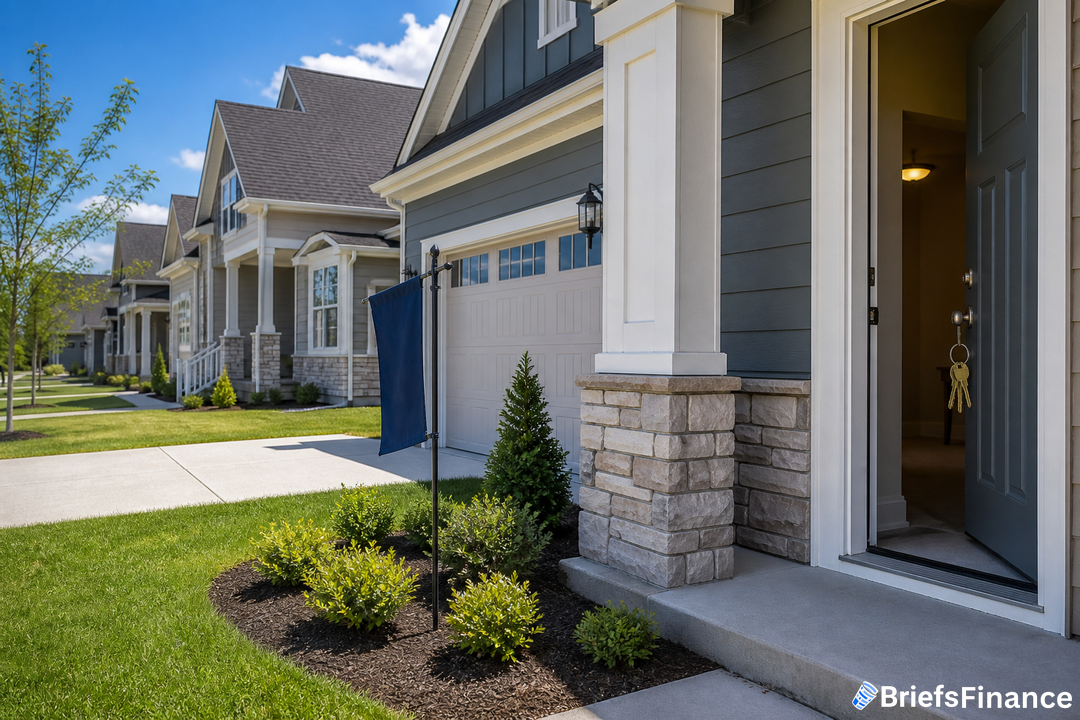
Homebuilders are targeting the monthly payment, not just the sticker price. In August, 13.8% of new-construction listings promoted a cheaper rate, averaging 3.92%, while the going 30-year fixed sat at 6.67%. By Thursday, the market rate had ticked up to 6.76%, the highest since June 2025.
Nearly 1 in 5 new-build listings advertised some form of incentive, and rate deals were the clear favorite. Flex cash was a distant second at 4.8%.
These offers skew toward higher price tiers. Only 1.4% of homes between $100,000 and $200,000 advertised reduced rates, but the share climbed to 17.1% for $500,000 to $750,000 homes and 15.8% for those from $750,000 to $1 million. That is the move-up market, where many owners are reluctant to surrender their cheap loans. Nearly 88% of mortgage holders on existing homes still pay below 6%, and a builder rate cut can help overcome that psychological hurdle.
Competition varies by metro. Around San Antonio, TX, the typical asking price for a new build sits near $330,000, and most rate-cut promos cluster on homes around $350,000 to $500,000. In Denver, the typical price is close to $639,000, and the incentives are mainly found on properties priced $500,000 to $1 million. The offers follow the parts of each market where builders face the most rivals and want to win on the payment instead of cutting prices outright.
The math and the tradeoffs
A big rate drop changes the payment quickly. Compared with 6.67%, paying 3.92% on a $450,000 new home with 20% down trims about $614 a month in principal and interest, close to $7,400 saved over a year. Jeremy Olsher, a Florida-based agent, put it plainly: "A sub-4% mortgage rate is extremely valuable, even for just a year or two, because it significantly cuts your early interest costs and builds home equity much faster."
Scale the idea across markets and the numbers still pop. Using the 3.92% figure on the median new-home price in the 10 metros with the most builder incentives produces monthly principal-and-interest payments that are lower by about $450 in San Antonio and by $871 in Denver compared with 6.67%, assuming 20% down. Hold the monthly payment steady instead of banking the savings and that lower rate stretches to roughly $95,000 to $184,000 in additional borrowing capacity across those markets.
That buying power costs money to manufacture. The American Enterprise Institute Housing Center estimates that trimming a mortgage rate by one percentage point costs a builder about 3.2% of the sale price. Cutting the price enough to create a similar monthly-payment drop would take roughly a 10% discount. It is an expensive perk, but still cheaper than slashing the list price to match the same payment.
Attractive offers can be a reminder to protect savings and plan long term. Join Briefs Finance CEO Jaspreet Singh on September 29th for a FREE live investor workshop, How to Profit From A Dollar That's Losing its Value, where he shows how we're spotting investment opportunities as the dollar falls. Save your spot.
Builders are spending real dollars to do it. According to Lennar, sales incentives - primarily price cuts and financing assistance - came to an average of $62,700 per home in fiscal 2025, amounting to 13.8% of home-sale revenue, compared with $42,900 and 8.8% two years prior. PulteGroup said incentives accounted for 10.9% of the gross sales price during the first quarter of 2026, compared with 8% a year earlier, and added that the home-sale gross margin slid to 24.4% from 27.5%, with more generous incentives contributing.
Market effects, appraisals, and risks for buyers
Cheaper financing can also soften the price pressure that high rates would normally put on new homes. For brand-new homes, list prices in August were lower by only 0.3% compared with a year earlier, versus a 2.5% drop for resales. Across the 10 metros with the most visible builder incentives, new-home prices outpaced resales in 4 and trailed in 6.
Denver saw new-home prices down 1.6% year over year versus a 5.7% drop for resales. In Durham-Chapel Hill, NC, new-home prices fell 8.5%, compared with a 1.2% decline for resales.
Researchers have warned this can happen. A 2026 Brookings report by University of Pennsylvania economist Joe Gyourko lists interest-rate buydowns among demand-side policies that can lift prices. Lenders see the spillovers too.
Appraisers and analysts are blunt about the risks.
What this means for your wallet
Sub-4% on a new build feels like a cheat code because it lowers early interest and speeds equity gains. The catch is that the discount has to be financed by someone, and right now builders are footing much of the bill to protect prices and move inventory. That can tug appraisal values, reshape local comps, and increase how much debt buyers take on. If you are eyeing new construction, watch where the offers are concentrated, how they compare with resales nearby, and what happens to your balance if the sweetened rate goes away or prices drift down.
When opportunities arise, steady strategies help you grow and safeguard your money. Our CEO Jaspreet Singh is hosting a FREE live investor workshop, How to Profit From A Dollar That's Losing its Value, on September 29th. Sign up free to join him live.