Free NewsletterPro Login

Walmart is taking Dunkin' delivery beyond its stores. Here's why that matters

Published Sep 5, 2026
Share:
Summary:
  • Walmart will start with Dunkin' from its own stores, then expand over the next year to cover most of Dunkin's roughly 10,000 U.S. shops, many not located in Walmart.
  • The effort runs through Walmart Restaurant Delivery, which began with Subway. Walmart called itself a "rapidly emerging contender in the restaurant delivery business."
  • Analysts say this tees up a clash with DoorDash and Uber Eats, but Walmart's angle is to bundle coffee and doughnuts with bigger baskets.

What Walmart is rolling out

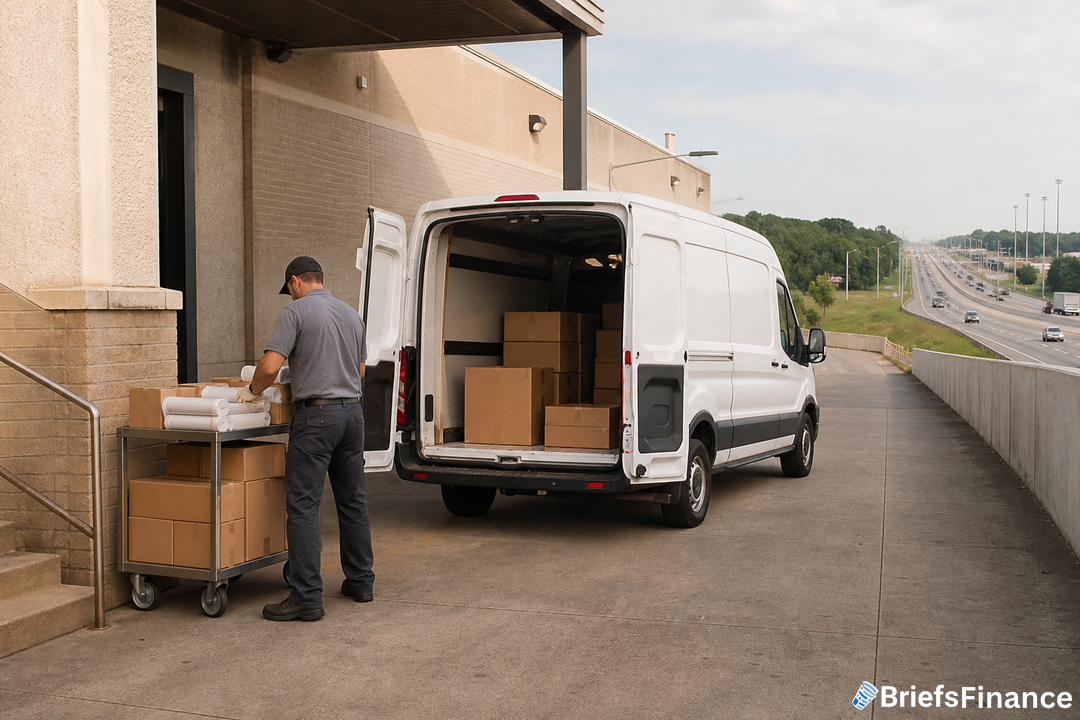
Want to toss a cold coffee and a maple-glazed doughnut into the same order as paper towels and socks? Walmart wants you to tap one app for all of it. The retailer will initially deliver Dunkin' products from its own stores, then over the next year plans to extend delivery to most of Dunkin's approximately 10,000 U.S. locations, many of which sit outside Walmart entirely. The move builds on a similar tie up with in-store Subway restaurants.

The program runs through Walmart Restaurant Delivery, the same service that started with Subway. A Walmart spokesperson told CNBC, "We see this as a way to continue adding value and convenience for customers within a shopping experience they already know and trust. By pairing restaurant delivery with Walmart's vast assortment, we can create a delivery experience that gives customers more of what they want in one place."

Walmart is not shy about its intentions, describing itself as a "rapidly emerging contender in the restaurant delivery business."

The strategy underneath the doughnuts

This goes beyond simple pastry economics. At Tulane University, Hongseok Jang serves as an assistant professor of management science focused on online delivery, and he argued that Walmart's enormous shopper base, footprint, and logistics create real leverage over existing food-delivery platforms. "To me it seems that Walmart is testing its own delivery system to see if they can handle it, and if it is successful there will be a big competition between Walmart and Uber Eats and DoorDash," Jang said.

Jang added that a doughnut and coffee order on its own is not the profit engine, but it can spark shoppers to toss more into the cart through the Walmart app. He pointed to proximity as a built-in edge: 90 percent of Americans live within 10 miles of a Walmart, which makes it easier to pair a latte with, say, mouthwash or groceries.

Mike Danford - Adverio's co-owner and chief strategy officer at the e-commerce marketing agency that supports brands on Amazon, Walmart, and Target - distinguished between orders fulfilled inside a store and those dispatched from external restaurants. Delivering from a restaurant inside Walmart is just adding another item onto a basket that is already being staged, he noted, and pointed to the company's Spark Driver system - used by independent contractors to find gig deliveries - to illustrate the model. But once Walmart starts delivering from locations beyond its four walls, "the attachment breaks, and you're essentially running pure delivery economics against DoorDash and Uber Eats, who have already occupied that ground."

That attachment is the point. On a standalone basis, Danford said coffee and doughnuts are low ticket, time sensitive, and temperature sensitive, which makes single item delivery hard to make work. The upside is frequency: groceries happen weekly or monthly, while coffee can be daily.

Rates, prices and policy all end up in your budget eventually. Get the free Market Briefs daily newsletter and see it coming.

"That can easily increase the frequency of orders per customer. Furthermore, the doughnut and the coffee aren't the product. They're the reason someone opens the Walmart app at 6 or 7 a.m. instead of once a week to order a few grocery items," he said.

Early results and operational hurdles

Walmart's leadership has been pushing speed. On the Q2 call, CFO John David Rainey said, "Customers are looking for value and convenience and they want things fast, and that's where Walmart shines." In the U.S., deliveries under 30 minutes grew 48% during the quarter. Even so, recent sales softness weighed on the stock, a reminder of why adding new revenue streams matters.

Greg Cathey, a Walmart senior vice president, wrote this week that after the Subway service launched, close to 65% of restaurant orders arrived bundled with Walmart items that customers wanted quickly. He also said restaurant delivery is introducing more people to Express Delivery: in one out of five orders that combined Subway with Walmart items, the shopper was using Express Delivery for the first time, and close to 30% of those first-timers returned within 30 days.

Execution is the swing factor. Amrita Bhasin, the co-founder and CEO of Sotira, which runs an AI-powered supply chain platform, said Walmart will need to build delivery density and optimize routing to truly rival DoorDash and Uber Eats. "If one person in a rural area is ordering food at an odd or off-peak hour and the driver has to undertake that route for a single person, this complicates economics by driving up costs for the user and/or compressing margin for Walmart," Bhasin said.

Food is also less forgiving than dog food or toilet paper. Customers expect fast, hot or cold as promised, and reasonable prices.

R.J. Hottovy, who leads analytical research at Placer.ai, said the Dunkin' test will help cement Walmart's place in the space "assuming iced coffee doesn't arrive room temperature and hot coffee doesn't arrive at room temperature." He added, "Walmart's expansion into third-party delivery is more than an in-store partnership play. Extending delivery to Dunkin' locations beyond its own stores signals that Walmart wants to be a restaurant delivery marketplace, not just a landlord." Because Walmart already runs a network fulfilling from stores, he said its cost structure differs from pure plays. The goal is attachment, not a bigger single ticket: "Coffee and doughnuts are low-ticket purchases, but Walmart doesn't need a $6 Dunkin' order to work on its own - it needs to attach that order to an existing $80 grocery basket for the economics to work," he said.

The market read and what to watch for your wallet

The competitive backdrop even showed up next to a DoorDash stock snapshot: Last NYSE Arca price 211.71 with a change of -0.02 (-0.01%), and After Hours 211.73 with a change of -10.27 (-4.63%), labeled 09/04/26 EDT.

Bottom line for everyday shoppers: Walmart wants to be the place you open first, whether it is for a daily coffee or a weekly grocery run, and to make it easy to add more to the same delivery. What matters next is whether it can keep drinks at the right temperature, hit fast delivery times, and prove the model works when orders start from outside its own stores.

Disclosure

Recent News

1 2 3 … 107

Get Market Briefs delivered to your inbox every morning for free!

No fluff. No noise. No politics. Just finance news you can read in 5 minutes.

Blogs

October 16, 2026
How Boring Math Makes You Rich: The Briefs Money Spreadsheet, Explained
  • Briefs Money shows you what to do with every paycheck, and in what order: how much to spend, save, and invest, when to build an emergency fund, and which debt to pay off first.
  • The Climb to Wealth course walks you through the system step by step, and the Personal Finance Spreadsheet is where you track your own numbers.
  • Investing is one piece of building wealth. The system that gets money to your investments, and keeps it there, decides the outcome.
Read More
October 16, 2026
Common Investing Mistakes: Why a Stock Grade Is One Tool, Not the Whole Toolkit
  • The Briefs Score shows growth, income, and wealth preservation investors how well a stock fits their goal, with a separate letter grade for each one.
  • The most common mistake is treating the letter as an instruction. An A tells you a stock scores well for one goal, not that you should buy today.
  • Research works best as one input in a process you own. The grade shows how a stock stacks up. You supply the goal, the timeline, and the rules for being wrong.
Read More
October 16, 2026
How to Read a Company's Numbers Without a Finance Degree (Using Briefs Terminal)
  • Briefs Terminal lets you size up any public company in about ten minutes: what the stock costs, what it earns, how fast sales are growing, and what it pays you, all on one page.
  • It lines those numbers up against the company's closest competitors for you, so you can tell if a number is impressive or just average.
  • Below that are the income statement, balance sheet, and cash flow statement from the company's SEC filings, the latest news, and transcripts of its earnings calls.
Read More
October 16, 2026
What Type of Investor Am I? The Three Investor Archetypes, Explained
  • Briefs sorts its stock grades and monthly reports by three investor goals: growth, income, and wealth preservation. Pick yours and you know which report and which grade to read first.
  • Growth investors want stocks that beat the S&P 500. Income investors want to get paid in cash. Wealth preservation investors want stocks that hold up when the market drops.
  • The same stock can score an A- for one goal and a D- for another, so picking your goal comes before picking any stock.
Read More
October 16, 2026
How to Build a Stock Watchlist That Isn't Just Stocks You Heard About
  • A watchlist on Briefs Terminal lets you group stocks by the idea you're tracking and follow each one's price, one-day move, and 52-week high and low in one place.
  • Each list has its own name and description, so you always know why a stock is on it, and you can make as many lists as you have ideas.
  • The monthly growth, income, and wealth preservation reports under the Briefs Research tab hand you new themes to track that you didn't hear about online.
Read More
October 16, 2026
How to Choose an ETF That Matches Your Idea (Using the ETF Planning Tool)
  • The ETF planning tool takes an idea like "I want to invest in fast food companies," asks what you mean, and finds the ETFs that match, with the reasons, the holdings, and the sources.
  • Build a Plan then shows what your money could grow to in those ETFs over the years you choose, with conservative, expected, and optimistic estimates next to the S&P 500.
  • It gets you from an idea to an actual plan without researching dozens of companies one at a time.
Read More
October 16, 2026
Is This Stock a Good Buy? How to Use the Briefs Score to Tell If a Stock Fits the Way You Invest
  • The Briefs Score shows growth, income, and wealth preservation investors how well a stock fits their goal, with a separate letter grade for each one.
  • One stock can score very differently for each. Nvidia showed an A- for growth and a D- for income, because it grows fast and pays almost no dividend.
  • Seven sub scores under each grade show what earned the letter, so you can see exactly where a stock is strong or weak for your goal.
Read More
October 16, 2026
How to Tell an Asset From a Liability: The One Question to Ask Before You Buy Anything
  • The typical American household earned more in 2025 than in any year on record, yet only 30% of Americans say they could pay a surprise $1,000 bill from savings, so the problem isn't income but what the income gets spent on.
  • An asset puts money in your pocket and a liability takes money out, and the wealthy buy assets first, then let the assets pay for the fun stuff.
  • Before you buy anything, ask one question: does this put money in my pocket, or take money out of my pocket? Then you need a plan for the money you keep.
Read More
October 16, 2026
How to Build Your First $2,000 Emergency Fund and Wipe Out Every Debt Over 10%
  • Your first money goal isn't investing, it's $2,000 in its own account named Do Not Touch, built by moving 10% of every paycheck into it automatically.
  • More than a third of American adults couldn't cover a $400 surprise bill with cash or savings, according to the Federal Reserve, and that's how one bad day turns into years of credit card payments.
  • Once the $2,000 is there, attack every debt charging more than 10% interest, highest rate first, because you can't out-invest a 22% credit card so paying it off is the investment.
Read More
October 16, 2026
How to Invest Through a Crash: 3 Rules From the Worst-Timed Investor Alive
  • Meet Bunty, a fictional investor with the worst timing in history: he put $100,000 into the market in four chunks right before four crashes, never sold, and by 2025 it had grown to more than $500,000.
  • Investors who jump in and out of the market miss its best days, and missing just a handful of those days can cut your final result roughly in half.
  • The fix is ABB, Always Be Buying: you buy on a schedule through booms, crashes and scary headlines, which matches the market, and beating it takes knowing where the money is moving first.
Read More
1 2 3 … 29
Share via
Copy link










