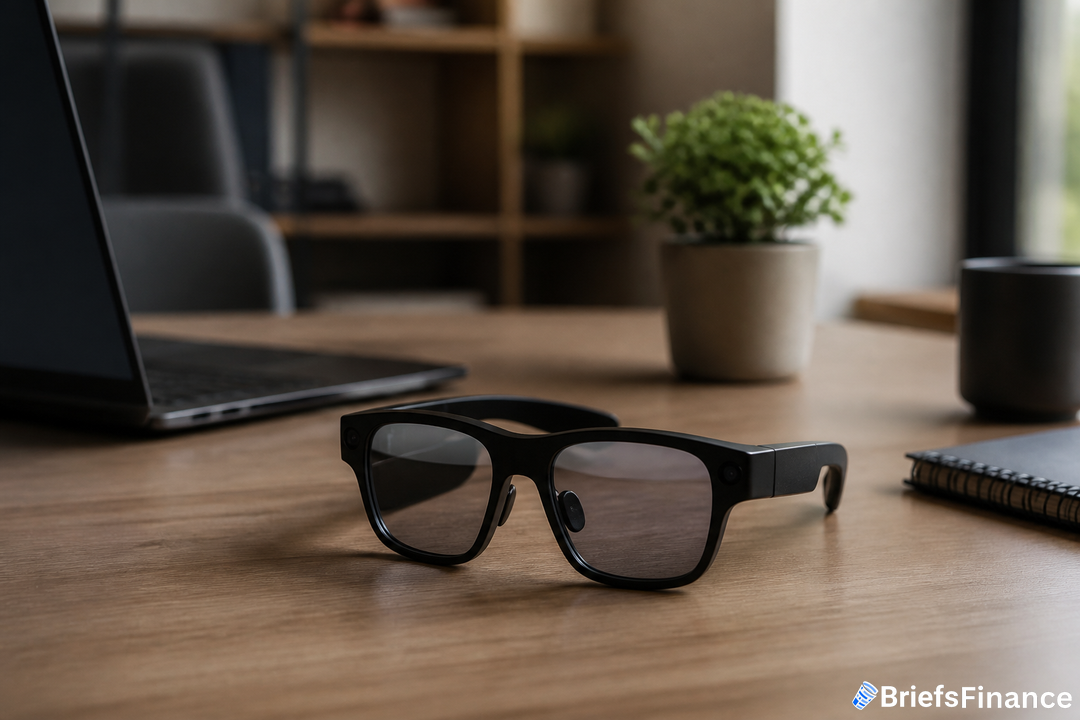
What you get and how it looks
HTC set the Vive Eagle price at $499, with orders opening Thursday and shipping right away. There are two frame shapes to pick from, a rounded Pantos and a Wayfarer-style design, and colors include black, brown, red, and blue.
A 12 megapixel camera handles photos and 3K video up to 10 minutes, backed by 32 GB of storage. The frames carry an IP54 rating for dust and water resistance, which covers splashes and light rain. Audio plays through speakers in each temple, and a microphone array is built in for voice commands and calls.
Battery life is rated for up to 4.5 hours of nonstop music play and 36 hours of standby time. Charging uses a magnetic connector that reaches roughly 50% from empty in about 10 minutes and a full charge in about 35 minutes. HTC also sells a $49 clip on power boost accessory, a small puck that attaches to the glasses and adds about an 80% recharge.
AI on your face, without a login
Vive Eagle supports assistants from Google and OpenAI, so you can set Gemini or ChatGPT as the default. To bolster privacy, HTC routes requests through enterprise APIs for both, granting premium capabilities without making customers log in or disclose any personal identifiers. HTC says it does not use device data for its own AI training.
Using the camera feed, the assistants can translate in dozens of languages. Basic on-device commands like "take a photo" finish in about one second. Tasks that tap your phone such as playing music typically take around 3 to 7 seconds, while cloud lookups like identifying an object land in the 5 to 14 second range. Media on the glasses is secured with military grade encryption, according to HTC.
The money story behind the headlines is usually the part that matters. Join Market Briefs free and get it every morning.
Privacy is the selling point
Smart glasses are under scrutiny in the US for stealthy recording. Meta's models have taken heat online, including being called "pervert glasses" by some social media commenters, and the company has tried to calm concerns with a privacy focused ad campaign. Meta has further tightened safeguards so users can't tamper with or disable the round status light that shows when it's capturing video or taking photos.
HTC built in its own guardrails. If the Vive Eagle detects the LED is covered, the camera is blocked. People nearby can say "stop recording" to immediately end an in progress clip.
The camera only works while the glasses are on your face, so if you start filming and then remove them, recording stops. The Vive Connect app also warns users not to cover or hide the indicator.
Where this fits in a busy launch year
HTC's pricing lines up with several Ray Ban Meta models, though it's priced higher than Meta's self-branded pairs, which hit the market in June at $299. Vive Eagle arrives just ahead of glasses co developed by Alphabet's Google and Samsung that are expected this fall. Bloomberg News has reported Apple plans to reveal audio based glasses in 2027, and Snap and Xreal plan to ship models with built in AR displays by year end.
For your wallet, here is the takeaway: wearables are colliding with AI, cameras, and audio, and the privacy playbook matters. Watch for clear recording indicators, voice commands that stop capture on cue, and assistants that do not require a login as more choices show up on store shelves.