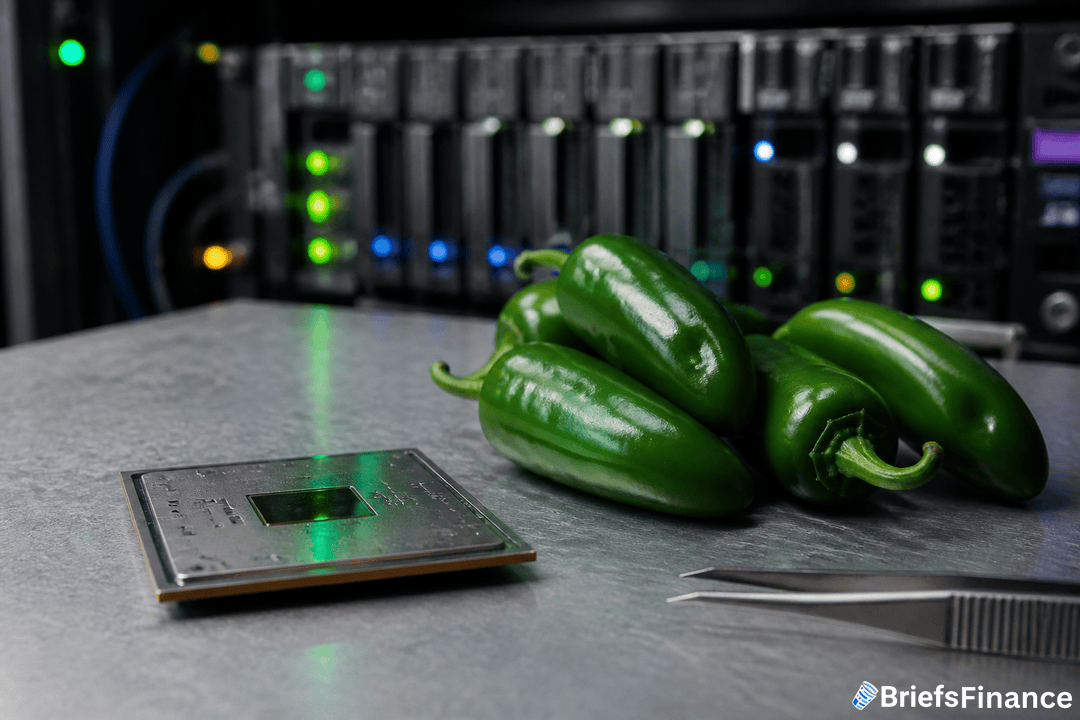
OpenAI has described a successful round of testing for its new Jalapeno chip. During the tests, Jalapeno outperformed Nvidia Corp.'s existing hardware in two important areas: how much AI work it can handle per unit of electricity, and how quickly it returns answers. According to OpenAI, this means the chip can serve more customers at a lower cost while also supporting applications that need fast response times. The company plans to introduce the chip into its production systems later this year, and it expects the move to reduce costs significantly as its AI products become more widely available.
The testing results are important because they show how the chip could affect OpenAI's business. AI models depend on large amounts of computing power, and the cost of that power is directly related to how much OpenAI can expand. A chip that can handle more AI work per unit of electricity reduces the expense of running its models.
A chip that returns responses quickly also supports a better user experience, especially for interactive applications. OpenAI said that Jalapeno is designed to handle both types of demand. High-throughput workloads involve processing a large number of requests steadily and efficiently, while low-latency workloads require quick reactions for individual users.
Cheaper technology is a reminder to let your money grow, so download the free Always Be Buying E-Book today.
Because Jalapeno supports both high-throughput and low-latency tasks, customers can decide which trade-off matters more to them. Some may prefer a configuration that reduces costs. Others may pay for better performance when fast responses are critical. OpenAI described this flexibility as a major benefit of the chip's design.
OpenAI said of the test results: "In the lab, Jalapeno is showing performance both in the high-throughput domain, meaning it will be able to serve a lot of customers more cheaply, as well as the low-latency domain, meaning that for the customers that care about it, the response time will be really, really fast."
OpenAI added: "It's a really good chip - it should drop it by a lot."
That quote points to the expected financial benefit from using its own chip. Lower computing costs are important for a company planning to expand access to its AI models. In addition, customers that care about speed can benefit from the low-latency side of the chip, while those that want cheaper service can use the high-throughput side.
What It Means for Investors
For investors, the development is a reminder that progress in AI hardware can change the economics of the industry. The comparison to Nvidia's existing hardware highlights how seriously OpenAI views chip efficiency as part of its broader AI rollout. If OpenAI can reduce the cost of running its models, it may be able to expand usage without a matching increase in expenses. That could lead to better margins or more aggressive pricing for AI services.
When innovation lowers the cost of progress, the Always Be Buying E-Book helps you invest consistently and build wealth.