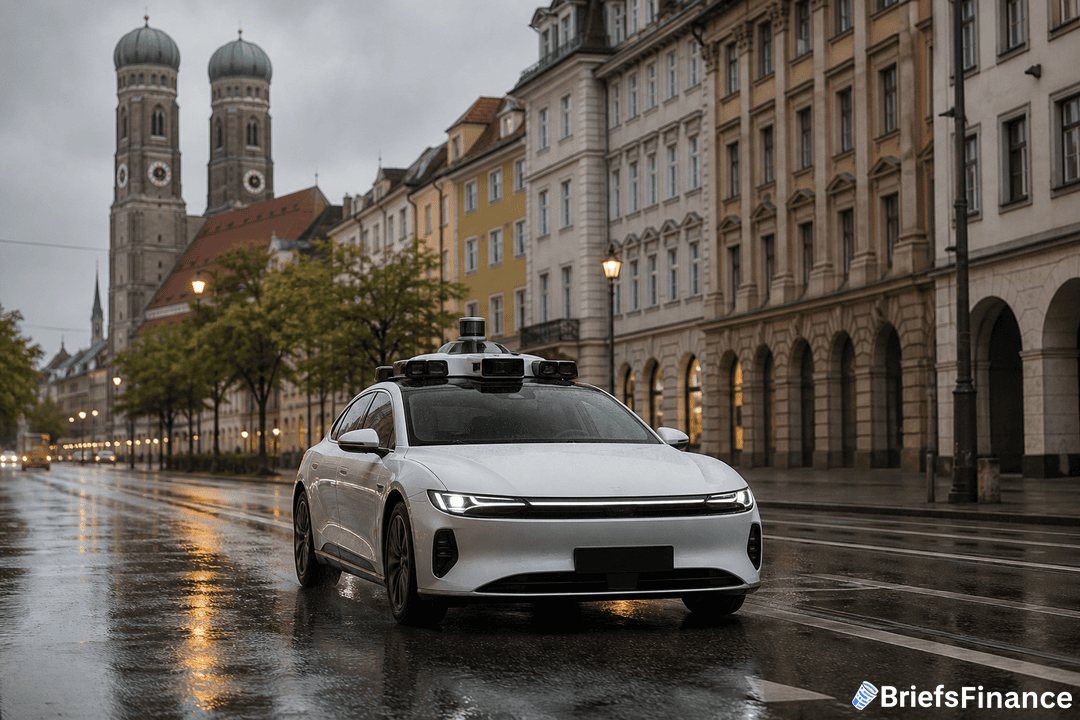
Entering a car with no driver behind the wheel is still a strange feeling for most of us. But Waymo has been pushing past that with millions of miles on U.S. streets, and now it is taking its self-driving cars across the Atlantic.
Alphabet-owned Waymo announced Tuesday, Aug. 25, 2026, that it will launch its driverless ride service in Munich, Germany, in 2027. That makes Munich the company's first market in Germany and its third international stop overall. The other two, London and Tokyo, are already running early tests.
- Waymo will start with testing in Munich soon, plus plan a full public launch of rides by the end of 2027.
- A company exec said in a post that becoming part of Munich marks a key step in its global growth.
What Waymo Has to Do First
Putting a few test cars on Munich's streets takes more than shipping vehicles over. The company has to build high-definition street maps, train its autonomous driving specialists, and adapt its software to how people actually drive in the city. German drivers have their own quirks, and the roads have their own layout down to the street markings and intersection shapes.
Rates, prices and policy all end up in your budget eventually. Get the free Market Briefs daily newsletter and see it coming.
Waymo co-CEO Tekedra Mawakana called the city "a world-class hub for mobility and engineering" and said joining it is an important milestone for the company's global expansion. That quote matters. Waymo is not treating Munich as a science experiment. It is treating it as a real market with real riders.
The company already runs robotaxis in several major U.S. cities, and earlier this month it added San Diego, Las Vegas, Denver, and Tampa to its list.
Waymo says it has logged nearly 221 million fully autonomous miles as of March. The company shared a photo from April 2026 showing one of its cars in New York with a safety specialist behind the wheel - a reminder that even a company this far along still uses human oversight during testing.
What This Means for Your Portfolio
For everyday investors, this is less about self-driving cars as a curiosity and more about what it signals at Alphabet, Waymo's parent company. Alphabet has a lot of business lines, but Waymo is one of the ones with real momentum right now. Every new city launch is another sign that autonomous driving is moving out of the pilot-project phase and into normal operations.
That comes with real costs. Mapping streets, hiring local specialists, and adapting software for a new country adds up before a single paying passenger rides. So this is not an overnight moneymaker, and it will take time to know whether the German expansion pays off.
Still, Waymo's approach abroad is worth watching. Cities in this region have stricter rules, denser traffic, and a more cautious attitude toward driverless tech. If Waymo can make Munich work, that says something about its ability to handle hard environments. And that would matter for how you think about its parent company's future, since Alphabet is a name most people already have in their portfolio.
The real story here is slow and careful expansion, not a sudden land grab. Between now and then, the company will have to convince regulators, local drivers, and eventually paying riders that its cars belong on those streets.
The road ahead is long. But for Waymo, being in Munich is about proving it can go anywhere cars go. For everyone else with a stake in it - as riders or as shareholders - that is worth watching closely.
The best financial decisions come from understanding the whole picture. Join Market Briefs free and get the full brief each morning.