Washington Chooses Money Over Missiles
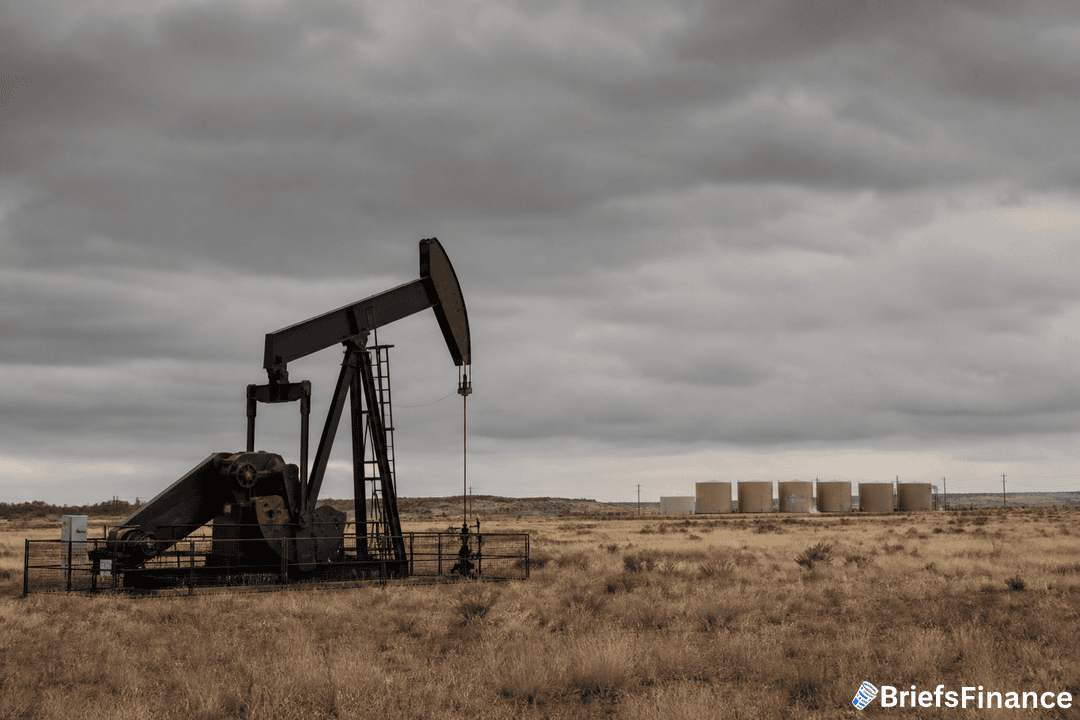
Oil prices slid sharply on Tuesday, losing more than 3% because Washington chose financial penalties over missile attacks in its campaign against Tehran.
The new sanctions hit Iran directly and also target the countries that still do business with it, which is a warning to anyone trading with Tehran.
The international Brent contract slid 3.2% to $89.20 a barrel. West Texas Intermediate, the U.S. benchmark, settled 3.3% lower at $82.21. Weekly losses now exceed 5%.
The White House calls this campaign "economic D-Day."
Treasury Secretary Scott Bessent called it "the single greatest financial offensive ever" and told CNBC's "Squawk on the Street" that maximum economic pressure likely means there will not be "a large-scale kinetic restart."
Kinetic, in military speak, means shooting.
The logic is easy to follow: if the goal is to make Iran hurt, the fastest way is through money, not missiles. Traders are betting that a war that never starts keeps oil lower than a war that does.
The shift to economic pressure removes the immediate threat of a military confrontation in the Strait of Hormuz, a chokepoint for global oil trade. That threat had been keeping a risk premium in crude prices, and Tuesday's move signals that Washington prefers to squeeze Iran financially rather than risk a disruption to supply.
Signals On The Ground
The quieter signals point the same direction. The State Department is preparing to send evacuated U.S. diplomatic staff back to the Middle East, possibly as soon as Aug. 25, 2026, according to a Tuesday New York Times report.
The best financial decisions come from understanding the whole picture. Join Market Briefs free and get the full brief each morning.
Diplomats do not usually fly back into an active war zone.
Defense Secretary Pete Hegseth said Monday that economic pressure "hurts them the most right now," but he left the door open for more strikes.
"If we need to use kinetic strikes, we'll use them," he told reporters, adding that "by no means are we foreclosing using kinetic strikes anywhere in the Strait of Hormuz or around Iran."
The military option is resting, not retired.
Iran says it is ready for the squeeze anyway. On state television, Economy Minister Ali Madanizadeh declared that Tehran is "fully prepared" and has "a two-year plan to manage these events," adding, "We have our own tools and we know how to play the game."
A two-year plan is a long time to hold your breath, and a reminder that this fight is not ending tomorrow.
China Is The Pressure Point
The real pressure point is not Tehran, but Beijing. BBH strategists note that China buys roughly 90% of Iran's oil exports, making it Iran's biggest customer by a mile.
China has repeatedly pushed for a diplomatic resolution, and under the new sanctions it could face consequences if it keeps buying Iranian crude.
BBH strategists called the latest U.S. move more of a warning than a decisive blow, since Washington did not immediately impose secondary sanctions on other countries.
Those are the penalties that hit a third party, like China, for trading with Iran.
The reason for the caution is clear. Targeting China means going after major Chinese banks and refiners, which risks financial turmoil, retaliation, and damage to U.S.-China relations.
China's foreign ministry pushed back Tuesday, with spokesperson Lin Jian saying Beijing will "do everything necessary to firmly safeguard its rights and interests" and that "economic warfare and maximum pressure provide no solution."
In plain terms, Beijing is not asking for permission.
What It Means For Your Portfolio
For the rest of us, the immediate takeaway is friendlier. Cheaper oil means cheaper gas, and cheaper gas is a tax cut you feel at the pump, plus a little relief for inflation.
The oil market's mood can flip in a day, though. If the diplomatic track stalls and the U.S. hits Iran harder, crude could snap back just as fast as it fell.
The bottom line: this is a bet that economic pressure works and war stays off the table. If it pays off, your energy bills get some relief and inflation keeps cooling.
If it fails, the market just showed you how fast prices can change. Beijing's next move is the one that decides which way oil goes from here.
Markets move every day, and most of it never reaches you in time. Get the free Market Briefs daily newsletter and stay ahead of it.