Siemens Energy is getting ready to sell a big piece of itself.
According to people familiar with the matter, the company is working with Goldman Sachs to handle the divestment of a controlling interest in its steam turbine business.
A Big Name in Power Looks for a Buyer
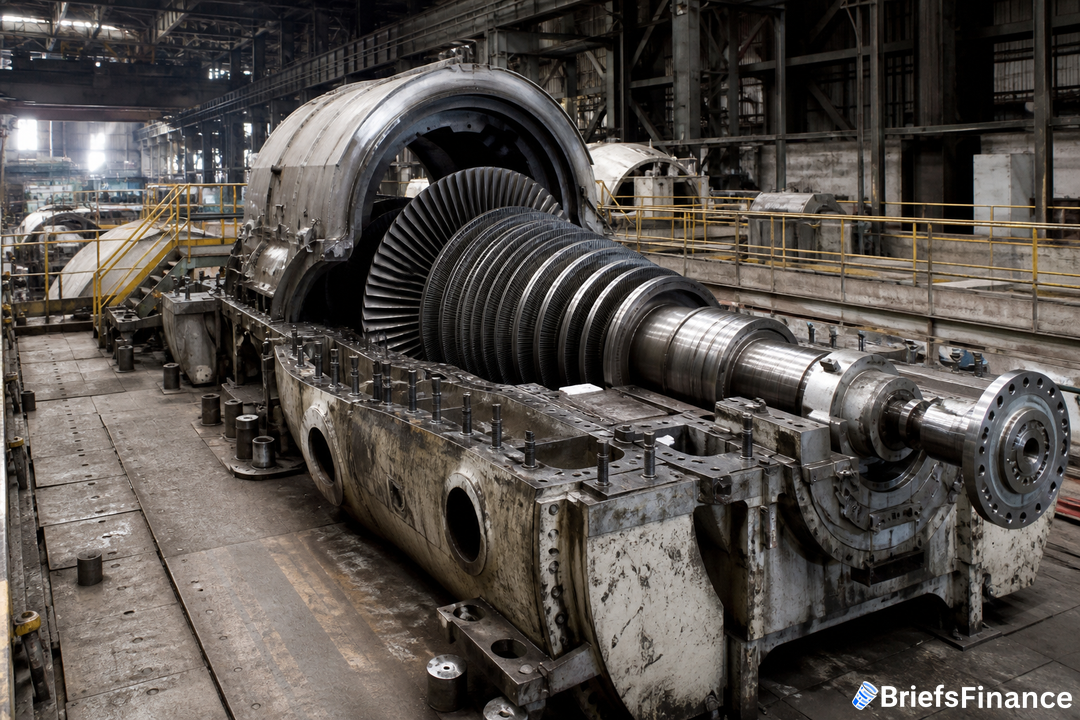
The unit up for sale is called the Transformation of Industry division. It makes steam turbines, generators, and compressors, and it pulled in roughly €5.7 billion in revenue during the company's most recent fiscal year.
That is a serious chunk of business. Steam turbines are the workhorses that help power plants and industrial facilities turn heat into electricity, so this is not some tiny side project getting tossed aside.
Siemens Energy's board is scheduled to meet Tuesday to decide what comes next. The company has been weighing a sale for a while, and now the process appears to be moving toward real offers.
Big industrial owners are shuffling hard assets for a reason. Our CEO Jaspreet Singh explains why on September 29th in his free workshop on how to profit from a dollar that is losing its value.
Who Might Show Up to Bid
The list of potential buyers reads like a who's who of private equity. That is a lot of big money circling one asset. Private equity firms love buying established industrial businesses with steady revenue, and this one fits the profile.
But here is the thing to keep in mind: none of this is done yet. The talks are still in the early phase, and it is entirely possible that some or all of these firms walk away. Representatives for Bain, Brookfield, CVC, EQT, KKR, and Goldman Sachs all declined to comment, and so did a Siemens Energy spokesperson.
That silence is pretty standard for this stage of a deal. Nobody wants to tip their hand before the bidding starts.
What a Sale Like This Means for Investors
When a company the size of Siemens Energy decides to sell a major division, it is usually trying to simplify its business or raise cash to focus on other priorities. For this company, that likely means putting more energy into the power grid and renewable technology side of things.
The steam turbine business is not going away. Whoever buys it will keep making the same equipment for the same customers. But the ownership change could shift how the division invests in new technology or how aggressively it pursues new markets.
The bottom line: For investors, this is a signal about where the industrial energy sector is heading. Big companies are deciding that some of their traditional businesses are better off in someone else's hands, and that frees them up to chase the next wave of energy demand.
If the sale goes through at that €10 billion price tag, it would be one of the larger industrial deals of the year. That kind of money does not move without ripples, and it is worth watching which direction the buyers take the business once they own it.
For your portfolio, the lesson is simpler. When a giant like Siemens Energy reshuffles its operations, it is usually betting on what comes next, not what is already here. Watching where these companies put their cash is one of the clearest ways to see which energy technologies they think will win.
When a company sells real assets, ask what the cash is really worth. Join our CEO Jaspreet Singh on September 29th for a free workshop on how to profit from a dollar that is losing its value.