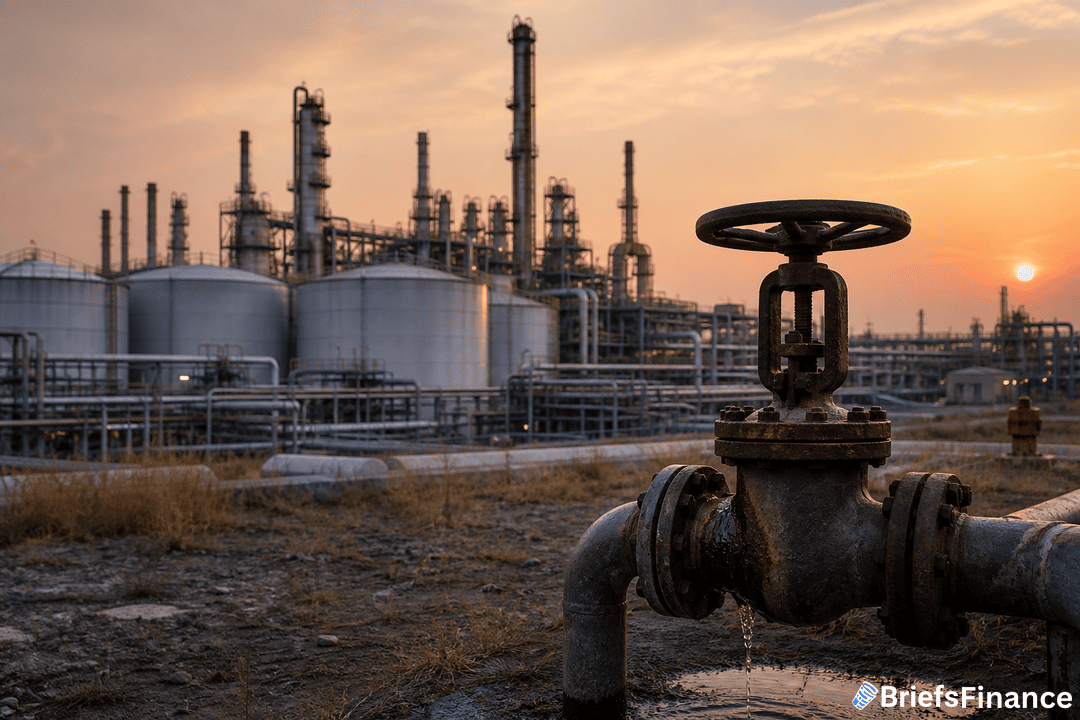
US refineries are bracing for a drop in supply from Canada, their top foreign crude source, and the timing could not be worse. They are running at the highest processing volumes in eight years, according to government data, trying to capitalize on diesel margins at a record high this week. Just as they need every barrel they can get, the pipeline is about to tighten.
The Shortfall Nobody Is Talking About
Canada normally sends over 4 million barrels of crude to the US every day, most of it flowing from northern Alberta down to American refineries.
That sounds like a drop in the bucket until you look at what is sitting in storage. Alberta's stored crude is at its lowest point in over a year, which means there is no backup supply to cover the gap. The last time companies had this little cushion, they were shipping crude ahead of expected tariffs back in March 2025. Storage at Hardisty, Alberta, is now near its lowest since that month and the second-lowest level since records began in 2017.
Midwest refineries are the ones feeling this most directly. Canadian crude accounts for roughly 70% of what those refineries process, so a shortfall up north hits them right in the inputs. US imports from Canada already fell the most since May last year, according to Energy Information Administration data, and the maintenance work will keep pushing that number down.
Why This Matters for Prices
The market is already reacting. Thursday's escalation of regional tensions pushed US crude futures to their highest level in several weeks, and the Canadian supply problem adds another layer on top of that.
When gas prices climb due to refinery supply, grab the free Always Be Buying E-Book to build wealth steadily
Here is where it gets concrete for diesel. A diesel-rich synthetic crude grade traded at a premium of nearly $20 per barrel last week, data from Modern Commodities show. That is the largest gap since an April surge tied to the Iran War. In plain terms, the stuff refineries turn into diesel is getting more expensive, and that cost has nowhere to go but downstream.
Canada is not just a convenient supplier. It is a critical one, especially right now, because Middle East exports via the Strait of Hormuz are restricted during the Iran War. When one major source of global crude is off the table, every other barrel becomes more valuable, and Canadian crude is the barrel the US relies on most.
The pipeline picture tells the same story. Enbridge will not ration space on its Mainline pipeline in September because of maintenance at production sites and US refineries. The last time apportionment on that system was zero was October last year, which means the pipeline usually has to tell shippers to cut back.
Now it does not need to, because there simply is not enough oil to fill it. Trans Mountain's pipeline from Alberta to Vancouver also stopped rationing space in August, the first month without restrictions in two months.
Suncor and Canadian Natural Resources are scheduled to take equipment offline for maintenance, including previously delayed work at the Syncrude upgrader.
What It Means for Your Wallet
Pump prices are likely to rise before the Labor Day holiday because of these higher crude costs. If you are planning a road trip, the timing is unfortunate.
The diesel story matters beyond truckers and shipping companies. Diesel moves the stuff you buy, so when diesel costs more, the price of everything from groceries to furniture tends to creep up. This is not a small, isolated problem in the oil patch. It is a cost that works its way through the whole economy.
The good news is that maintenance work does not last forever. The 300,000 barrels per day that come offline in the next month should return once the equipment is back up and running.
For investors, the takeaway is simpler. When a critical supplier hits a rough patch, prices move, and companies that produce or transport crude often see their margins improve. But for anyone who drives, fills a tank, or buys anything that arrives on a truck, the next few weeks might feel a little more expensive than planned.
With Canadian oil supplies dipping, now is a smart time to grab the Always Be Buying E-Book for steady investing