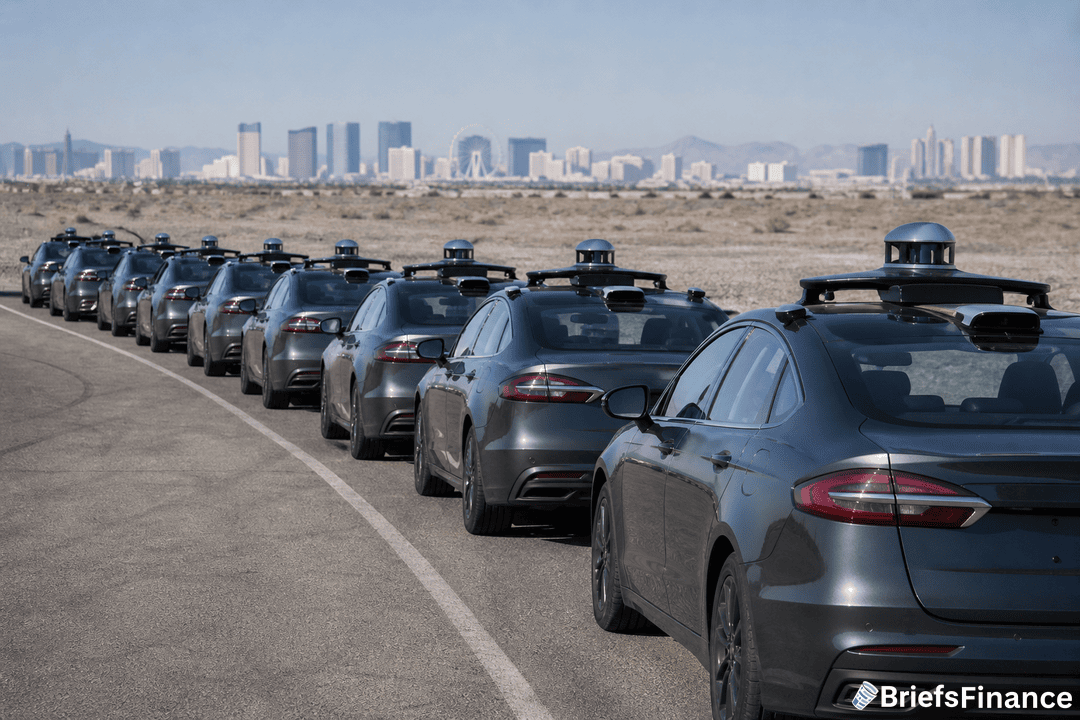
Las Vegas is about to get a lot more self-driving cars on its streets.
On August 20, 2026, Nevada's transportation regulator gave unanimous approval to three applications letting Tesla, Uber, and Waymo offer paid robotaxi services in Clark County, which is home to Las Vegas. Together, the permits allow as many as 7,000 self-driving vehicles to be deployed countywide within the next year.
That is a massive jump for a city that has been testing autonomous vehicles in small numbers for years.
The Breakdown by Company
Tesla got the biggest slice of the pie. The company may field up to 5,000 robotaxis, while Waymo's authorization caps at 1,000 self-driving vehicles over the next 12 months. Uber's approval also allows 1,000 robotaxis, operated through its partnerships with Motional, a Hyundai subsidiary, and Zoox.
Zoox can already operate 100 robotaxis under a separate permit.
But Tesla's number is a ceiling, not a target. Eric Early, Tesla's Cybercab chief engineer, said during the hearing that the company would be very happy to reach around 2,500 or a bit more in the coming year.
As robotaxis multiply on Vegas roads, download the free Always Be Buying E-Book to build wealth steadily
"The 5,000 has always been a ceiling for us," Early said. "I don't think we'll be in a position by this time next year to deploy 5,000 vehicles, and it's not [because of] the technology. … I think we would be extremely happy and satisfied if we could get ourselves up to 2,500, maybe a bit higher than that in the next year."
That honest assessment suggests the rollout will be more gradual than the raw permit numbers imply. Still, even 2,500 robotaxis would be a major presence on Las Vegas roads.
The Pushback From Taxi Companies
Not everyone is thrilled about this. Taxi firms and the Livery Operators Association spoke against the approvals, saying the rollout was too aggressive.
"These applications raise two grave concerns," Maxson-Rushton said. "One deals with the oversaturation of the commercial transportation industry as a whole in Nevada. And the second one deals with the overcrowding of the roadways, and specifically the Golden Triangle."
The Golden Triangle sits between the airport and Las Vegas Boulevard, and it is the zone where most autonomous vehicle testing has happened so far. Motional is also running tests downtown and near Town Square, a local shopping area.
The taxi industry's worry is straightforward: more robotaxis means fewer human-driven rides. That is a real economic threat to drivers who make their living on Las Vegas roads.
What This Means for Riders
For everyday passengers, the next year will bring a lot more options. Uber is advocating a hybrid strategy that keeps humans and robotaxis side by side on ride-hailing platforms, a stance that differs from Waymo's approach.
That means when you open a ride-hailing app in Las Vegas, you might get matched with a human driver or a self-driving car, depending on availability and price. Waymo, by contrast, is building its own dedicated robotaxi service.
The bottom line: Las Vegas is becoming the testing ground for how self-driving cars and human drivers share the same roads, the same customers, and the same city. The next 12 months will show whether that mix works smoothly or hits the kind of congestion and conflict that taxi companies predicted, including oversaturation and road congestion.
For investors, the approvals signal that regulators are willing to move fast on autonomous vehicles. For anyone who lives in or visits Las Vegas, it means the future of transportation is arriving sooner than expected - one robotaxi at a time.
As self-driving cars take over the strip, let the Always Be Buying E-Book guide your financial future