A Decade-Old Bet Gets Reversed
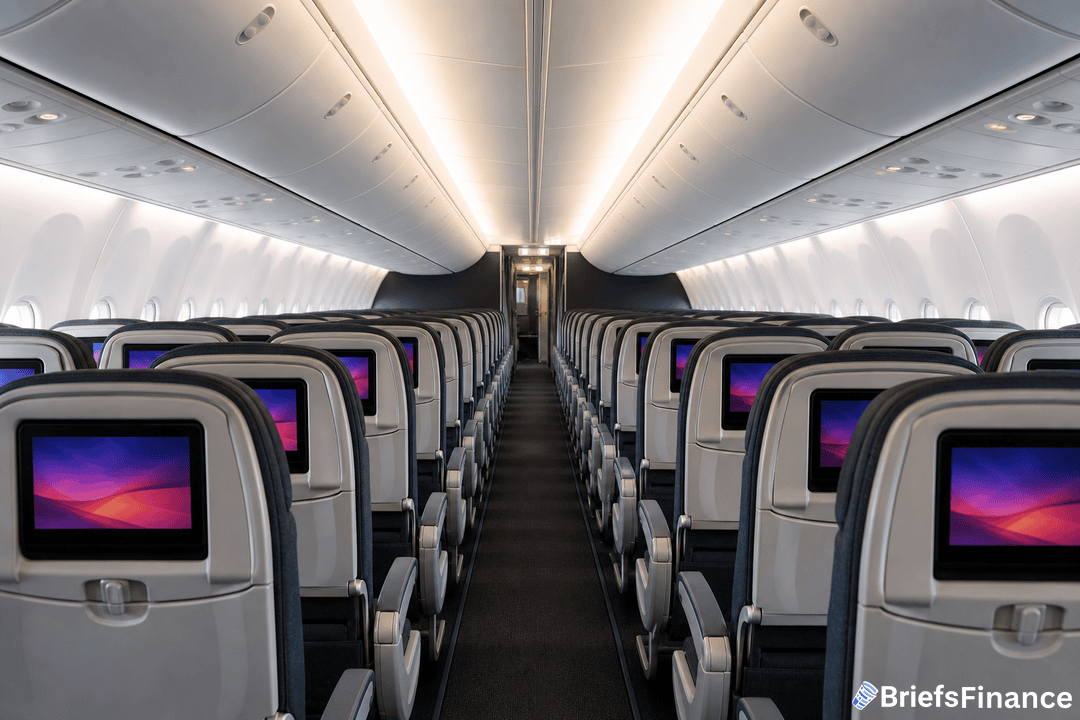
American Airlines will restore seatback entertainment displays on most of its narrow-body aircraft. The carrier has decided to embrace the technology again as it tries to narrow the earnings shortfall versus Delta Air Lines and United Airlines, though travelers will need to be patient.
For months, American weighed the move as a way to keep pace with Delta and United. The 4K monitors will debut on newly delivered Boeing and Airbus jets in 2028. In addition, American will upgrade existing planes so every cabin gets the displays, plus support for wireless audio pairing and modern USB-C power ports.
American has spent months weighing the screens as part of a broader cabin refresh, saying it was "seriously considering" the technology. For years, American avoided installing seatback monitors; executives argued the equipment was too expensive and heavy, and predicted passengers would stream content on their own phones and tablets.
The decision reverses a decade-old bet by American that passengers would use their own devices, a stance executives defended for years on cost and weight grounds. The company now says advances in technology and customer preference justify the investment.
The money story behind the headlines is usually the part that matters. Join Market Briefs free and get it every morning.
"The technology has advanced so much from when we made this decision more than a decade ago," Chief Customer Officer Heather Garboden said in an interview. "Ultimately, when you have customer preference and customer satisfaction improvements, that also generates revenue."
Garboden would not disclose the cost of the project, though she said the rollouts should wrap up by the early 2030s. The new screens are part of a broader effort to improve the customer experience, which American executives believe will also help revenue. The carrier is counting on the combination of better entertainment, more premium seats and upgraded lounges to narrow the gap with Delta and United.
More First Class, More Legroom
The airline said Tuesday that the cabin overhaul adds first-class capacity on Airbus A321neos and Boeing 737 Max 10s, the latter of which won't arrive for several years. It will also increase the number of extra-legroom seats throughout the fleet.
Such premium seats often sell for at least twice the cost of standard coach. For example, a round trip between John F. Kennedy International Airport and Dallas Fort Worth International Airport was priced at $447 for a regular ticket and $1,161 for a premium one.
Why American Is Making the Change
In June, American CEO Robert Isom told CNBC that the carrier's leadership is focused on closing the earnings shortfall with major competitors by adding premium seating and upgrading lounges.
The airline's previous strategy of relying on personal devices proved unpopular with many travelers who preferred a built-in screen without draining their phone or tablet batteries. Airlines like Delta and United have consistently offered seatback screens, and American's decision now brings it in line with industry expectations. The move also aligns with a broader trend where carriers are reinvesting in the in-flight experience to justify higher fares and attract business travelers. American's leadership acknowledges that the earlier cost-saving measure, while prudent at the time, ultimately hurt its competitive standing in premium markets.
Understanding what moved a market beats knowing that it moved. Get the free Market Briefs daily newsletter and follow the drivers.