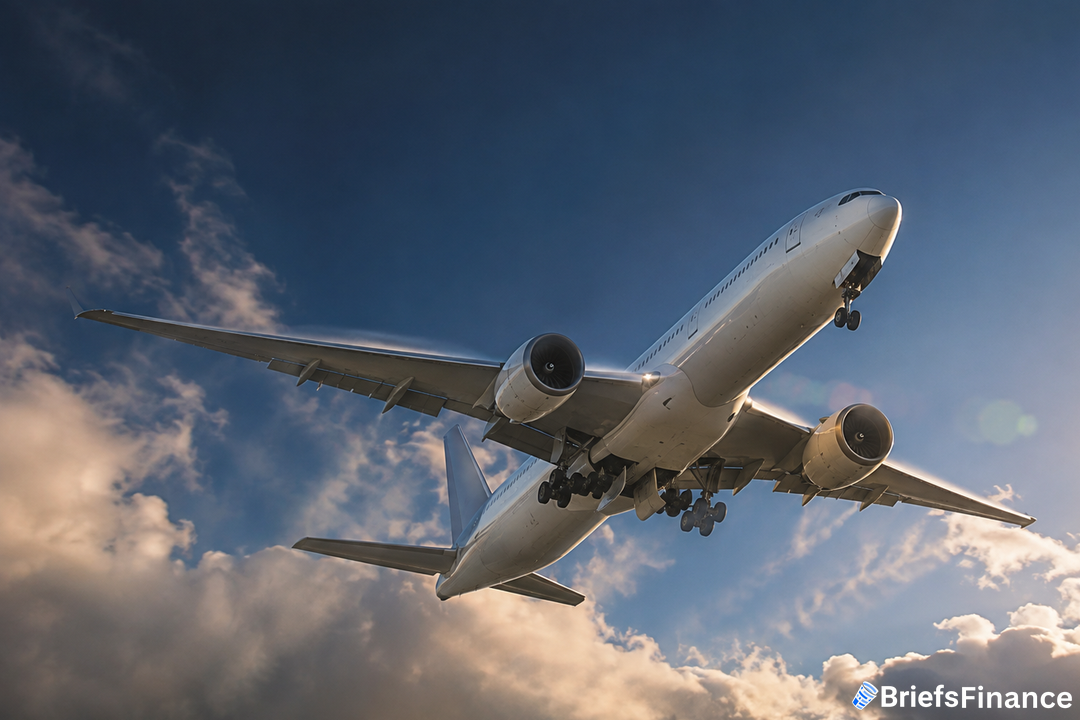
Boeing stock jumped Monday after BNP Paribas raised its rating by two notches and argued that the plane maker could be worth more than twice its current share price by the start of the next decade. The bullish call came from Matthew Akers, previously the only bearish analyst covering the stock; he moved his rating up two levels and now argues that Wall Street's free-cash-flow projections have come down "too far," and that Boeing's risk profile should improve over the next 12 months as certifications wrap up and debt declines.
"The post-Covid era of uncertainty for Boeing is over," "Akers wrote in a note to clients on Monday". "This clarity likely allows the stock to finally break out of the $150-$250 range it has been stuck in since early 2020."
His $300 target on Boeing matches the highest price target on Wall Street; Baird's Peter Arment also has that figure.
Shortly before 1:38 p.m. in New York, Boeing shares had climbed up to 6.8%. The Federal Aviation Administration said Monday it had approved the 737 Max 7, concluding a certification effort that stretched nearly ten years.
Entering Monday, the shares were up roughly 4.2% year-to-date, well behind the S&P 500's 10.6% gain. Following the upgrade, over 80% of Bloomberg-tracked analysts rate Boeing a buy; the rest rate it a hold.
Get the market news that matters in a five-minute read with Market Briefs, our free daily newsletter
Market Context
Monday's rally follows a long stretch of underperformance. Boeing remains below its 2019 highs. Akers expects additional certifications for Max and 777 variants over the next year. Those milestones, along with declining debt and fading defense writedowns, are central to his improved cash-flow outlook.
The company's recovery has been uneven, with shares stuck in a wide range as development costs, customer concessions, and defense charges ate into cash generation. The approval of the Max 7 removes one major overhang. If those certifications clear as anticipated, the improved cash-flow trajectory could bring Boeing back to levels not seen since before the pandemic.
What It Means for Investors
His upgraded forecast assumes those pressures are fading.
That reduced drag on cash should refocus investors on the company's strengthening commercial business.
Consequently, his 2027 free cash flow forecast now stands at $7 billion, versus the $6.23 billion average estimate compiled by Bloomberg.
"As the primary drags on cash - development costs, customer concessions, and legacy defense charges - subside, we forecast free cash flow reaching about $16 billion by 2030," the analyst wrote.
"Applying a current industrial free cash flow yield and historical Boeing discount, this implies a ~$450 share price, about twice its current level and a return to new highs for the first time since 2019," the analyst said.
Join Market Briefs, our free daily newsletter, for a quick daily rundown of the markets