Free NewsletterPro Login
S&P 500 6,287 +0.42%
DOW 44,521 -0.18%
NASDAQ 21,103 +0.71%
S&P 500 +12.4%
Briefs Finance Fund +24.8%
JOIN THE FUND →

Nuclear Power Startup Valar Atomics Eyes $6B Valuation in New Funding Round

Published Jul 17, 2026
[tts_player]
Share:
Summary:
  • Valar Atomics, a three-year-old startup building small modular nuclear reactors, is in talks to raise $1 billion in new equity at a $6 billion valuation.
  • Sequoia Capital is expected to lead the round, joining existing investors including Anduril's Palmer Luckey and Palantir's CTO Shyam Sankar.
  • The company has already raised $450 million in total capital and recently partnered with Nvidia to explore nuclear power for AI data centers.

The Deal on the Table

A nuclear energy startup that barely existed three years ago is now seeking a much higher valuation.

Valar Atomics, based in El Segundo, California, is negotiating a new funding round that would value the company at about $6 billion. That is up from a $2 billion valuation from its previous raise. The company is trying to raise $1 billion in fresh equity, with venture capital firm Sequoia Capital expected to lead the deal. Sequoia declined to comment on the talks.

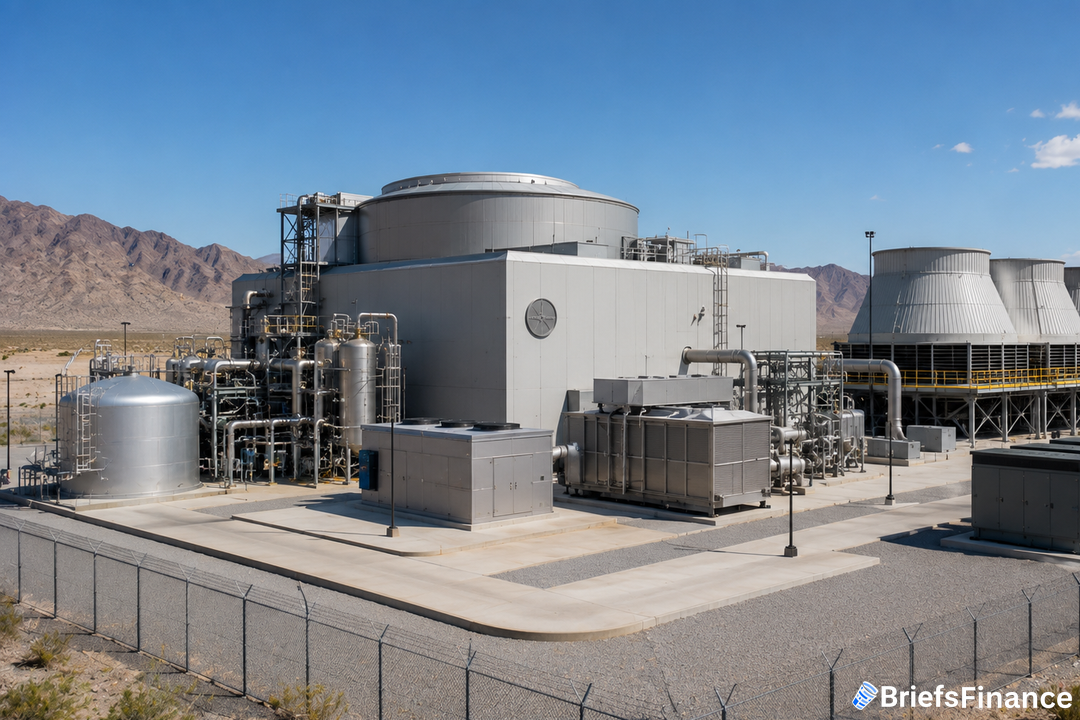
The company manufactures compact, prefabricated power stations known as small modular nuclear reactors, designed to be more economical and quicker to deploy than traditional reactors.

Why Nuclear Is Suddenly Hot

There is a broader demand crunch driving interest in this space.

Get the market news that matters in a five-minute read with Market Briefs, our free daily newsletter

Forecasts indicate that demand for power from data centers will rise rapidly in the coming years, and numerous local utilities remain far from installing sufficient additional capacity. This supply shortfall has transformed nuclear energy - historically hindered by budget overruns and bureaucratic hurdles - into a sector that is now receiving intense attention within the AI infrastructure market.

Valar is not alone in chasing this opportunity. Rivals such as Kairos Power and Bill Gates-backed TerraPower are developing advanced reactors intended for technology and industrial clients, along with NuScale Power, the only small modular reactor developer with U.S. regulatory design approval.

Valar recently showed that its small reactor produced a small amount of electricity to power an Nvidia AI processor. Around the time of that test, the two companies announced a partnership to study how nuclear power could supply future AI data centers.

The Founder Story

Isaiah Taylor founded Valar Atomics. He is 27 years old. He left high school at the age of 16. Taylor launched two startups before Valar, and he has mentioned that his great-grandfather was a nuclear physicist involved in the Manhattan Project.

Among Valar's backers are Palmer Luckey, who founded Anduril, and Shyam Sankar, Palantir's CTO.

What Comes Next

In a separate matter, Valar has adopted a confrontational legal approach against its regulator. In 2023, the company allied with multiple states and competing startups to file a lawsuit against the Nuclear Regulatory Commission. Valar argued in the suit that the regulator "improperly subjects small test reactors to the same protracted licensing procedure as larger commercial facilities," a company spokesperson said. The legal dispute remains unresolved; both parties have repeatedly halted court proceedings, indicating that a potential settlement may be under negotiation.

The broader context for Valar's rise is a surge in venture interest in advanced nuclear technology. With AI data centers projected to consume massive amounts of electricity, startups like Valar are racing to deliver carbon-free power that can be sited nearer to customers than traditional plants. The company's young founder, who dropped out of high school to start companies, has also courted controversy by challenging the NRC's framework, a move that has drawn both support and criticism from industry insiders.

Join Market Briefs, our free daily newsletter, for a quick daily rundown of the markets
Disclosure

Recent News

1 2 3 38

Get Market Briefs delivered to your inbox every morning for free!

No fluff. No noise. No politics. Just finance news you can read in 5 minutes.

Blogs

June 29, 2026
Portfolio Diversification: Why Putting All Your Eggs in One Basket Destroys Wealth
  • Real diversification means spreading investments across all 11 economic sectors plus bonds, alternatives, and cash so no single bet can sink the portfolio.
  • Different sectors perform at different times, so a diversified portfolio captures upswings while smoothing the brutal drawdowns that wipe out concentrated bets.
  • Total market index funds offer the simplest path to diversification, and annual rebalancing is what keeps the structure working over time.
Read More
June 29, 2026
Non Taxable Income: What It Is and Why It Matters
  • Non taxable income is money you receive that you don't owe income tax on.
  • The tax code treats workers, investors, and business owners very differently, and investors often come out ahead.
  • Learning how income is taxed is a quiet superpower for keeping more of what you earn.
Read More
June 29, 2026
Semiconductor Stocks: A Simple Guide for Investors
  • Semiconductor stocks are companies that design and make computer chips, the brains inside nearly every modern device.
  • The AI boom has turned chips into one of the market's most important and most watched groups.
  • They offer big growth potential, but come with high valuations and a notoriously cyclical history.
Read More
June 25, 2026
How Stocks Work: A Simple Guide for Beginners
  • A stock is a slice of ownership in a company - buy one, and you own a piece of the business.
  • You make money two ways: the share price rising over time, and dividends paid to shareholders.
  • The simplest path for most beginners is buying into the whole market through a low-cost index fund.
Read More
June 25, 2026
Stop Loss vs Stop Limit: What's the Difference?
  • A stop loss order sells your stock once it hits a trigger price, prioritizing getting you out.
  • A stop limit order only sells within a price range you set, prioritizing price over a guaranteed exit.
  • The trade-off: a stop loss almost always executes; a stop limit might not if the price moves too fast.
Read More
June 25, 2026
Energy Stocks: A Simple Guide for Investors
  • Energy stocks are companies that produce and supply the power the world runs on, from oil and gas to newer sources.
  • They make up one of the 11 sectors of the market and tend to move with energy prices and big-picture shifts.
  • Like any sector, the key is diversification and understanding the forces driving demand.
Read More
June 18, 2026
What Is a Stop Loss Order? A Simple Guide
  • A stop loss order automatically sells a stock once it falls to a price you set.
  • It's a tool to cap losses or lock in gains without watching the market all day.
  • It works best for active strategies, and can backfire if used carelessly on long-term holdings.
Read More
June 18, 2026
Best S&P 500 Index Fund: How to Choose One
  • The best S&P 500 index fund for most investors is simply the cheapest, most established one that tracks the index well.
  • Funds like VOO, IVV, and SPY all hold the same 500 companies, so the biggest difference is the fee.
  • Pick one, automate your buys, and let time do the heavy lifting.
Read More
June 17, 2026
What Are Penny Stocks? Risks and Rewards Explained
  • Penny stocks are very low-priced shares of very small companies, often trading for just a few dollars or less.
  • They promise huge gains but carry huge risks: low liquidity, high failure rates, and wild price swings.
  • Most investors are better served by quality companies and funds than by chasing cheap shares.
Read More
June 17, 2026
Best Stocks for Beginners With Little Money
  • The best stocks for beginners with little money usually aren't individual stocks at all - they're low-cost index funds.
  • You can start with $100 or less and use small, regular investments to build wealth over time.
  • Focus on diversification and consistency, not on picking the next big winner.
Read More
1 2 3 24
Share via
Copy link











